
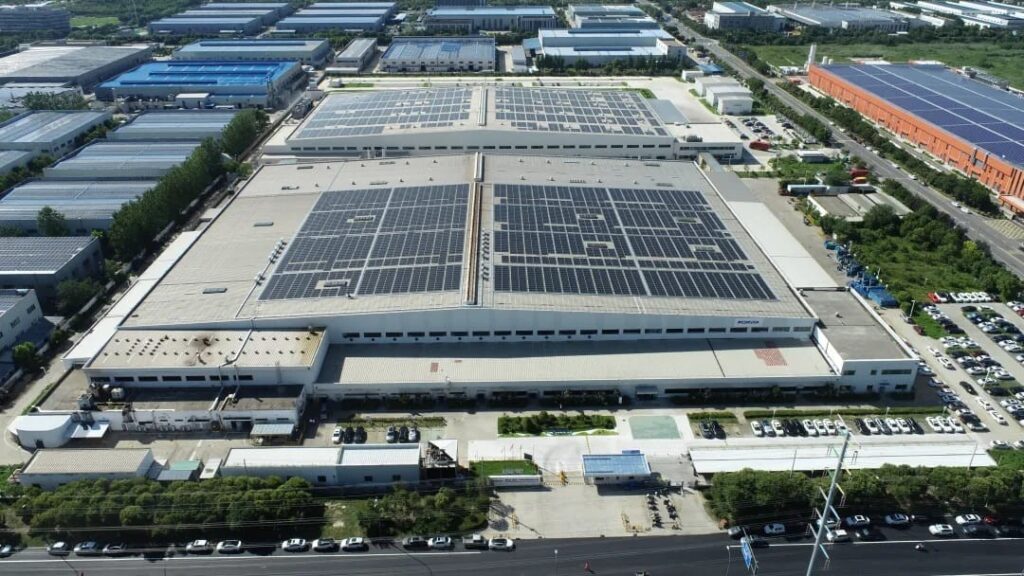
The World Economic Forum (WEF) has announced 23 new industrial sites joining its Global Lighthouse Network, demonstrating how advanced technologies can improve productivity, resilience, sustainability, talent and customer-centricity at scale.
Within this group, DataMesh played a key role in supporting the digital transformation journeys of two newly recognized Lighthouses: Faurecia Automotive Systems (Yancheng) and EVE Energy (Jingmen). By applying digital twin, spatial intelligence, and AI technologies to real production environments, DataMesh helped both companies turn advanced concepts into practical, scalable capabilities.
Faurecia | Using VR Training to Strengthen Workforce Capability and Quality
As the world’s largest automotive seat slide production base, Faurecia (Yancheng) has significantly improved quality, efficiency, and operational resilience through the deployment of more than 40 advanced digital use cases. These efforts led to its recognition as the world’s first Lighthouse Factory in the automotive seating sector.
A central element of this transformation is a VR-based immersive training system built on the DataMesh FactVerse platform, designed to strengthen frontline capabilities at scale.
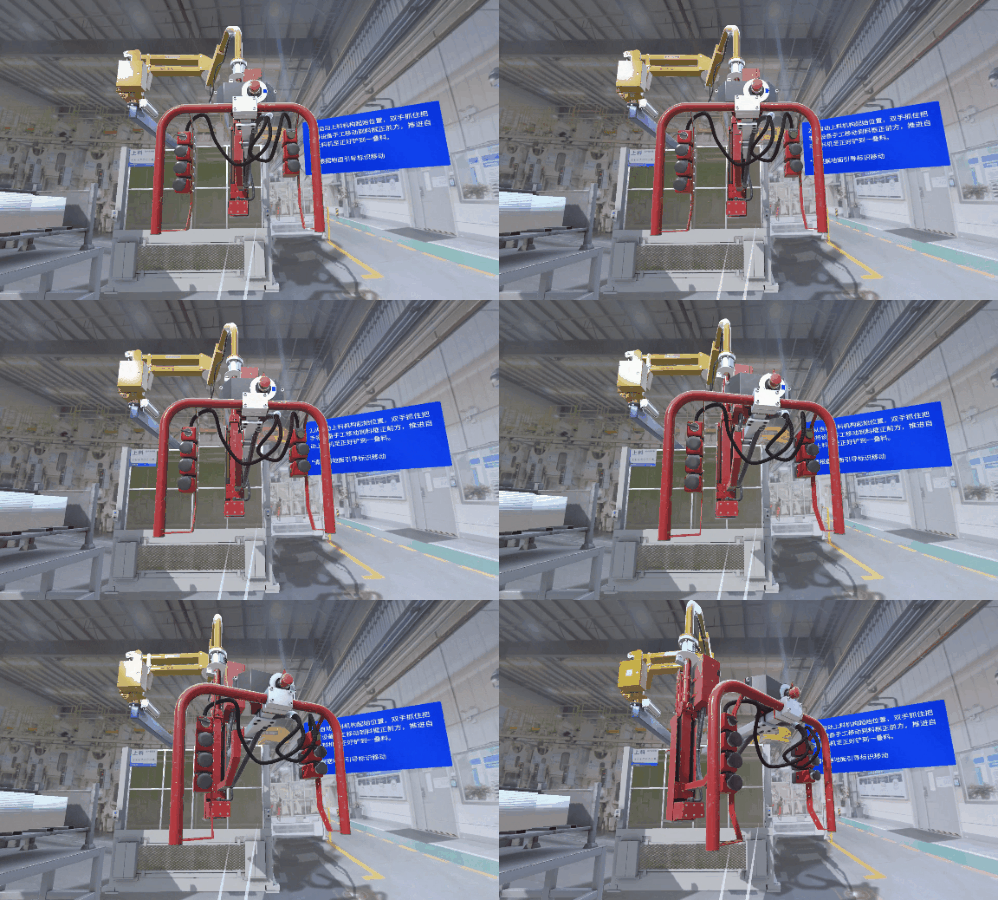
As production expanded, Faurecia faced familiar manufacturing challenges: frequent workforce turnover, growing training demand, limited access to production equipment, and inconsistent training outcomes that could affect product quality. To address these issues, the plant introduced VR training as a core part of its talent development strategy.
Using VR, critical production lines and workstations are recreated at full scale in a virtual environment. Employees can complete standardized learning, hands-on practice, and assessments without interrupting live production. A dedicated training management platform allows HR teams and supervisors to track outcomes, compare performance, and continuously improve training standards.
For critical maintenance tasks such as belt replacement, VR training eliminates the need to use physical equipment and removes waiting time associated with heating, insulation, and cooling processes. This approach enables zero-risk training, shortens onboarding cycles, and significantly improves training efficiency and consistency.
As a result, training has shifted from an experience-driven, site-dependent process to a scalable, repeatable digital capability, supporting stable, high-quality operations.
EVE Energy | Improving Manufacturing Transparency and Efficiency with Digital Twins
In battery manufacturing, production processes are highly complex and tightly paced, placing stringent requirements on equipment reliability, energy management, and quality traceability. To meet these demands, EVE Energy advanced a comprehensive digital strategy across R&D, production, and operations, deploying more than 40 digital solutions.
These initiatives delivered measurable gains in productivity and sustainability, leading the facility to become the world’s first Lighthouse Factory for cylindrical battery manufacturing.
A key foundation of this effort is a digital twin factory built on the DataMesh FactVerse platform. By integrating data from production systems, equipment, and energy infrastructure, the platform provides unified visibility into factory operations and end-to-end traceability.
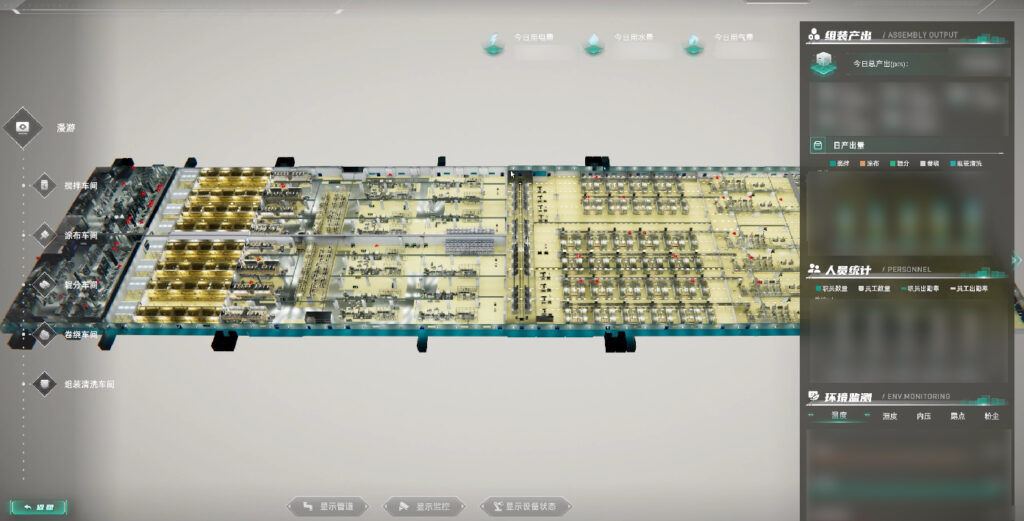
With this digital twin in place, the plant can:
- Simulate and optimize production processes to identify efficiency and cost-reduction opportunities
- Use XR-based training to improve understanding and consistency for complex operations
- Detect potential equipment issues early through continuous data analysis
- Monitor energy consumption in detail to support more efficient and sustainable production
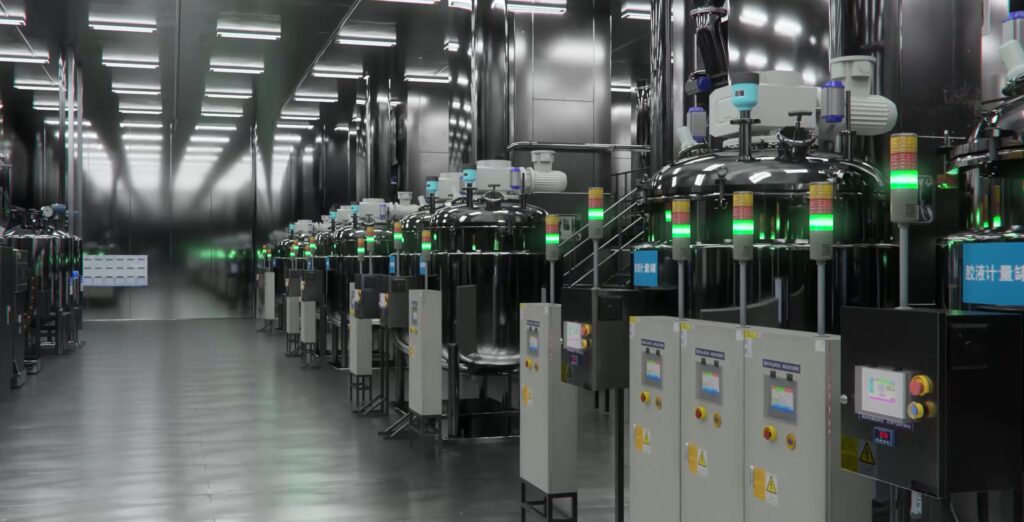
Building on the FactVerse platform and its integration with NVIDIA Omniverse, EVE Energy has developed high-fidelity digital twin environments that support more intuitive decision-making, industrial AI training, and future exploration of embodied AI.
Making Technology Work for People and Business
The World Economic Forum’s Global Lighthouse Network, developed in collaboration with McKinsey, represents the highest standard of digital manufacturing today. Its true value lies not in technology alone, but in the ability to deploy that technology at scale, deliver measurable business impact, and create models that others can follow.
This principle is central to DataMesh’s approach. DataMesh brings digital twins, spatial computing, and AI into everyday operations. Serving manufacturing and facilities management, the company focuses on planning, monitoring, training, and maintenance—helping organizations operate more efficiently, more transparently, and at lower cost.
As manufacturing continues to evolve, DataMesh remains committed to working as a trusted digital partner—embedding innovation into real production environments and supporting the next generation of global Lighthouse Factories.