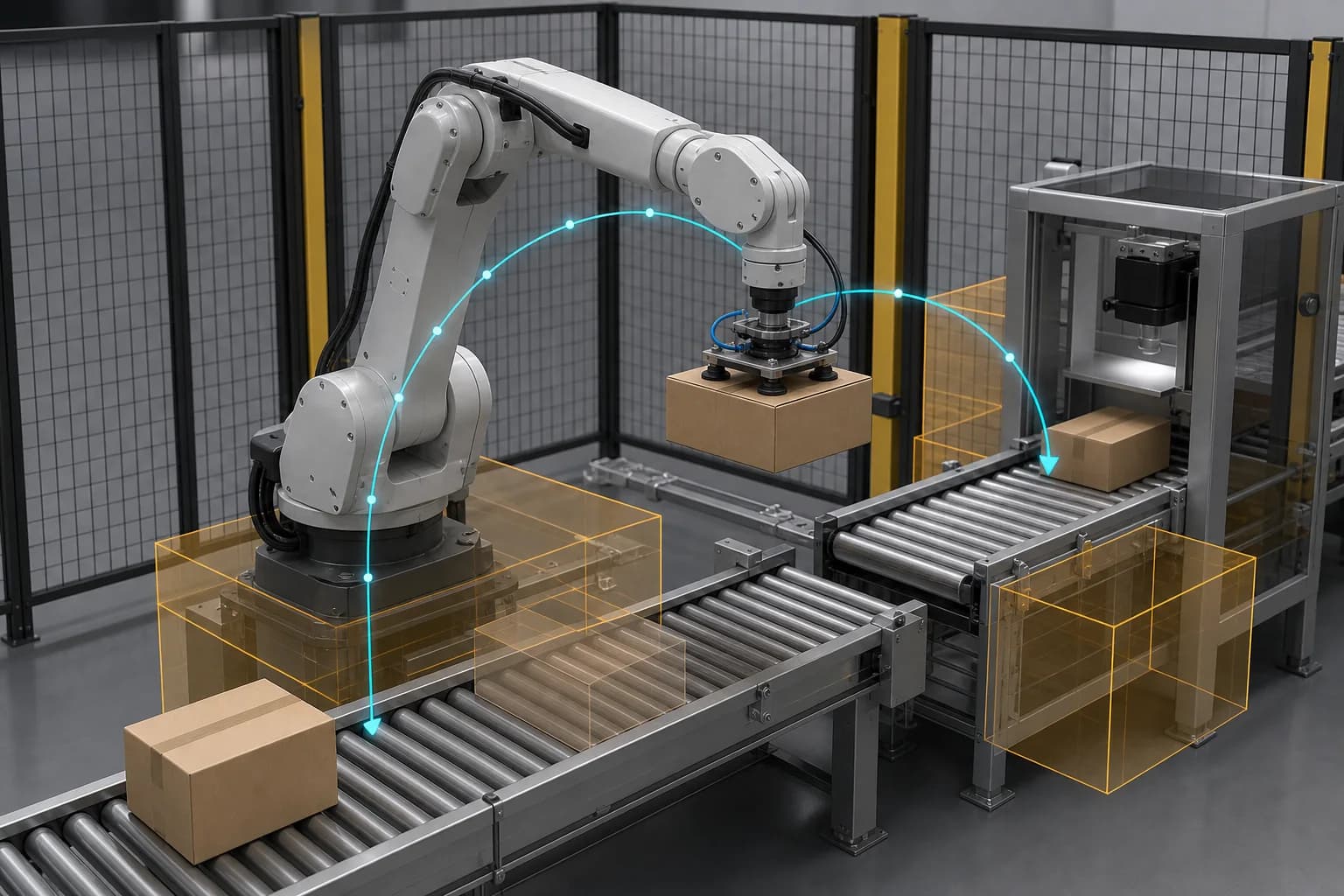
Synthetic perception datasets
Generate labeled RGB, depth, segmentation, and pose data from industrial scenes when real data collection is expensive, risky, or incomplete.
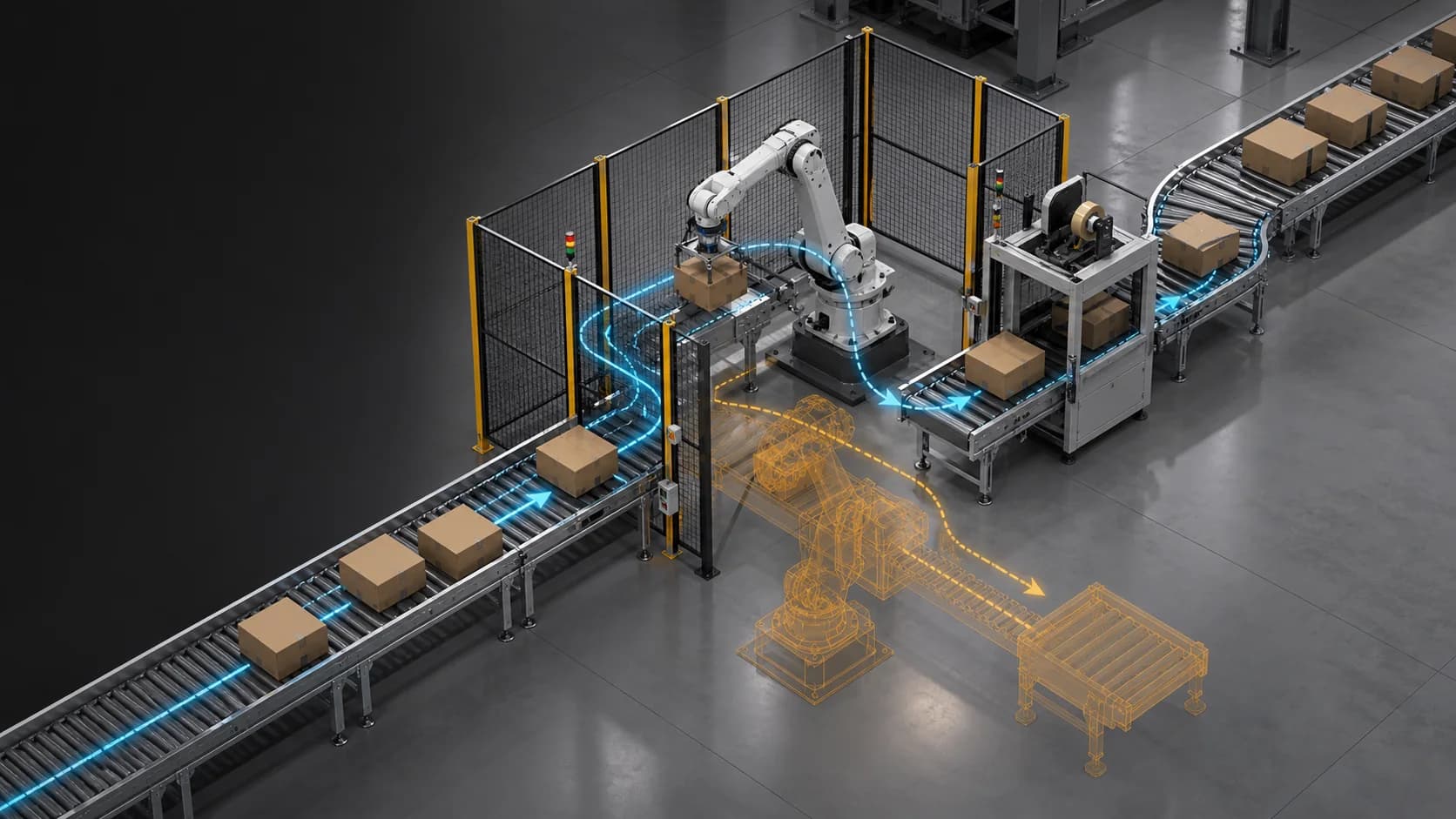
Industrial Synthetic Data for World Models, Physical AI, and Embodied AI
DataMesh Robotics generates industrial-grade synthetic training data for Physical AI and embodied AI. Build digital twins, simulate sensors, auto-label ground truth, and export to NVIDIA Isaac Sim/Omniverse and robotics pipelines.
Connect data, workflows, and field execution so teams can understand context, act faster, and keep work traceable.
Build high-fidelity industrial environments from CAD/BIM, facility drawings, asset libraries, and site constraints — optimized for simulation at scale.
Generate high-quality RGB and synthetic imagery with controllable lighting, textures, and camera optics — supporting robust perception training across real-world variability.
Assign physical attributes (mass, friction, restitution, joints, constraints) and material definitions to make interactions realistic — essential for manipulation, contact, and mobility learning.
Generate consistent large-scale annotations such as segmentation masks, 2D and 3D bounding boxes, instance IDs, depth, keypoints, poses, trajectories, and scene metadata. This also includes invisible data like temperature, pressure, and embedded business logic.
Define goals, success conditions, and reward signals for industrial tasks: tight tolerances, multi-step procedures, safety constraints, partial observability, and domain-specific semantics.
Package datasets and OpenUSD scenes for downstream training, evaluation, and Sim2Real workflows — including integration paths for NVIDIA Isaac Sim/Omniverse and common robotics toolchains.
Practical applications and proven success scenarios across industries.
Generate labeled RGB, depth, segmentation, and pose data from industrial scenes when real data collection is expensive, risky, or incomplete.
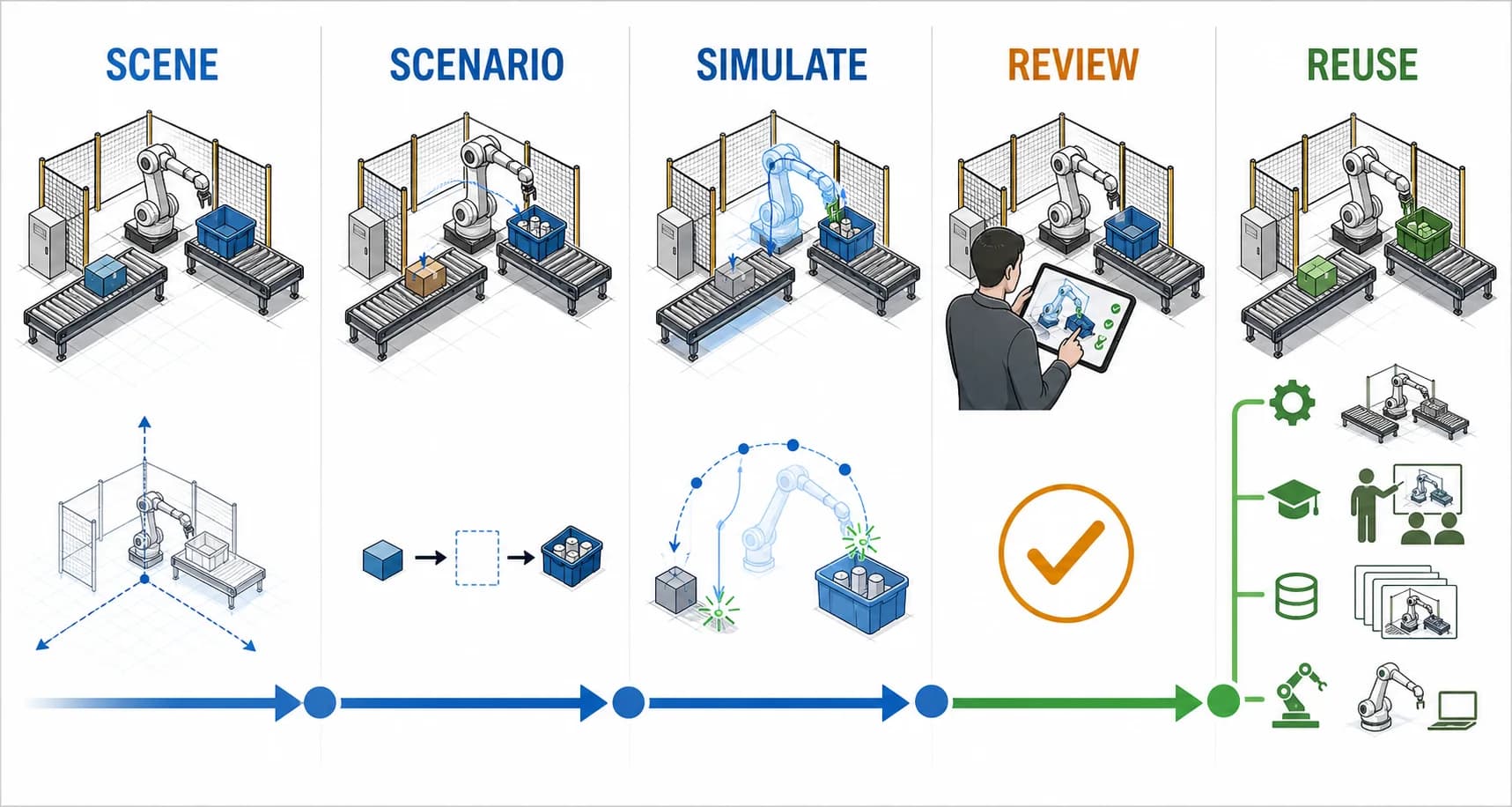
Test robot tasks against facility layout, object constraints, and process logic before moving into physical trials.

Package scene assets, labels, and task variation for downstream training stacks and robotics simulation environments.
DataMesh Robotics generates industrial-grade synthetic training data for Physical AI and embodied AI. Build digital twins, simulate sensors, auto-label ground truth, and export to NVIDIA Isaac Sim/Omniverse and robotics pipelines.
Early Access — DataMesh Robotics is currently available to select enterprise partners. We are working with partners including industrial automation companies to refine simulation-based data generation workflows for real-world robotics applications.
Tell us your target robot, tasks, and environment. We'll propose a data generation plan, integration approach, and a demo tailored to your industrial scenario.
Contact us at: robotics@datamesh.com
We can generate multi-modal datasets such as RGB images, depth, segmentation, instance IDs, 2D/3D bounding boxes, object poses, robot state/trajectories, and scenario metadata. Outputs are configurable to your training goals and target simulator.
Both. Perception datasets are common, but DataMesh Robotics is built for embodied tasks where physics matters — manipulation, contact-rich interactions, mobility, and inspection actions.
We combine industrial-accurate geometry and constraints with physics parameters and structured variation (domain randomization).
DataMesh Robotics is designed to integrate with OpenUSD-based workflows and can be adapted to support Isaac Sim/Omniverse pipelines depending on your environment and requirements.
Yes. We can ingest your assets and help optimize them for simulation while supporting enterprise deployment options to protect IP.
A pilot commonly includes one target environment, a small set of tasks, a defined dataset spec, an integration path to your training stack, and a performance validation loop. We also have ready-to-use templates to generate generic training data in certain industries.
Yes. DataMesh Robotics suites can be used with both cloud and on-premise environments.
Continue with the most relevant products, solutions, guides, and public references for this topic.