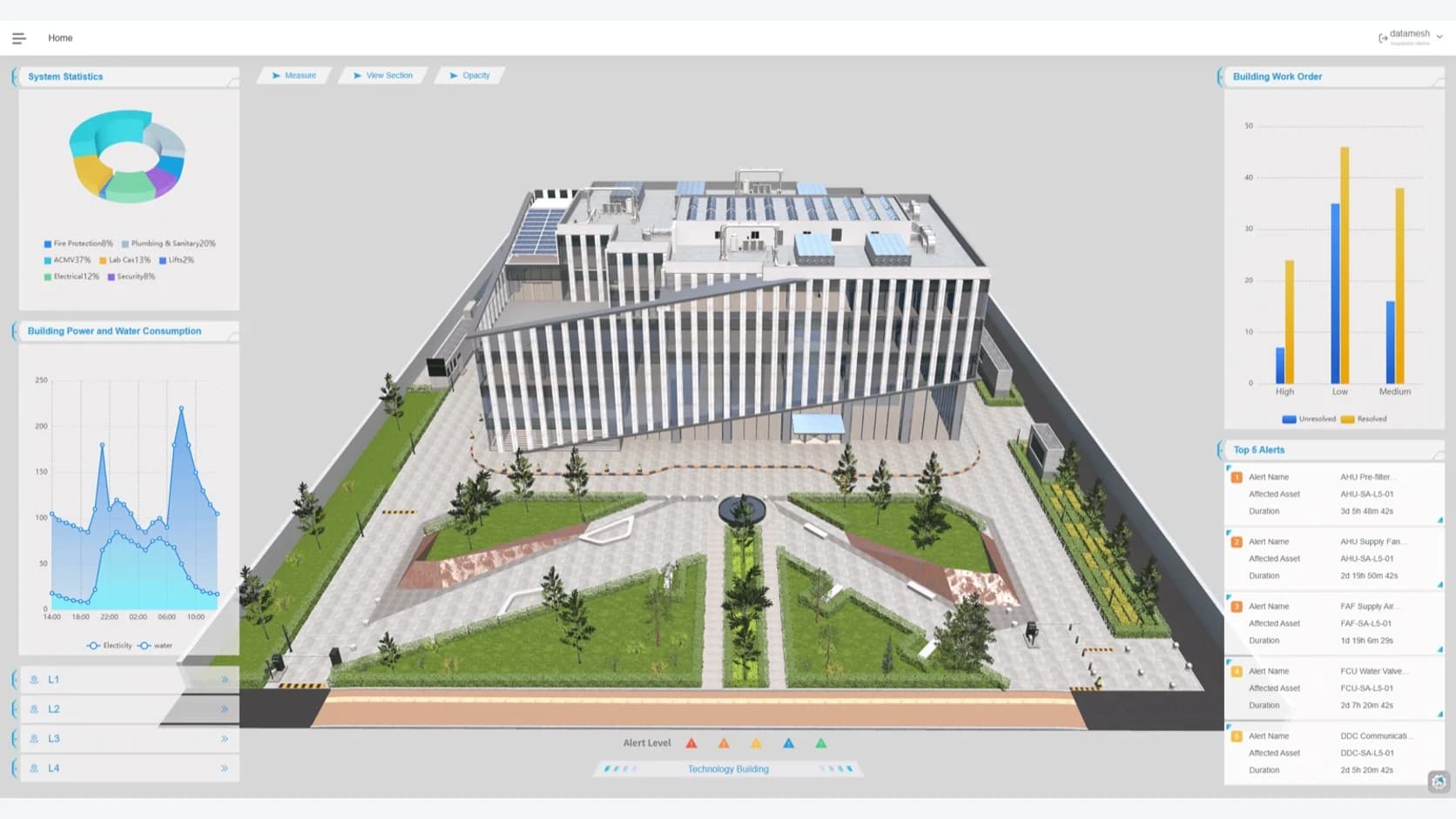
Rotating equipment risk detection
Detect early degradation patterns across pumps, compressors, motors, and other critical assets before they become failures.
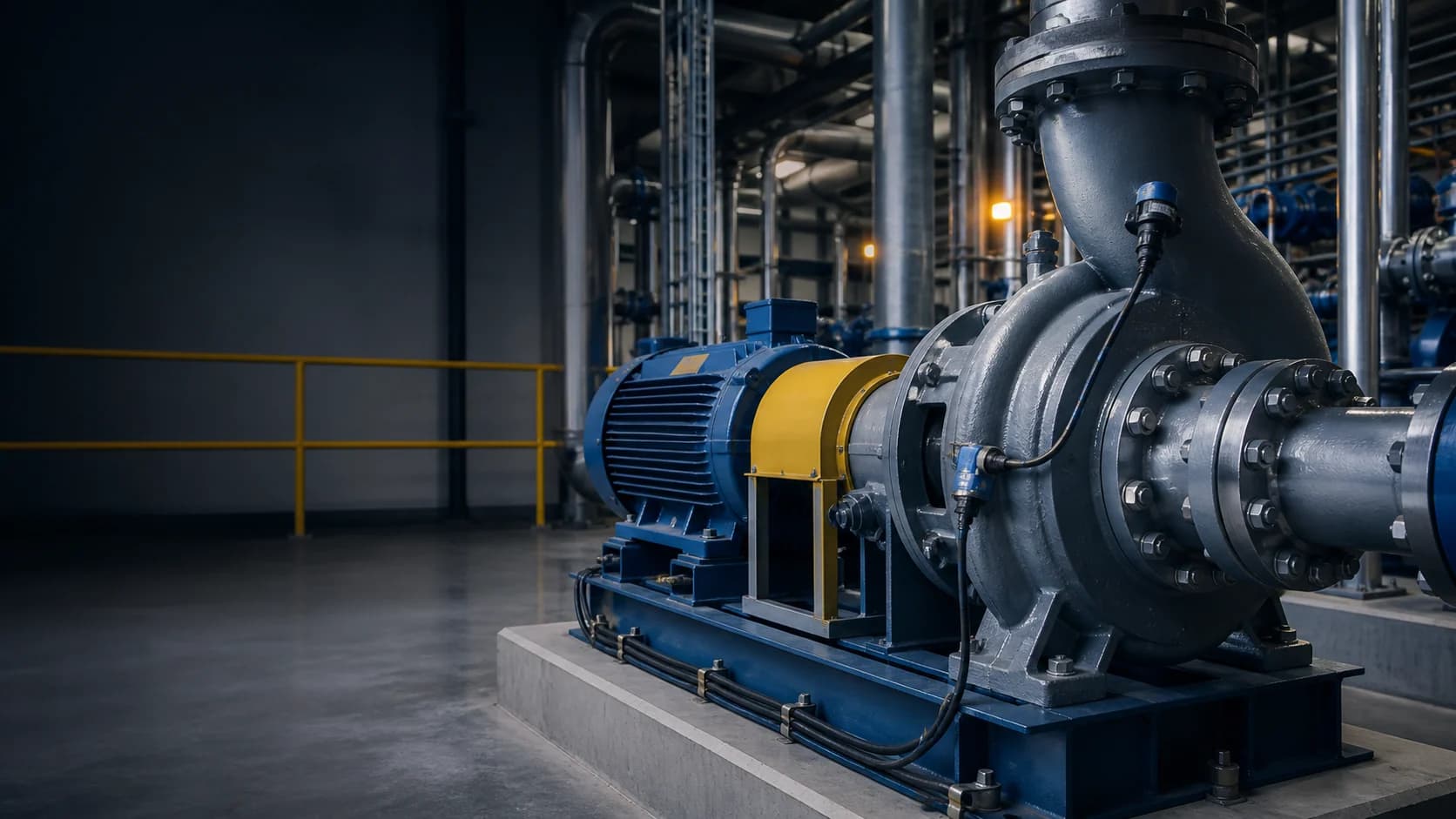
Predictive Maintenance for Industrial Operations
Compare vibration ratings with an asset’s own operating baseline, then test monitoring criteria against its history.
Connect data, workflows, and field execution so teams can understand context, act faster, and keep work traceable.
Bring vibration, temperature, current, pressure, historian tags, inspection records, and equipment metadata into one operational model through Data Fusion Services.
See which method is assigned to an asset and review its validation record. For assets configured for forecasting, open past runs to check the input window and forecast trend.
Review equipment location, upstream and downstream dependencies, recent work, and site constraints inside the digital twin before dispatching field action.
Turn confirmed findings into Inspector work orders, guided field tasks, verification records, and maintenance follow-up without replacing the existing CMMS/EAM stack.
Preserve the signals, reasoning context, operator review, work record, photos, and completion notes that support maintenance decisions.
Start with a critical asset class or facility system, validate the signal quality and workflow fit, then expand the same operating model across additional equipment and sites.
Practical applications and proven success scenarios across industries.
Detect early degradation patterns across pumps, compressors, motors, and other critical assets before they become failures.
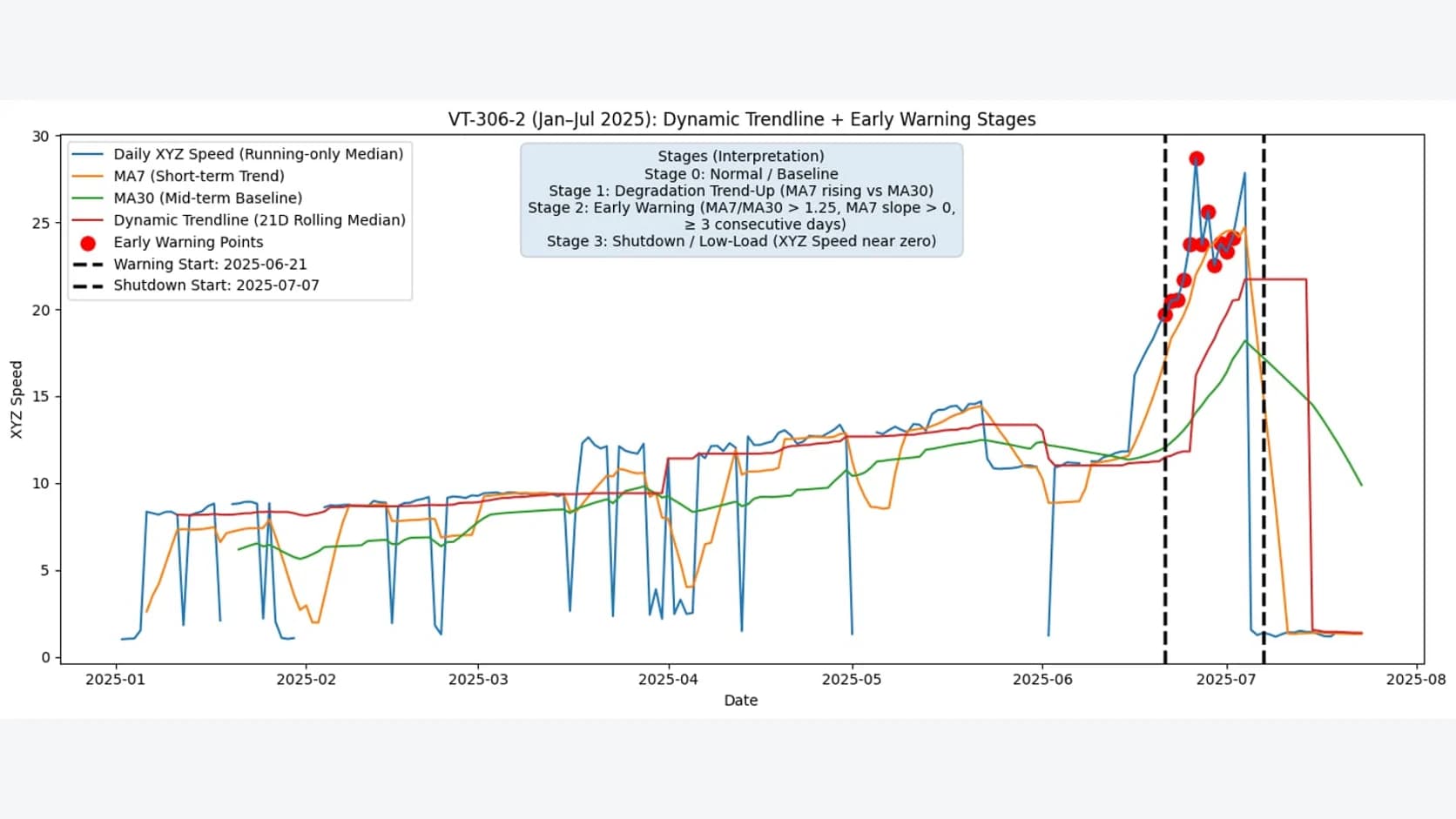
Correlate sensor signals, process context, and asset relationships to surface maintenance priorities earlier.
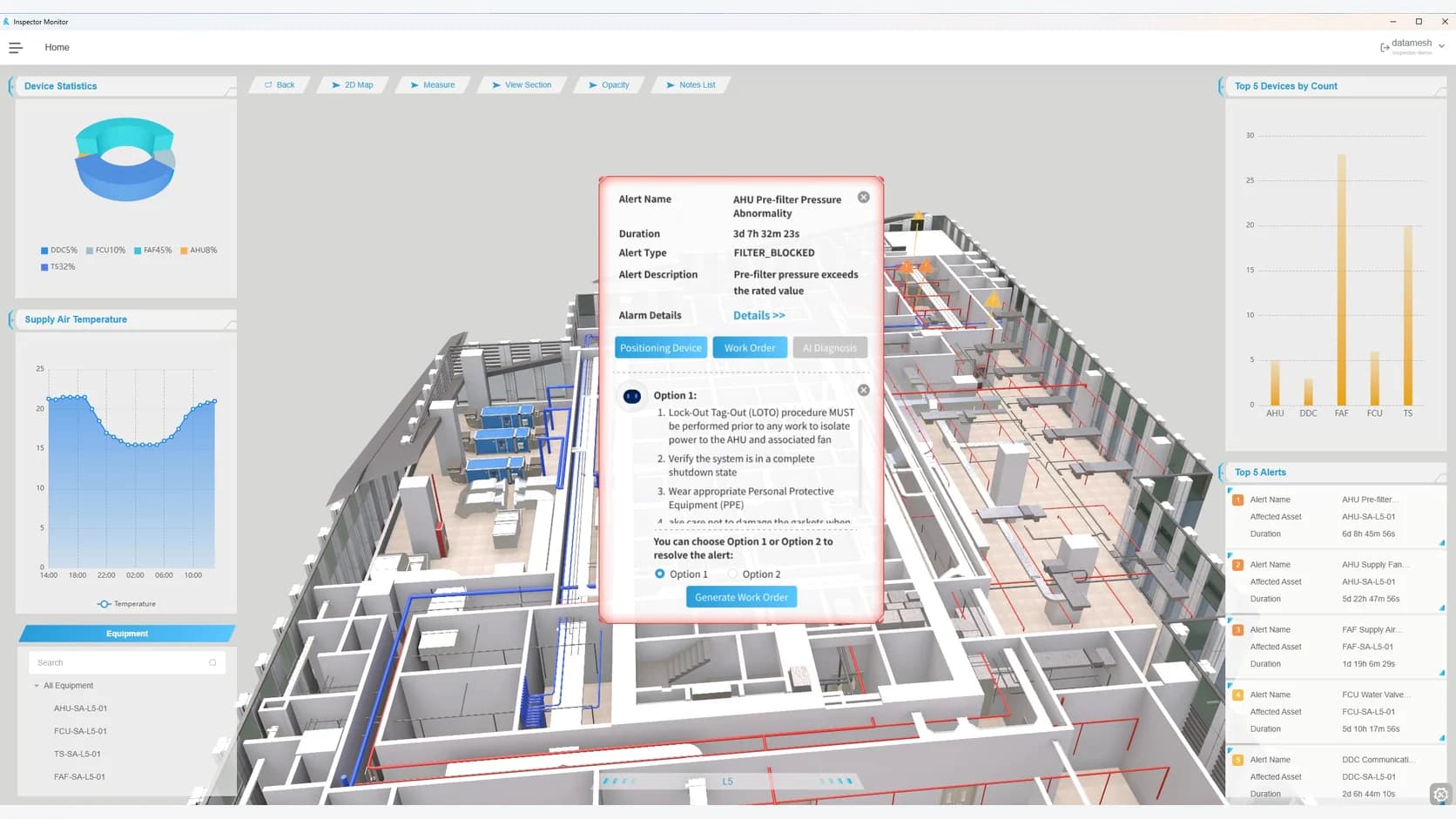
Connect anomaly review, maintenance planning, field execution, and verification in one operational loop.
A pump can stay within its engineering vibration band while a bearing runs consistently above its usual level at comparable load. The band puts vibration severity in context. The baseline shows how far this pump has moved from its own history. Together they give a planner a reason to inspect a specific point.
In FactVerse AI Agent, engineers can check which analysis method an asset uses and replay two criteria over the same history. Compare the sample count, alerts under each criterion and the number of matching decisions. Ask the AI assistant which inputs support the health score and which are missing before choosing a point to investigate.
Two identical pumps can run very differently: one carries a steady load while the other starts on demand. An engineer can train a baseline for each pump using vibration readings from stable operation. When a bearing starts vibrating more than usual, the team knows which point to check.
Could another method catch the change sooner? Automated machine learning (AutoML) tests several detection methods against the same history and compares them with the one in use. A model that passes validation can run in the background while the existing alerts stay in place. Engineers compare results with inspection records before switching.
Predictive maintenance combines trusted sensing, asset context, AI analysis, and twin-based review so teams can evaluate maintenance risk with more context and less guesswork.
Instead of reacting only after threshold alarms fire, teams can review emerging issues in context, prioritize the right assets, and move into planned action with less noise.
DataMesh and Yokogawa bring AI-assisted predictive maintenance into complex industrial facilities. Work with Swire Coca-Cola and Foxconn also demonstrates how FactVerse connects maintenance knowledge, frontline execution, and reusable operational records.
Begin with an asset class or facility system where failures have clear operational impact and sufficient history is available. DataMesh connects its signals, maintenance records, operating context, and field workflow so teams can establish a repeatable health-management process.
Once the signal quality and execution loop are established, the same model can extend to more equipment and sites while preserving each facility's approval rules, safety procedures, and CMMS or EAM workflow.
| Metric | Impact |
|---|---|
| Earlier signal review | Faster identification and prioritization of emerging maintenance issues |
| Unplanned downtime | Lower through earlier intervention and planned maintenance |
| False alarms | Reduced through trend-based analysis and contextual diagnostics |
| Maintenance execution | Faster handoff from detection to validated field action |
Typical starting points include vibration, temperature, current, pressure, historian tags, inspection records, and equipment metadata. Data Fusion Services connects them into one operational model.
Thresholds react after a limit is crossed. The FactVerse AI Agent predictive maintenance module evaluates trends, equipment behavior, and operational context to surface earlier and more trustworthy warnings.
Yes. Inspector and connected APIs can route detections into existing work order and maintenance systems and keep the current maintenance stack in place.
Continue with the most relevant products, solutions, guides, and public references for this topic.