
Passenger-flow readiness
Review expected arrival pressure, queue status, checkpoint capacity, and staffing options before service levels deteriorate.
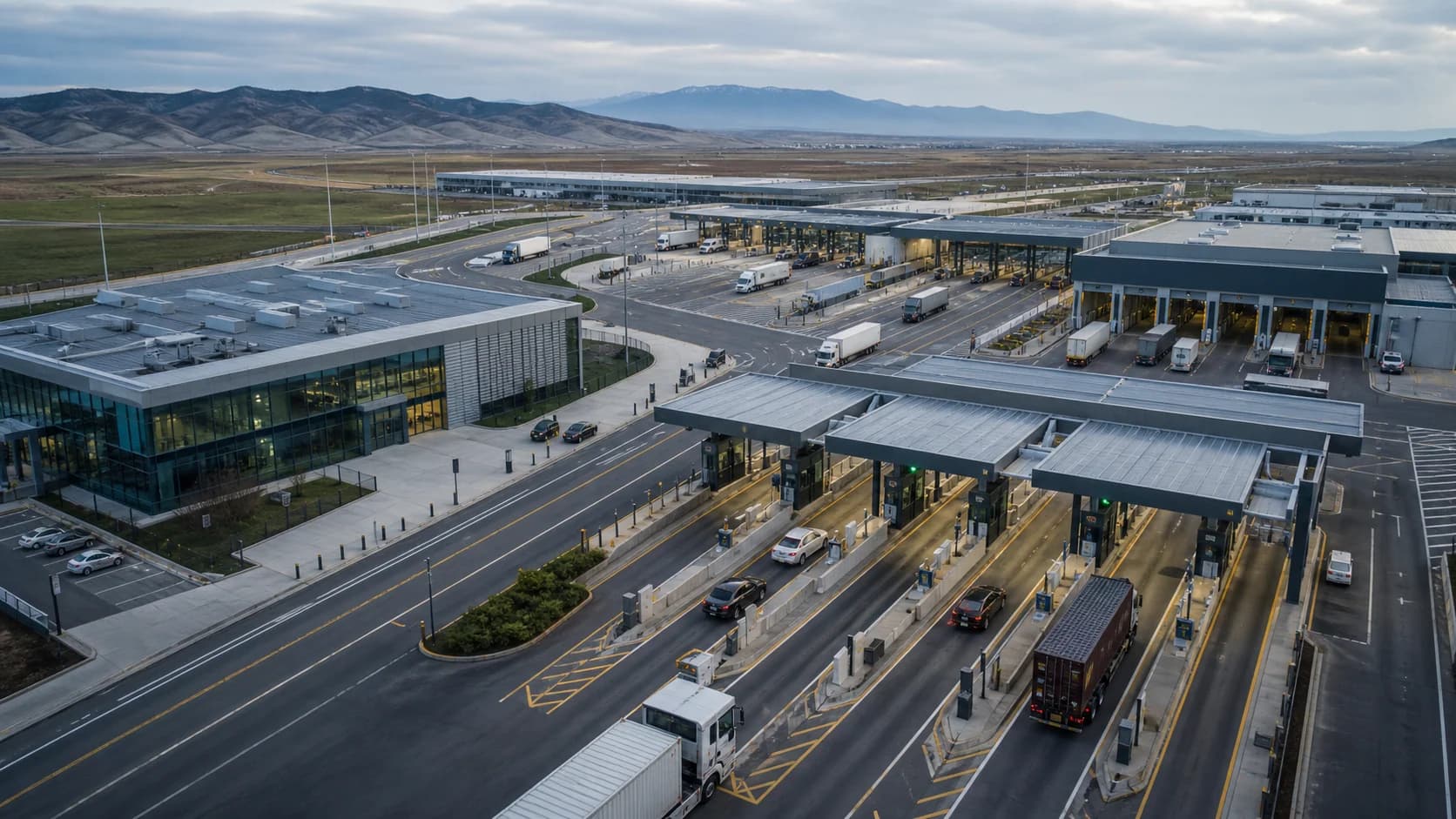
Anticipate flow pressure and coordinate an accountable response
Coordinate passenger, vehicle, and cargo flow across checkpoints, ports, terminals, and transport hubs with the TrafficOps industry module, operational digital twins, and AI-assisted decisions.
Connect data, workflows, and field execution so teams can understand context, act faster, and keep work traceable.
Bring queue status, throughput, lanes, checkpoints, schedules, facilities, and operational events into a shared TrafficOps model.
Use current and historical flow data to surface expected peaks, queue pressure, and capacity constraints for operator review.
Compare lane, checkpoint, staffing, and service configurations against demand, operating rules, and facility availability.
Connect traffic conditions with equipment, facility, and operational events so teams can triage disruptions in one context.
Evaluate selected operating scenarios before changing lane allocation, staffing, maintenance windows, or response plans.
Keep recommendations subject to operator approval and preserve the decision, action, and observed result for later review.
Practical applications and proven success scenarios across industries.
Review expected arrival pressure, queue status, checkpoint capacity, and staffing options before service levels deteriorate.
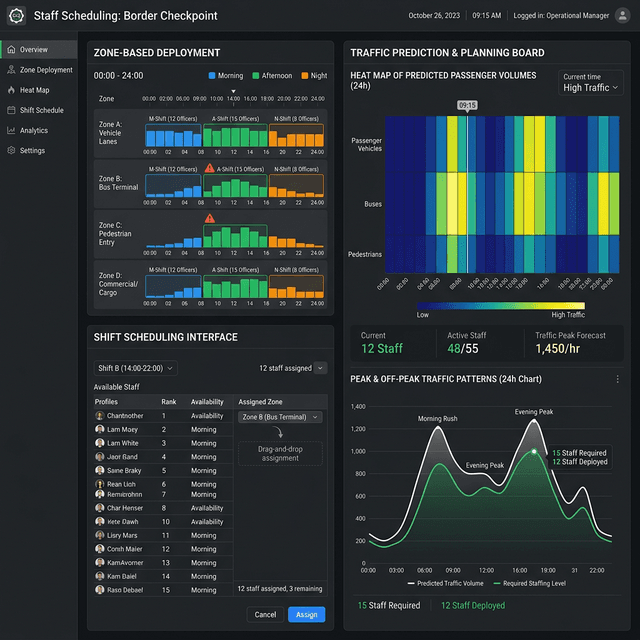
Track vehicle flow, lane availability, processing conditions, and operating rules in a shared view for shift decisions.

Connect cargo movement, inspection stages, facility conditions, and incidents across checkpoints and terminal areas.

Assess traffic impact alongside equipment and facility context when planning response or lower-impact maintenance work.
Passenger, vehicle, and cargo operations are shaped by arrival patterns, lane availability, checkpoint capacity, staffing, facility conditions, equipment readiness, and incident response. Each system shows part of the picture. Traffic Flow Operations brings those signals into one operating context so teams can understand pressure earlier and coordinate a response with the people responsible for the operation.
TrafficOps provides the domain model and operational workflows for queues, passenger flow, vehicle flow, cargo movement, checkpoints, incidents, rules, simulation, and operations-center dashboards. It sits inside a broader DataMesh solution:
This composition gives operators a complete workflow while keeping the role of the TrafficOps module explicit.
TrafficOps currently provides product surfaces for operations dashboards, queue and flow views, checkpoint and equipment configuration, passenger, vehicle, and cargo operations, incident handling, rules, reporting, simulation, what-if analysis, and reviewed recommendations. The exact data sources and automation depth are configured for each deployment.
Forecasts and scenario results support operational judgment. Their acceptance criteria are established with the customer using available data, operating rules, and agreed performance measures.
Lane allocation, staffing, security, incident response, and maintenance changes carry real operational consequences. FactVerse AI Agent presents supporting evidence and response options; authorized operators review, approve, dismiss, or revise the action according to site procedures. The decision record provides context for after-action review without bypassing existing authority.
A practical evaluation begins with one checkpoint, terminal area, corridor, or flow type. The project team selects available data, defines queue and service measures, models the relevant operating rules, and evaluates a small set of recurring decisions. Expansion follows after operators confirm that the shared context and recommendations improve their planning process.
Current public DataMesh references demonstrate infrastructure safety workflows and complex-facility digital twins. TrafficOps capability is evaluated directly against the customer's own flow data and operating environment.
Select a location, flow type, decision owner, data window, and operational question. DataMesh can then define the TrafficOps configuration, integration scope, AI Agent workflow, review process, and acceptance measures for a focused evaluation.
TrafficOps is the FactVerse industry module for flow, queue, checkpoint, vehicle, cargo, incident, simulation, and operations-center workflows. The full solution also uses Data Fusion Services, FactVerse, FactVerse AI Agent, and Inspector where field execution is required.
The integration scope can include lane and checkpoint systems, counters, schedules, sensors, facility systems, equipment telemetry, incident tools, and maintenance systems through reviewed interfaces and Data Fusion Services.
FactVerse AI Agent can analyze conditions and propose actions. Operators review the evidence and retain authority over lane, staffing, maintenance, and incident decisions. Approved actions follow the operating systems and procedures selected for the deployment.
A focused evaluation uses the operator's own flow history, rules, queues, and facility context. The team agrees baseline metrics, runs selected scenarios, reviews recommendations, and compares observed outcomes before expanding scope.
The operating model can be configured for multiple facilities or regions when data ownership, terminology, access control, and cross-site coordination are defined during solution design.
Continue with the most relevant products, solutions, guides, and public references for this topic.