Data readiness comes before AI scale
Industrial AI projects often stall when the model can read documents but cannot reliably identify the asset, location, signal, work record, or approval rule behind a decision. In real operations, the data foundation matters as much as the model.
Data readiness means preparing the operating context that AI agents and digital twins need: source systems, asset identities, spatial structure, live signals, alarm history, work orders, inspection evidence, SOPs, documents, permissions, and outcome records.
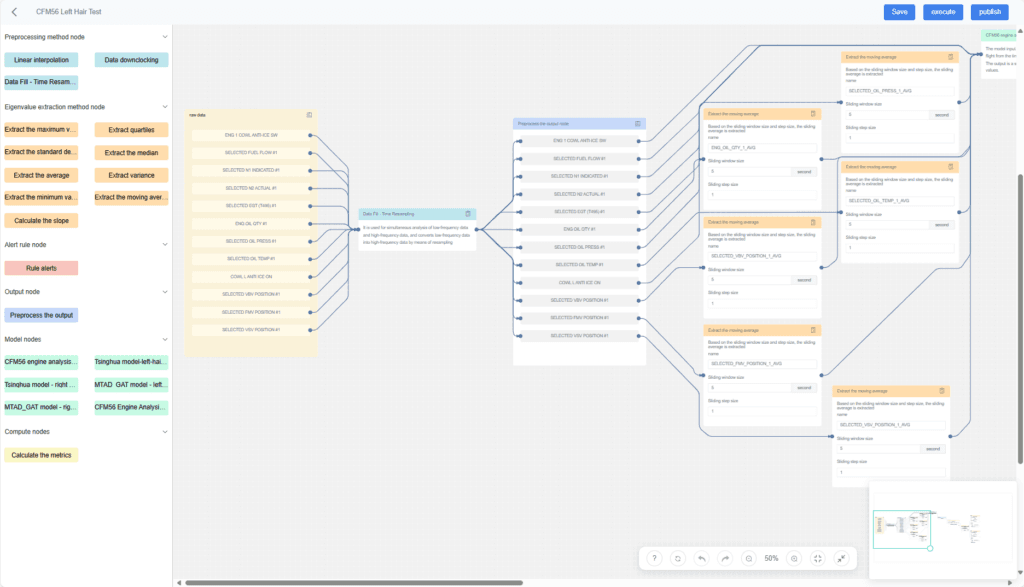
Data Fusion Services is the part of the FactVerse stack that prepares this foundation. It connects source systems, maps fields to twin entities, normalizes data, computes indicators, and makes the resulting context usable by FactVerse Twin Engine, FactVerse AI Agent, Inspector, dashboards, and analytics workflows.
Start from the operating workflow
The first question should be operational: what decision or task should improve?
Useful starting points include predictive maintenance for critical equipment, facility inspection routes, data center asset management, heating-network operations, semiconductor facility systems, warehouse equipment checks, and digital SOP execution. Each workflow defines which data is necessary and which data can wait.
| Workflow | Data that matters first |
|---|---|
| Predictive maintenance | Asset hierarchy, sensor trends, alarms, maintenance history, inspection results, work-order outcomes |
| Facility inspection | Space hierarchy, asset list, inspection points, checklists, photos, issue categories, closure records |
| Data center operations | Rooms, racks, facility equipment, meters, alarms, energy readings, maintenance records, asset ownership |
| HeatOps | Heat sources, substations, meters, temperatures, pressure, flow, weather, dispatch logs, field tasks |
| Semiconductor facility operations | Utility equipment, sub-fab systems, alarms, operating limits, work orders, operator notes |
| Operator guidance | SOPs, task steps, equipment references, safety notes, training records, approval requirements |
Starting from a workflow keeps the data model tied to operating value.
Build a source inventory
Industrial sites usually have useful data spread across many systems. A source inventory should describe which systems exist, what each source owns, how data is accessed, how often it updates, and who approves use.
Typical sources include SCADA, BMS, EMS, PLCs, historians, IoT platforms, MES, ERP, CMMS, EAM, GIS, BIM, meters, spreadsheets, drawings, manuals, SOP repositories, inspection tools, training systems, and document libraries.
For each source, record:
- owner and business purpose
- connection method and access boundary
- available fields, tags, documents, and records
- update frequency, latency, and historical retention
- unit, timestamp, naming, and quality issues
- security, privacy, and approval requirements
This creates the delivery map for data integration.
Establish asset and space identity
AI Agent workflows need stable references. A pump, AHU, UPS, heat exchanger, valve, crane, vehicle, room, line, or substation should have an identity that can be recognized across systems.
FactVerse and Twin Engine use this identity layer to connect spaces, equipment, systems, relationships, documents, signals, and work records. Data Fusion Services maps source fields and tags to those entities so a signal is attached to the right object in the twin.
Good identity design covers:
- site, building, floor, zone, room, line, route, and service area
- asset class, asset ID, display name, model, location, and owner
- system relationships, upstream and downstream dependencies, and parent-child structure
- source-system aliases and tag naming patterns
- document links, SOP links, inspection points, and work-order references
This identity layer turns raw data into operational context.
Prepare time-series and event data
Continuous operations depend on clean signals. Temperature, vibration, current, pressure, flow, energy, valve state, alarm state, and equipment status need consistent units, timestamps, sampling rules, and quality flags.
Data Fusion Services can help normalize units, align timestamps, handle missing values, compute derived indicators, and mark quality issues. The goal is to make live and historical signals reliable enough for dashboards, AI review, maintenance analysis, and machine learning datasets.
Teams should document:
- unit conventions and conversion rules
- time zone, timestamp source, and clock drift risks
- sampling rate and aggregation rules
- missing data, outliers, flat lines, and sensor replacement events
- alarm severity, acknowledgement, reset, and repeat-event logic
- calculated indicators and their formulas
Connect workflow records and SOP context
AI recommendations become useful when they can move into execution. That requires work-order records, inspection results, issue categories, acceptance notes, photos, SOPs, manuals, training records, and approval paths.
Inspector, Checklist, and connected CMMS or EAM systems provide the field side of the loop. They record who reviewed a finding, what action was taken, what evidence was captured, and whether the condition improved.
SOP and document context should be linked to assets and workflows. The AI Agent can then retrieve the right procedure, summarize relevant history, prepare a task recommendation, and keep the human reviewer in the approval path.
Make data useful for machine learning
Machine learning needs more than raw sensor history. The useful dataset includes the signal, the asset context, the operating state, the human decision, the action taken, and the outcome.
A predictive maintenance model, for example, needs to know which asset produced the signal, whether the site was in normal operation, which alarms appeared, which work orders followed, what technicians found, and whether the condition improved after action. These records support training, retraining, evaluation, and recommendation tuning.
The data pipeline should preserve:
- input signals and features
- asset and location context
- operating state and process conditions
- human review decisions and rejected suggestions
- work-order actions and completion evidence
- post-action readings and outcome labels
- model version, recommendation version, and review metrics
This keeps machine learning connected to verifiable operations.
Governance and rollout controls
Data readiness also depends on governance. Each source needs an owner. Each mapped entity needs a steward. Each AI-enabled workflow needs rules for access, approval, change management, and evidence retention.
For industrial deployments, governance should cover data lineage, cybersecurity boundaries, role-based access, model review, site acceptance criteria, change history, localization, and rollback plans. These controls let teams scale beyond a pilot without losing trust in the data foundation.
DataMesh rollout pattern
- Choose the workflow - Select one operating loop with clear ownership and measurable results.
- Inventory sources - List systems, tags, records, documents, owners, access methods, and data quality risks.
- Model identity - Define spaces, assets, systems, relationships, aliases, and ownership in FactVerse.
- Map and normalize data - Use Data Fusion Services to connect sources, bind fields to twin entities, normalize units, align timestamps, and compute indicators.
- Attach execution context - Connect Inspector, Checklist, CMMS or EAM workflows, SOPs, evidence fields, and approval rules.
- Prepare AI review - Feed trusted context to FactVerse AI Agent for evidence summaries, anomaly review, recommendation drafting, and human approval.
- Capture outcomes - Use field records and post-action readings to improve data quality, model evaluation, and rollout decisions.
Readiness checklist
- Does the workflow have an owner and a measurable operating result?
- Are source systems, documents, tags, and records inventoried with owners?
- Are assets and spaces mapped consistently across systems?
- Are units, timestamps, sampling rates, and data quality issues documented?
- Are work orders, inspections, SOPs, photos, and acceptance records connected?
- Can the AI Agent explain recommendations using traceable evidence?
- Can human review decisions and rejected suggestions be preserved?
- Can outcome records support model training, retraining, and evaluation?
- Are cybersecurity, access control, data lineage, and change management defined?
Public references
The Data Fusion Services product page describes the data integration layer of the FactVerse stack.
The FactVerse AI Agent operations loop guide explains how AI Agent recommendations move into human-reviewed field execution.
The Yokogawa and DataMesh predictive maintenance reference, NIO smart factory reference, and JTC collaboration show public examples of industrial data, digital twin context, and operational workflows.