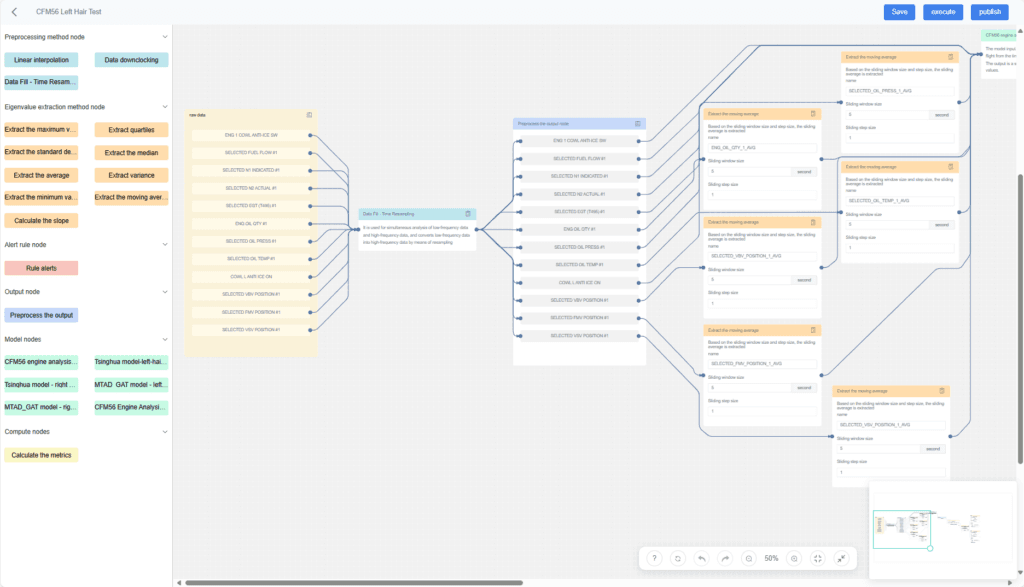
Real-time facility data integration
Connect BMS, CMMS, IoT, historian, and enterprise data into a shared operational data layer for facility and production digital twins.
Seamless Data Integration & Insights
DataMesh FactVerse Data Fusion Services unifies data from multiple sources — such as IoT sensors, enterprise systems, and operational logs — into a single digital environment within FactVerse. By eliminating data silos and providing analytics and ML platform integration, Data Fusion Services accelerates decision-making, supports continuous optimization, and empowers businesses to harness the full potential of their digital twin strategies.
Connect data, workflows, and field execution so teams can understand context, act faster, and keep work traceable.
Connect via REST API, MQTT, OPC UA, BACnet, Modbus, JDBC, CSV upload, Microsoft Fabric, and pre-built adapters for Siemens, Honeywell, Kepware, PI, and Azure IoT Hub. Ingest data in minutes with no custom middleware.
AI automatically maps raw sensor tags and data fields to digital twin entities — no manual schema mapping required. The system recognizes naming patterns, unit types, and hierarchies to create accurate twin bindings on first import.
Pre-built templates for common industrial scenarios: HVAC performance scoring, energy benchmarking, OEE calculation, alarm correlation, SPC charting, and more. Customize or clone templates to match your specific KPIs.
Automated outlier detection, gap interpolation, unit normalization, and timestamp alignment across heterogeneous sources. Data quality scores are tracked per-source so you always know which feeds need attention.
Cleansed, normalized data is stored in a centralized Data Mart optimized for direct consumption by ML/AI frameworks, BI dashboards, and the FactVerse AI Agent. No ETL pipelines to build — data flows from ingestion to model training automatically.
Live sensor values stream directly into 3D twin scenes created in FactVerse Designer. Equipment color, state, and animation update in real time — so operators see the facility as it is, not as it was in a stale report.
Practical applications and proven success scenarios across industries.
Connect BMS, CMMS, IoT, historian, and enterprise data into a shared operational data layer for facility and production digital twins.

Bind live equipment status, alarms, measurements, and calculated indicators to FactVerse scenes so teams can see operational context in the twin.
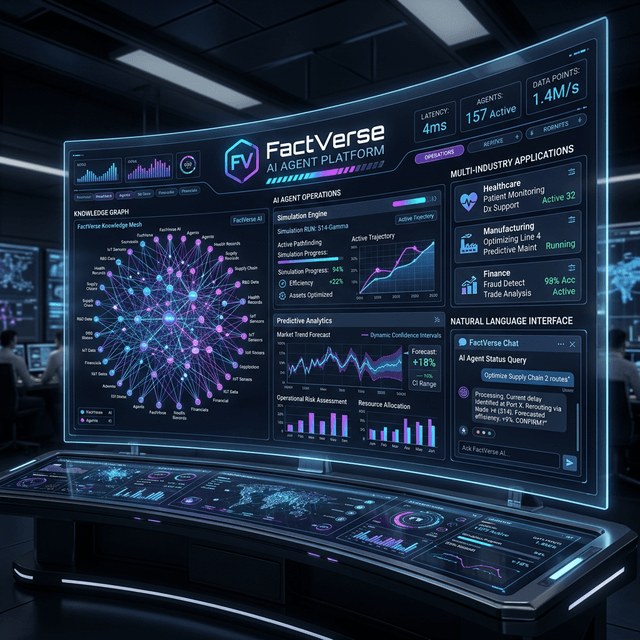
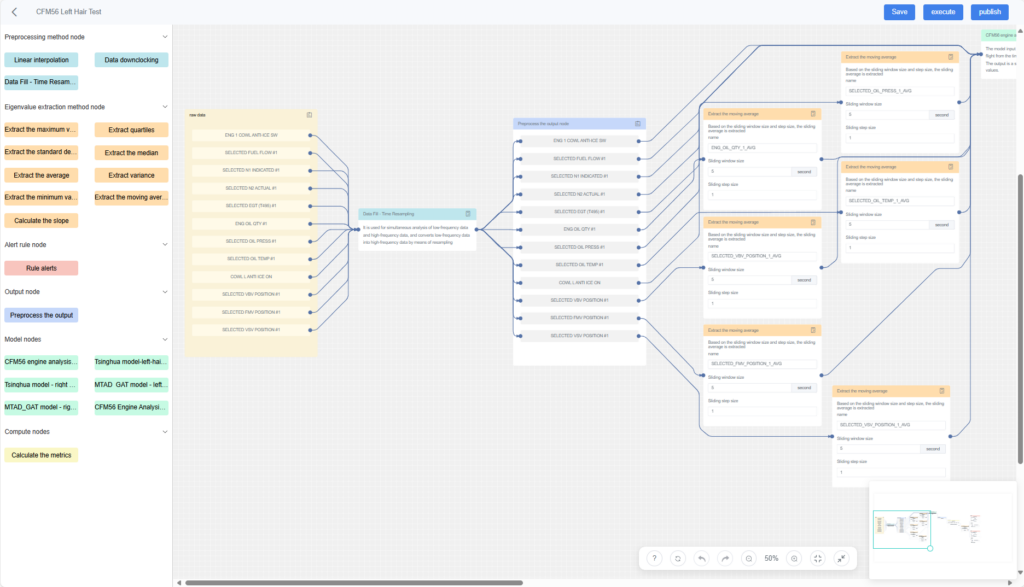
Prepare cleansed, normalized, and contextualized data for analytics, reporting, model training, and FactVerse AI Agent workflows.
DataMesh FactVerse Data Fusion Services unifies data from multiple sources — such as IoT sensors, enterprise systems, and operational logs — into a single digital environment within FactVerse. By eliminating data silos and providing analytics and ML platform integration, Data Fusion Services accelerates decision-making, supports continuous optimization, and empowers businesses to harness the full potential of their digital twin strategies.
| Module | Function |
|---|---|
| Data Ingestion | Connect to data sources via MQTT, OPC UA, HTTP, REST APIs |
| Data Mapping | Map raw data to digital twin entities automatically |
| Data Cleansing | Remove inaccuracies and ensure data quality |
| Data Computation | Transform and compute derived metrics |
| Data Mart | Centralized storage optimized for ML, AI, and BI tools |
| Visualization | Intuitive dashboards and reports |
Data Fusion Services owns the data pipeline that makes FactVerse useful in real facilities: ingestion, mapping, cleansing, computation, storage, and live twin binding. It prepares operational data for Twin Engine, Designer, Inspector, AI Agent, dashboards, and downstream analytics.
Its role is to make operational data usable, contextual, and traceable across the FactVerse stack, while AI Agent, Designer, Inspector, and customer-governed systems handle decision intelligence, simulation authoring, work execution, and site-approved control decisions.
Teams use this workflow to validate operational value through a focused pilot: better visibility, more consistent execution, cleaner records, faster handoffs, and clearer decision evidence. Exact impact depends on site scope, data readiness, workflow maturity, and rollout depth.
Start by defining clear objectives (streamlining real-time data usage or accelerating ML initiatives). Assess existing data sources and identify protocols (MQTT, OPC UA, etc.) for data ingestion. Work with DataMesh or a certified partner to configure Data Fusion Services modules — Data Ingestion, Mapping, Cleansing, Computation, Data Mart, and Visualization. Conduct a pilot then roll out organization-wide with training and optimization.
Data Fusion Services follows a license and services model: (1) Node/Server License covers on-premises or private-cloud deployment to host the Data Fusion Services environment and manage data processing tasks. (2) Optional Service Fees include customization or integration services for specific use cases or advanced AI/ML configurations.
The Data Ingestion module uses standard protocols (MQTT, OPC UA, HTTP, etc.) to pull data from MES, ERP, and other systems. REST APIs or flat-file inputs also supported. Once ingested, Data Fusion Services automatically cleanses and maps data to digital twin entities, creating a unified dataset accessible for analysis, simulation, or AI/ML processing.
Data Fusion Services recommends using Microsoft Azure as the platform hosting services.
Continue with the most relevant products, solutions, guides, and public references for this topic.