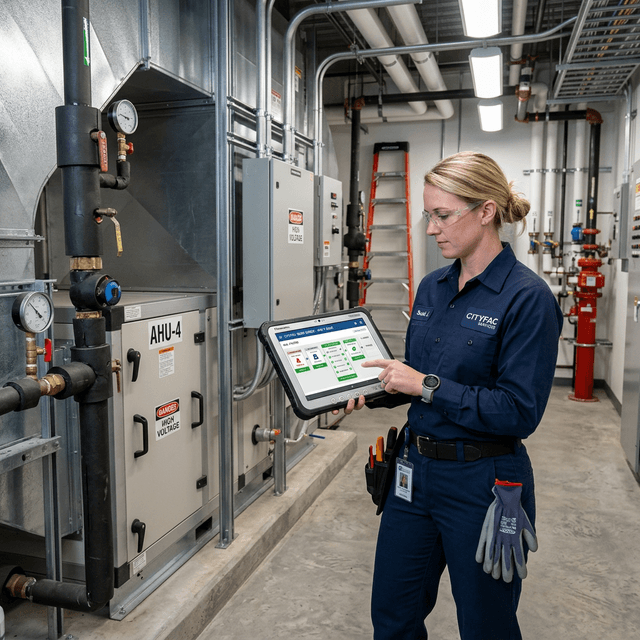
Work order consolidation
Bring maintenance tasks, inspection assignments, alarm follow-ups, and enterprise work orders into one workflow view connected to the digital twin.

Unified Work Order Management
DataMesh Checklist is a robust solution designed to centralize and streamline work order management by connecting digital twins, real-time operational data, and diverse enterprise systems into a unified platform.
Connect data, workflows, and field execution so teams can understand context, act faster, and keep work traceable.
DataMesh Checklist centralizes tasks from diverse enterprise systems into a single platform, eliminating data silos and ensuring clear, consistent workflows.
Checklist's system-of-systems approach reduces errors, automates status updates, and simplifies cross-team coordination, improving overall task execution quality.
By linking digital twins and real-time data, Checklist provides complete visibility of work orders, equipment status, and operational contexts in one place.
For customers requiring spatial guidance, Checklist can integrate AR functionality, enabling workers to view tasks and contextual information in an immersive environment when needed.
Practical applications and proven success scenarios across industries.
Bring maintenance tasks, inspection assignments, alarm follow-ups, and enterprise work orders into one workflow view connected to the digital twin.
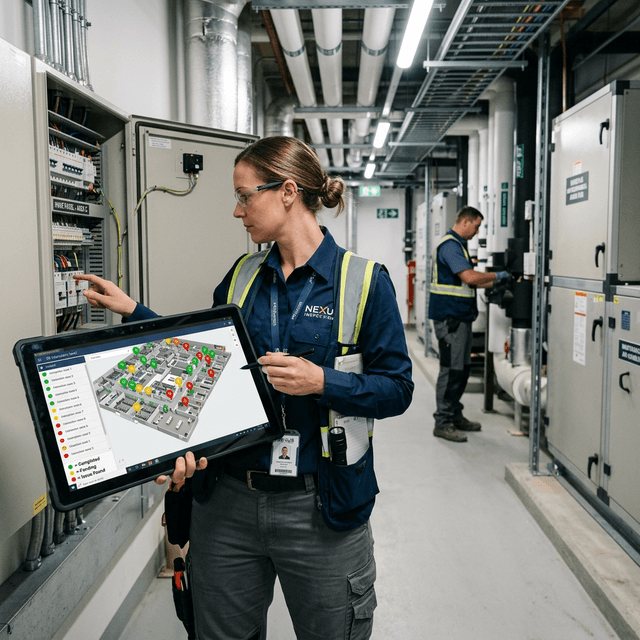
Link checklist items to assets, locations, photos, notes, and completion records so field teams can execute recurring inspections with traceable evidence.
Coordinate facility, operations, and maintenance teams around shared task status, responsible owners, and verification records.
DataMesh Checklist is a robust solution designed to centralize and streamline work order management by connecting digital twins, real-time operational data, and diverse enterprise systems into a unified platform. With the "system of systems" Digital Twin architecture of DataMesh FactVerse, Checklist provides end-to-end task oversight, ensuring accurate execution, reducing errors, and enhancing collaboration across teams.
By seamlessly integrating existing workflows, it offers a clear, data-driven approach to maintenance and operations, driving productivity and consistency in complex industrial environments.
Teams use this workflow to validate operational value through a focused pilot: better visibility, more consistent execution, cleaner records, faster handoffs, and clearer decision evidence. Exact impact depends on site scope, data readiness, workflow maturity, and rollout depth.
Start by identifying initial processes and objectives (reducing errors, improving collaboration). Assess existing systems (ERP, MES, IoT platforms) for integration points. Gather data and digital twins to link with work orders, define user roles and permissions, and collaborate with DataMesh or a partner to configure Checklist. After a pilot phase, provide training sessions and monitor key metrics (completion time, error rate).
Three components: Client Licenses for individual user access, a Checklist Service (FactVerse Node License) enabling the service on the FactVerse platform, and an optional Service Fee for customizing or extending functionality to meet specific organizational needs.
Through DataMesh FactVerse Data Fusion Services, organizations can connect CMMS, EAM, BMS, IoT, and other operational systems through APIs, webhooks, and standard interfaces, consolidating operational data, equipment status, and work orders into a unified view.
Checklist currently supports iPad and iPhone for AR-enabled workflows. DataMesh envisions leveraging next-generation AR glasses in the future as hardware continues to evolve.
DataMesh Checklist recommends using Microsoft Azure as the platform hosting services.
Continue with the most relevant products, solutions, guides, and public references for this topic.