Governance starts when data enters a decision
Industrial data governance begins when a signal, alarm, meter reading, work order, inspection note, document, or calculated indicator starts influencing an operating decision.
For an operational digital twin, data needs more than a connection. Teams need to know where the data came from, which asset or space it describes, which unit and timestamp rule applies, who owns the mapping, whether the value is reliable, which AI Agent or dashboard uses it, and what changed since the last release.
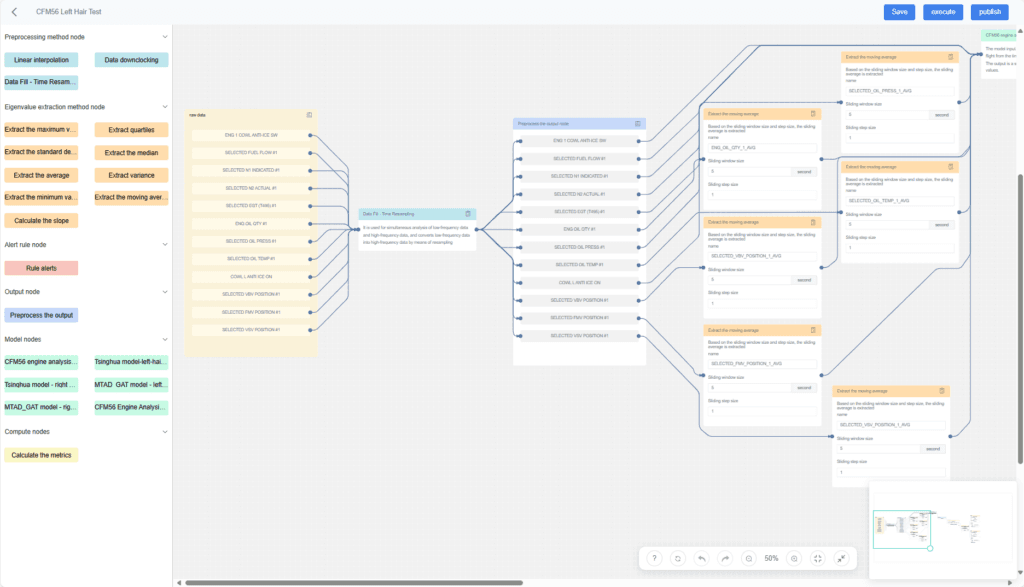
Data Fusion Services supports this operating discipline inside the FactVerse stack. It connects source systems, maps data to twin entities, cleans and normalizes fields, computes indicators, prepares data marts, and binds live context to the twin. The governance work around those steps makes connected data usable for FactVerse AI Agent, FactVerse Twin Engine, Inspector, dashboards, simulation, and machine learning workflows.
What DFS should help govern
Data governance should follow the data from the original system to every operational consumer.
| Governance area | Practical question | Why it matters |
|---|---|---|
| Source ownership | Which system owns this value and who approves use? | Prevents unclear responsibility when data is disputed |
| Access boundary | Which network, tenant, site, or role can read it? | Protects sensitive operations and customer-specific data |
| Entity binding | Which asset, space, system, route, or workflow does it describe? | Turns raw tags into operational context |
| Unit and timestamp | Which unit, time zone, clock, sampling rate, and aggregation rule apply? | Keeps trends, alarms, and comparisons meaningful |
| Quality state | Is the value missing, stale, interpolated, out of range, or sensor-replaced? | Helps AI and operators know when evidence is weak |
| Computation logic | Which formula creates a derived KPI or indicator? | Makes analytics and energy or maintenance metrics reviewable |
| Lineage | Which connector, mapping, transform, and release produced the value? | Supports troubleshooting and audit review |
| Consumer registry | Which dashboards, AI workflows, reports, or work orders use this data? | Shows the impact before changing a tag or formula |
This level of governance does not require a heavy central committee for every point. It does require visible ownership and repeatable rules for the data that drives decisions.
Govern by operational identity
Industrial systems often describe the same object differently. A pump may have one name in SCADA, another tag pattern in the historian, another asset ID in CMMS, another label in BIM, and a nickname used by technicians. Data governance needs a stable operational identity that ties those aliases together.
FactVerse provides the shared context for spaces, assets, systems, relationships, documents, data bindings, and workflows. Data Fusion Services maps source fields and tags to that context so a value is attached to the right asset, location, and operating loop.
Good identity governance covers:
- site, building, floor, zone, room, line, route, and service area
- asset class, asset ID, display name, model, owner, and lifecycle state
- upstream and downstream system relationships
- source-system aliases and naming patterns
- documents, SOPs, inspection points, and work-order references
- permission boundaries for restricted spaces, assets, and records
When identity is governed, AI Agent workflows can retrieve evidence with fewer ambiguous matches, and field teams can see why a recommendation points to a specific object.
Quality rules for live and historical data
Time-series values and events change constantly. A data pipeline needs quality rules that operators and data teams can both understand.
Common rules include:
- missing value handling
- stale data thresholds
- unit conversion rules
- timestamp and time-zone alignment
- sampling and aggregation rules
- outlier and flat-line detection
- sensor replacement records
- alarm severity, acknowledgement, and reset logic
- calculated indicator formulas and review owners
Data Fusion Services can help normalize units, align timestamps, detect quality issues, and compute derived indicators. The governance layer should record which rule was applied and who is responsible for reviewing exceptions.
For AI Agent workflows, quality status is part of the evidence. A recommendation based on fresh sensor data, recent work history, and approved calculations should be treated differently from a recommendation based on stale values or a temporary manual upload.
Lineage and change control
Industrial data changes quietly. A BMS point can be renamed. A meter can be replaced. A historian tag can move to a new gateway. A CMMS field can change meaning after a process update. A KPI formula can receive a new denominator.
The twin may still render correctly while the underlying data points to the wrong source. Governance should make these changes visible before they affect AI review, dashboards, work orders, or external reporting.
A practical change record should capture:
- source system and connector affected
- tag, field, document, or formula changed
- mapped asset, space, system, or workflow affected
- downstream consumers affected
- reviewer and approval status
- effective date and rollback option
- evidence used to validate the change
This change control is especially important for regulated operations, data centers, semiconductor facility systems, biopharma workflows, sustainability evidence, and multi-site programs where the same indicator may be reused in several reports and decision loops.
Access, evidence, and approval
Operational data often includes sensitive details: restricted rooms, customer-specific layouts, production states, equipment health, energy profiles, maintenance findings, and service records. Governance should preserve access boundaries as data moves from the source system into the twin.
Useful controls include:
- role-based access for spaces, assets, documents, dashboards, and AI workflows
- site-level and customer-level data boundaries
- approval rules for AI-assisted recommendations
- evidence retention for inspections, work orders, and review decisions
- audit logs for mapping changes and data exports
- clear handling of temporary uploads and manually corrected values
Inspector and connected work systems help close the loop by recording who reviewed a finding, what action was taken, what evidence was captured, and whether the result improved. Those records become governance data for the next AI review or machine learning cycle.
Data governance for machine learning
Machine learning workflows need more than clean sensor history. They need data that explains what happened in the physical site.
For predictive maintenance, that means the input signal, asset identity, operating state, alarm context, technician review, work-order action, completion evidence, and post-action reading. For energy analysis, it means meters, spaces, equipment groups, operating schedules, weather, formulas, and improvement records. For simulation, it means scenario assumptions, asset versions, process states, and approved data ranges.
Data governance should preserve:
- feature definitions and source fields
- quality filters applied before training
- labels created from work orders, inspections, or outcomes
- model version and recommendation version
- human review decisions and rejected suggestions
- post-action results used for evaluation
- dataset refresh schedule and approval owner
This lets teams improve models without losing the operational evidence behind them.
A DataMesh rollout pattern
- Choose one decision loop - Start with a workflow such as predictive maintenance, facility inspection, data center asset review, energy evidence, or digital SOP execution.
- Name data owners - Assign owners for source systems, asset identity, data mappings, quality rules, calculations, permissions, and downstream workflows.
- Map operational identity - Use FactVerse to align spaces, assets, systems, relationships, documents, workflows, and aliases.
- Connect and govern data - Use Data Fusion Services to connect sources, bind fields to twin entities, normalize units, align timestamps, compute indicators, and mark quality status.
- Register consumers - Record which dashboards, AI Agent routines, Inspector forms, reports, and machine learning datasets use the governed data.
- Review changes before release - Validate tag changes, formula updates, connector changes, and permission changes before they affect production workflows.
- Capture outcomes - Use Inspector, Checklist, CMMS, EAM, and customer systems to capture field evidence, review decisions, and post-action results.
- Improve the rules - Use exceptions, failed mappings, stale data, rejected AI suggestions, and field feedback to improve the governance model.
Governance checklist
- Does each governed source have a business owner and a technical owner?
- Are asset, space, system, and workflow identities consistent across systems?
- Are source aliases and tag naming rules documented?
- Are units, timestamps, sampling rates, and quality rules visible?
- Are calculated indicators tied to formulas, owners, and review dates?
- Is lineage preserved from source connector to twin object to downstream consumer?
- Are dashboards, AI Agent workflows, reports, and datasets registered as consumers?
- Are sensitive spaces, customer records, and restricted documents protected by role?
- Are field evidence and work-order outcomes captured for review and machine learning?
- Is there a change path for renamed tags, replaced sensors, formula changes, and broken bindings?
Public references
The Data Fusion Services product page describes the data integration layer of the FactVerse stack.
The Data Readiness guide explains how to prepare the first data foundation for AI Agent and operational digital twin workflows.
The Operational Digital Twin Model Governance guide explains how to keep models, data bindings, and field changes aligned after go-live.
The Industrial Knowledge Graphs guide explains how semantic relationships connect assets, spaces, systems, signals, documents, and AI Agent reasoning.