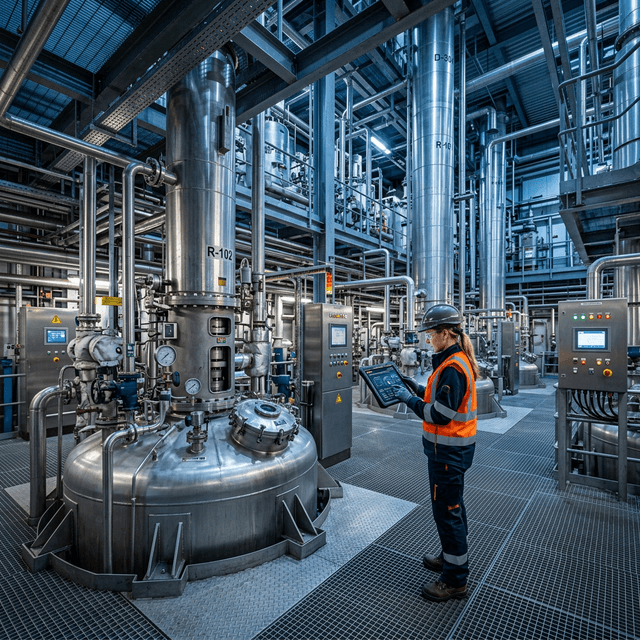
Equipment maintenance management
Track equipment health and maintenance workflows through Inspector, from alarm and inspection to work order, field execution, and verification.
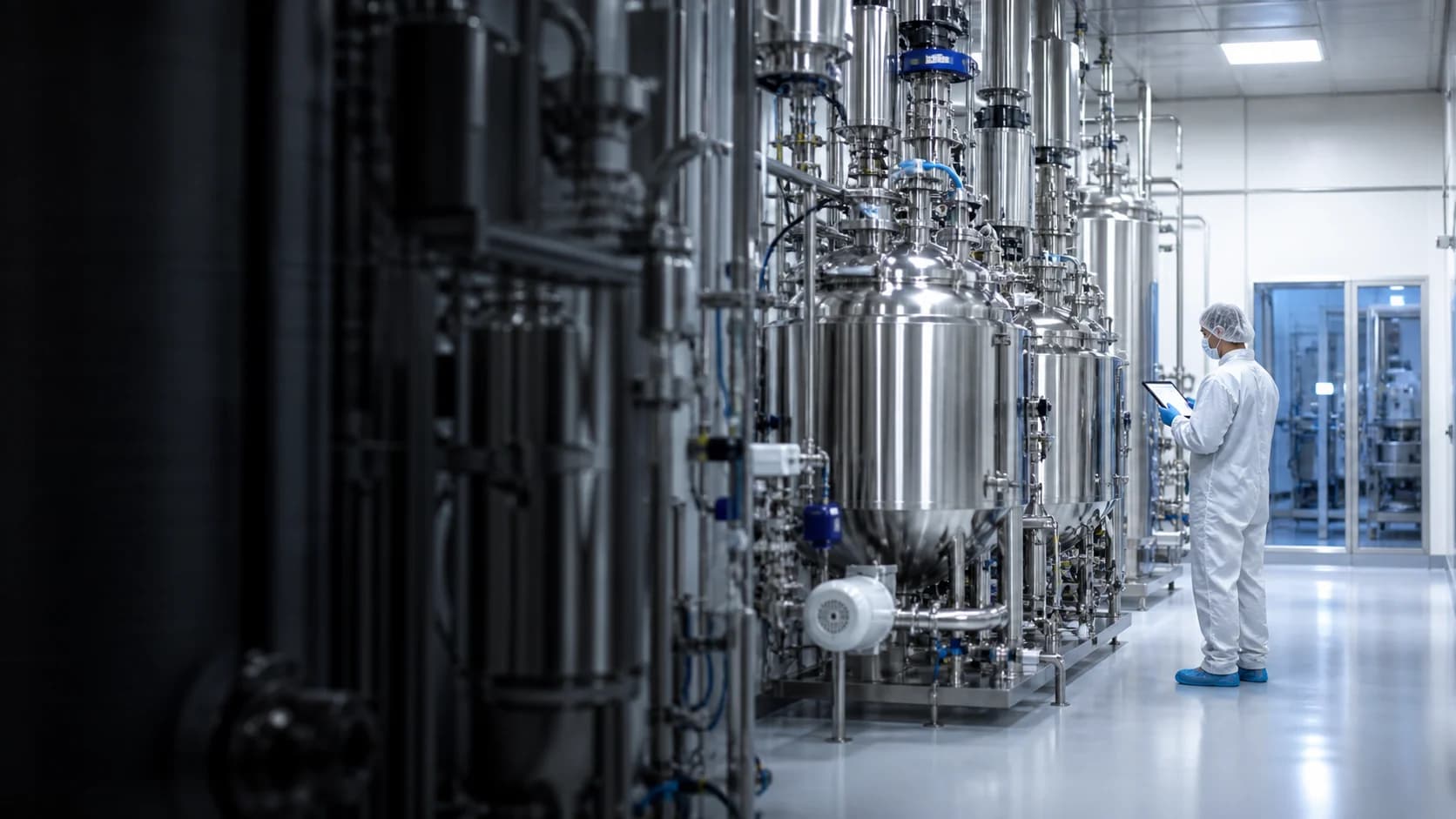
Human-centered SOP execution, training, and GMP/CSV readiness
Connect process data, equipment status, safety context, SOPs, maintenance workflows, operator training, and GMP/CSV evidence into an operational digital twin for chemical and pharmaceutical facilities.
Connect data, workflows, and field execution so teams can understand context, act faster, and keep work traceable.
Data Fusion Services connects DCS, SCADA, historians, equipment telemetry, alarms, and maintenance systems into the operating context around existing process control.
Map reactors, vessels, pumps, valves, utilities, zones, sensors, documents, and maintenance history into a shared operating context.
Inspector connects alarms, inspections, work permits, field tasks, evidence capture, and verification so maintenance stays tied to process context.
Director and DataMesh One turn manual and semi-automated operating procedures into guided 3D training and field instructions for tasks that still depend on skilled operators.
FactVerse AI Agent helps engineers identify abnormal trends, repeated alarms, and operating patterns that deserve human review.
Organize SOP versions, training completion, execution records, inspection evidence, and change history to support GMP review and computerized system validation.
Practical applications and proven success scenarios across industries.
Track equipment health and maintenance workflows through Inspector, from alarm and inspection to work order, field execution, and verification.
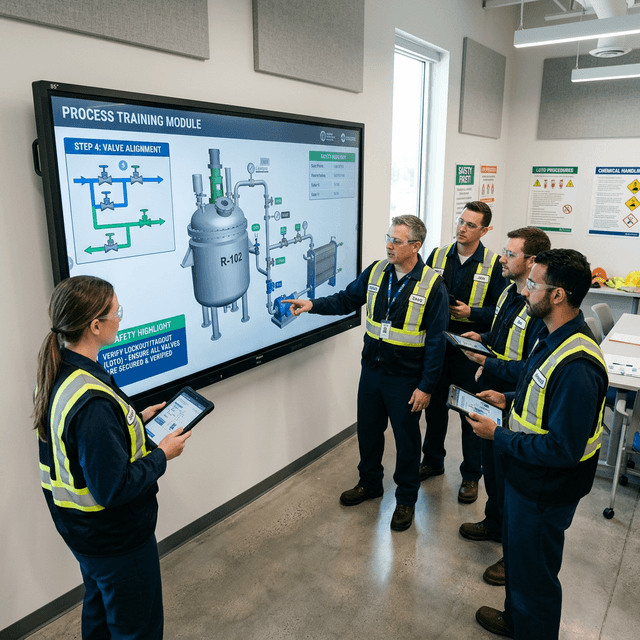
Deploy guided training and operating instructions for biopharma production steps that cannot yet be fully handled by robots or automation, including tasks that require operator judgment, clean execution, and repeatable handoff.
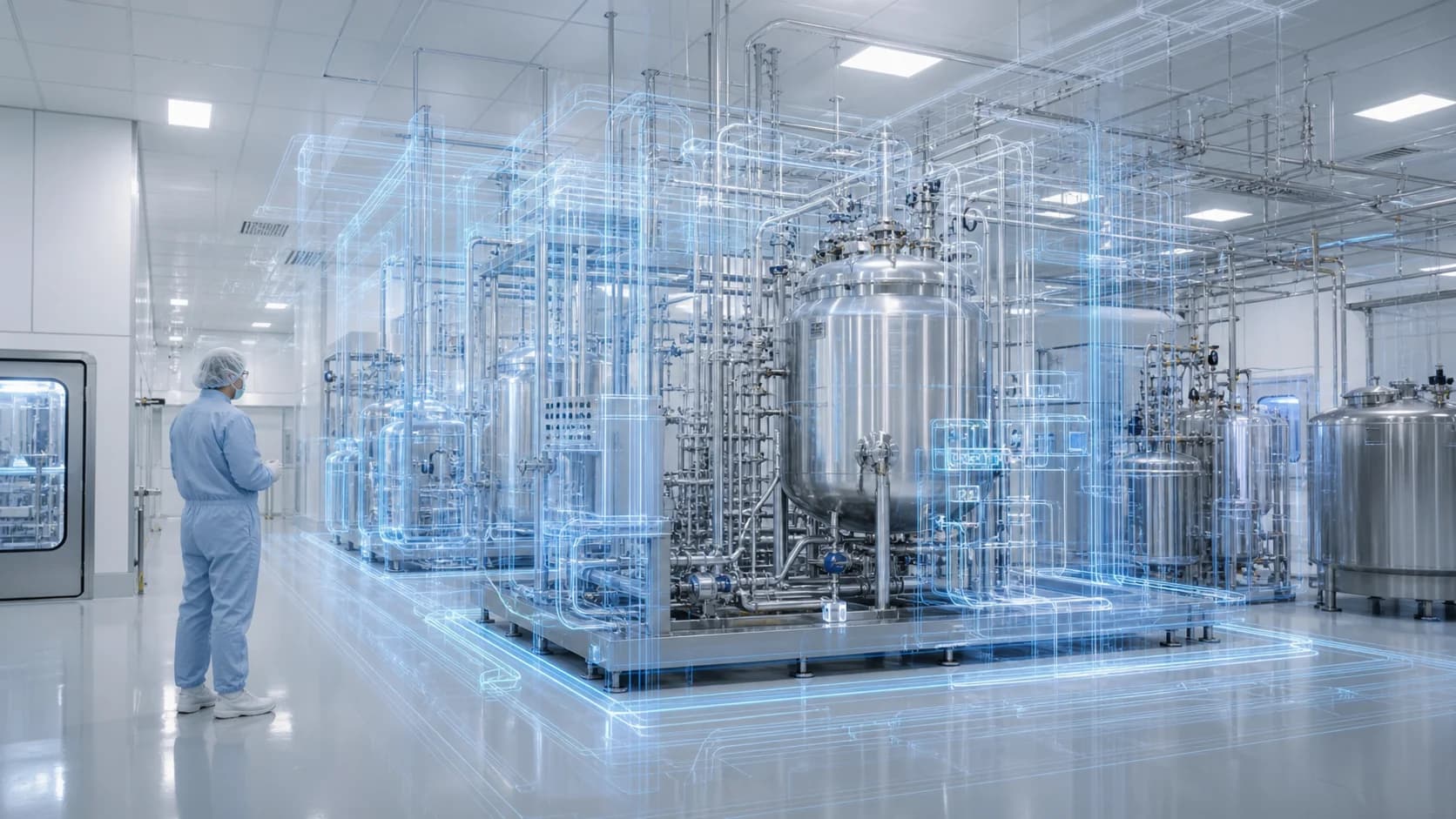
Connect process data, equipment status, safety context, utilities, and maintenance activity in a spatial digital twin.
Use AI-assisted analysis to review repeated alarms, parameter drift, maintenance history, and corrective actions before decisions are made.
Chemical and pharmaceutical facilities operate under strict expectations for safety, quality, reliability, and traceability. Process data, equipment state, alarms, SOPs, permits, maintenance records, training evidence, and validation materials often live in separate systems, making it difficult for operators and engineers to understand the full operating picture.
DataMesh connects these signals into an operational digital twin around DCS, SIS, SCADA, and validated quality systems. It helps teams see the process environment, understand equipment context, standardize field work, and preserve evidence for review.
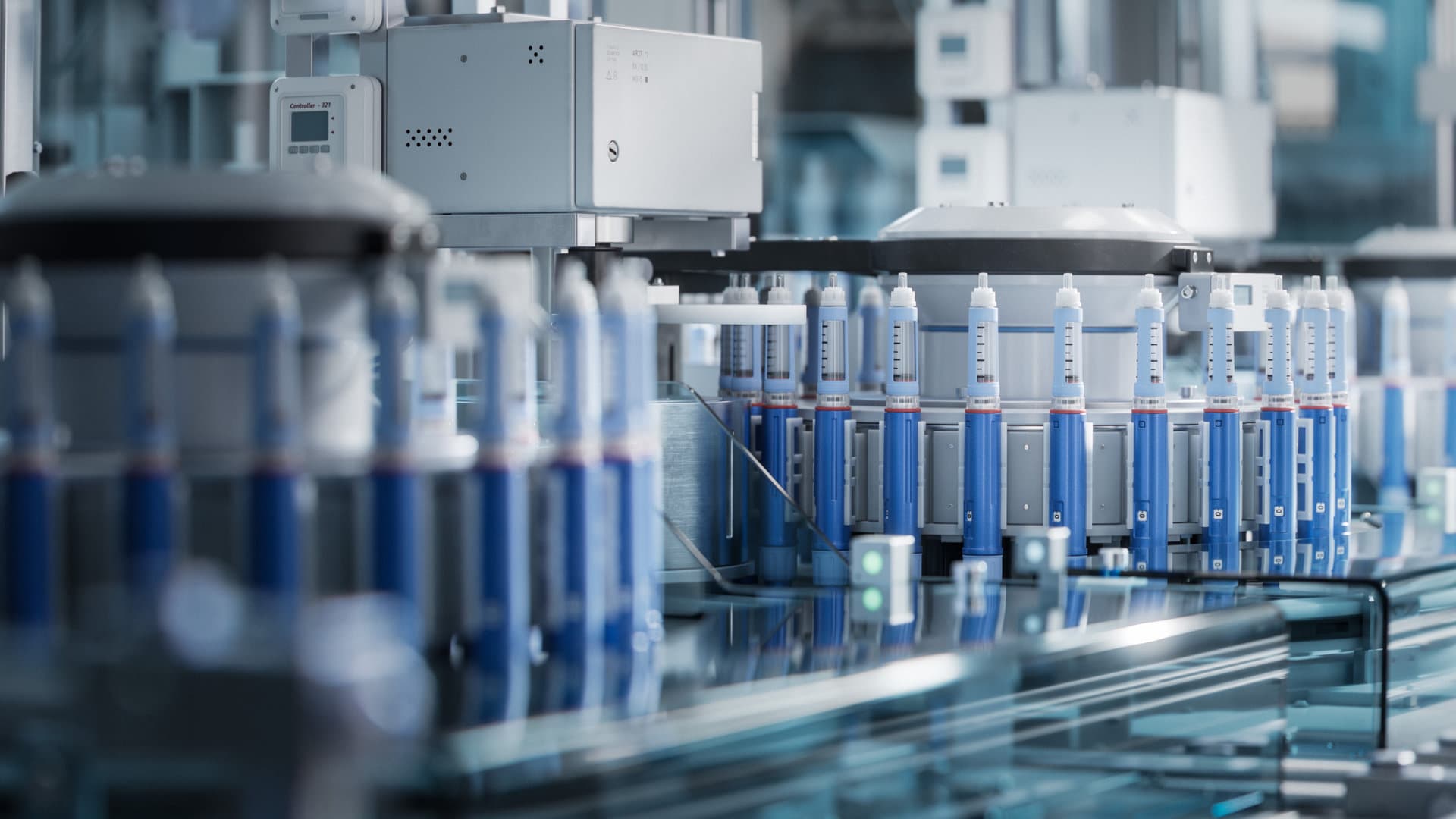
In multiple biopharma production environments, DataMesh has been used for operator training and guided operating instructions. Many regulated production steps still require trained operators, clean-room discipline, manual confirmation, coordinated handoff, and human judgment before automation or robotics can reliably take over.
Director turns expert procedures into repeatable 3D SOPs and training content. DataMesh One and Inspector can bring those instructions into the field, connect them to assets and work orders, and preserve evidence of what was trained, performed, reviewed, and corrected.
Inspector links alarms, inspections, maintenance tasks, field records, and verification in the same asset context. Director turns expert procedures into guided 3D SOPs and training content. FactVerse AI Agent supports engineering review by highlighting abnormal patterns and repeated issues, while final decisions remain with qualified teams and approved procedures.
Useful workflows include:
For regulated or quality-sensitive operations, DataMesh can help organize records and evidence around how work is trained, executed, reviewed, and changed. GMP requires controlled, repeatable, and traceable manufacturing practices. CSV requires computerized systems used in regulated workflows to be validated for their intended use.
DataMesh supports those programs by linking SOPs, training completion, work orders, inspection records, equipment history, evidence capture, corrective actions, and change history to the relevant asset and process context. This supports internal review, audit preparation, and validation evidence gathering. Formal validation strategy, quality approval, and regulatory acceptance remain the customer's responsibility.
A strong pilot should show whether field work becomes more consistent, abnormal events are reviewed with better context, maintenance closure is more traceable, and training knowledge transfers more reliably.
Continue with the most relevant products, solutions, guides, and public references for this topic.
DataMesh is an operational digital twin, analysis, SOP, training, and maintenance execution layer. Process control remains with validated DCS, SIS, SCADA, and approved plant procedures.
GMP focuses on controlled, repeatable, traceable manufacturing practice. CSV, or computerized system validation, verifies that computerized systems used in regulated processes are fit for intended use. DataMesh can help organize SOP versions, training evidence, execution records, inspection evidence, change history, and review materials. Formal validation, compliance acceptance, and quality release remain governed by the customer's quality system and regulatory framework.
Common sources include DCS, SCADA, historians, OPC UA, CMMS, EAM, LIMS, alarm systems, IoT sensors, and document systems, depending on site architecture.
AI Agent supports analysis and review by highlighting trends, repeated alarms, and likely risk areas, with operator approval and safety procedures governing execution.
Start with one high-value maintenance workflow, one critical asset group, one training procedure, or one repeated abnormal event review.
Use a focused proof of concept to validate operational value before a wider rollout.