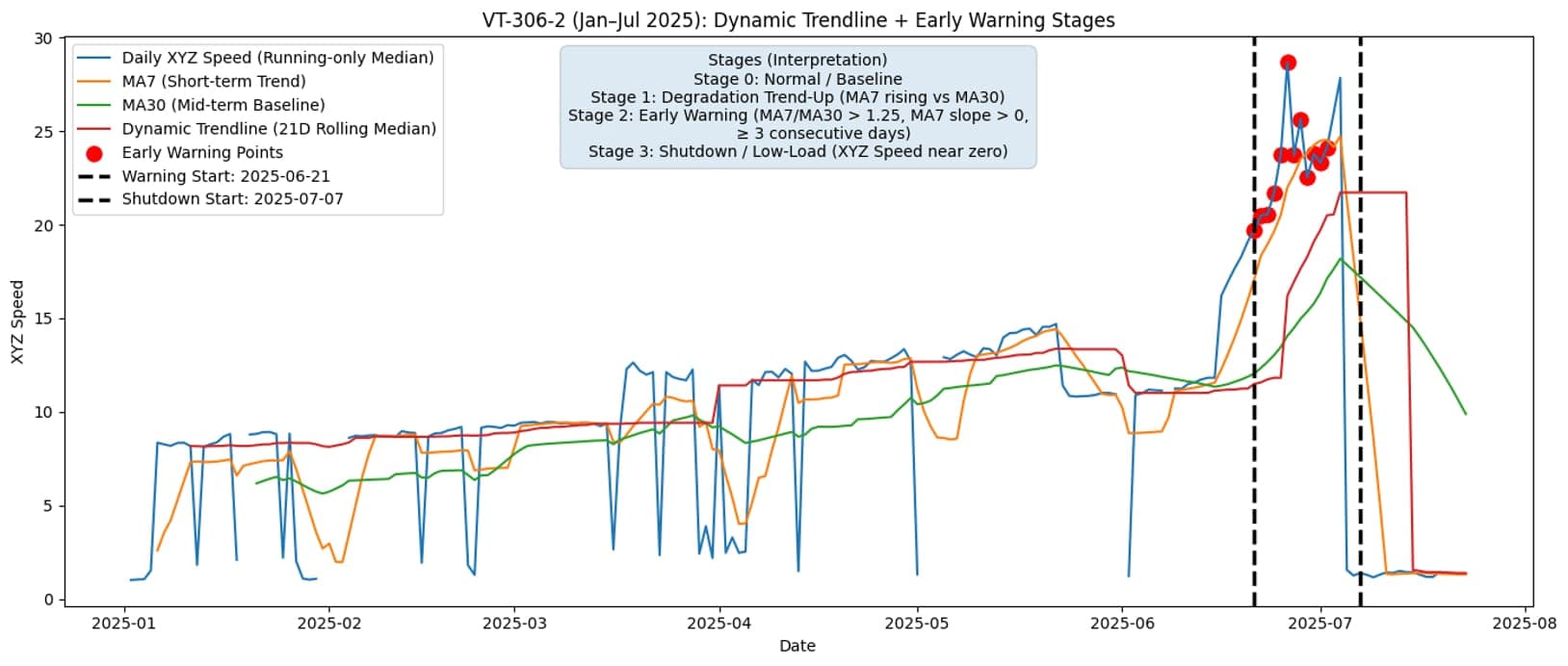
ลูป maintenance เริ่มหลังจากมีสัญญาณ
Predictive maintenance สร้างคุณค่าเมื่อสัญญาณความเสี่ยงถูกนำเข้าสู่กระบวนการทำงานที่ชัดเจน แนวโน้ม vibration, temperature drift, current anomaly หรือ alarm ที่เกิดซ้ำควรนำไปสู่คำถามเชิงปฏิบัติ: asset ใดได้รับผลกระทบ หลักฐานน่าเชื่อถือแค่ไหน ระบบใดเกี่ยวข้อง ทีมใดควรตรวจทาน และงานภาคสนามใดควรตามมา
DataMesh Predictive Maintenance ใช้ digital twin เชื่อมขั้นตอนเหล่านี้เข้าด้วยกัน ข้อมูล บริบทของ asset การตรวจทานด้วย AI work orders หลักฐานภาคสนาม และ verification records อยู่ใน operating loop เดียวกัน
นี่คือ workflow ของ Physical AI ในการใช้งานจริง AI ช่วยตีความ operational signals จากโลกจริง และ digital twin เชื่อมคำแนะนำเข้ากับ equipment, location, system relationships และขั้นตอน execution ที่ไซต์อนุมัติแล้ว
สิ่งที่ลูปนี้เชื่อมเข้าด้วยกัน
- Connected signals: vibration, temperature, current, pressure, runtime, alarms, historian tags และ environmental context
- Asset context: equipment hierarchy, location, operating role, system dependencies, maintenance plan, documents และ spare-part context
- AI-assisted review: trend comparison, anomaly review, degradation patterns, evidence summaries และ recommendation drafting
- Twin-based validation: spatial context, upstream/downstream dependencies, recent work, operating constraints และ field accessibility
- Work execution: Inspector work orders, Checklist tasks, assignment, field notes, photos, acceptance และ closure status
- Follow-up evidence: post-maintenance readings, repeat alarm review, condition comparison และ updated asset history
ผลลัพธ์คือ maintenance record ที่บอกได้ว่าอะไรถูกตรวจพบ เหตุใดจึงสำคัญ ใครตรวจทาน อะไรได้รับอนุมัติให้ดำเนินการ และผลลัพธ์ถูกยืนยันอย่างไร
บทบาทของ DataMesh stack
Data Fusion Services เชื่อม sensors, historians, BMS, SCADA, CMMS, EAM, IoT และ enterprise systems พร้อมเตรียม operational data สำหรับ digital twin binding, analytics และ AI review
FactVerse AI Agent เป็นชั้น decision intelligence โมดูล predictive maintenance ของ FactVerse AI Agent วิเคราะห์ signal behavior, asset relationships, maintenance history และ operating context แล้วจัดเตรียมหลักฐานและ recommended actions ให้ maintenance teams
FactVerse ให้บริบทของ digital twin เพื่อให้ทีมเห็นตำแหน่งของ asset ระบบที่รองรับ และ dependencies ที่เกี่ยวข้อง Inspector จัดการ inspections, work orders, field records, verification และ maintenance evidence ส่วน Checklist ช่วยรวม recurring tasks และงานข้ามทีม
ระบบที่ลูกค้ากำกับดูแล เช่น CMMS, EAM, BMS, SCADA และ site approval workflows ยังคงเชื่อมอยู่ตาม operating governance ของแต่ละไซต์
จากสัญญาณสู่ verified work
- เชื่อม sensor, historian, alarm, inspection และ asset data
- map assets, systems, points และ work records เข้ากับ digital twin
- ใช้ FactVerse AI Agent ตรวจ trends, abnormalities และ evidence ที่เกี่ยวข้อง
- ให้ maintenance และ engineering teams ยืนยัน finding ในบริบทของ twin
- สร้าง Inspector work order หรือ Checklist task พร้อม scope, owner และ acceptance criteria
- เก็บ completion evidence แล้วเปรียบเทียบ post-work condition กับ signal เดิม
จุดเริ่มต้นที่เหมาะกับ pilot
| Starting point | Practical focus |
|---|---|
| Rotating equipment | Pumps, compressors, motors, fans และ assets ที่มี vibration, temperature, current หรือ pressure patterns |
| Facility utility systems | HVAC, chilled water, compressed air, power distribution และ systems ที่มี recurring alarms หรือ service history |
| Production support assets | Conveyors, robotic cells, fixtures และ handling equipment ที่มีผลต่อ production flow |
| Inspection-heavy assets | Assets ที่มี rounds บ่อย recurring issues หรือ field records ที่ขาดความสม่ำเสมอ |
| Multi-site operations | Asset classes ที่ใช้ร่วมกันหลายไซต์และสามารถนำบทเรียนไปใช้ข้ามไซต์ได้ |
Pilot ที่ดีควรมี data history ที่ใช้ได้ maintenance owner ขอบเขต asset ที่จัดการได้ และ field team ที่พร้อมปิดลูปงาน
ตรวจความพร้อมของข้อมูล
- Signals มี stable identifiers, timestamps, units และ asset mapping
- Maintenance history พร้อมในระดับ asset หรือ equipment group
- Work orders มีรายละเอียดพอสำหรับ cause, action และ closure
- Asset hierarchy และ location data เชื่อมกับ digital twin ได้
- Engineering และ maintenance teams ตกลง review, approval และ escalation rules
- Field teams บันทึก evidence แบบ structured ได้
- Pilot metrics ผูกกับ verified operating records
Metrics สำหรับ validation
- เวลาตั้งแต่ signal detection ถึง human review
- สัดส่วน findings ที่เข้าสู่ planned maintenance
- คุณภาพของ work-order closure และ evidence completeness
- Repeat alarms หลัง corrective work
- Asset condition trend หลัง maintenance
- Field team response time และ task acceptance quality
- Engineering review effort สำหรับ recurring asset classes
แต่ละไซต์ควรวัดคุณค่าจาก baseline, asset scope และ operating history ของตนเอง
Public references
ประกาศของ Yokogawa และ DataMesh แสดงทิศทางสาธารณะของ AI-driven predictive maintenance ใน industrial facilities โดยเฉพาะ critical rotating equipment
กรณี Swire Coca-Cola และ Foxconn แสดงให้เห็นว่า maintenance process digitization, frontline guidance และ training ช่วยสนับสนุน execution side ของลูปนี้อย่างไร