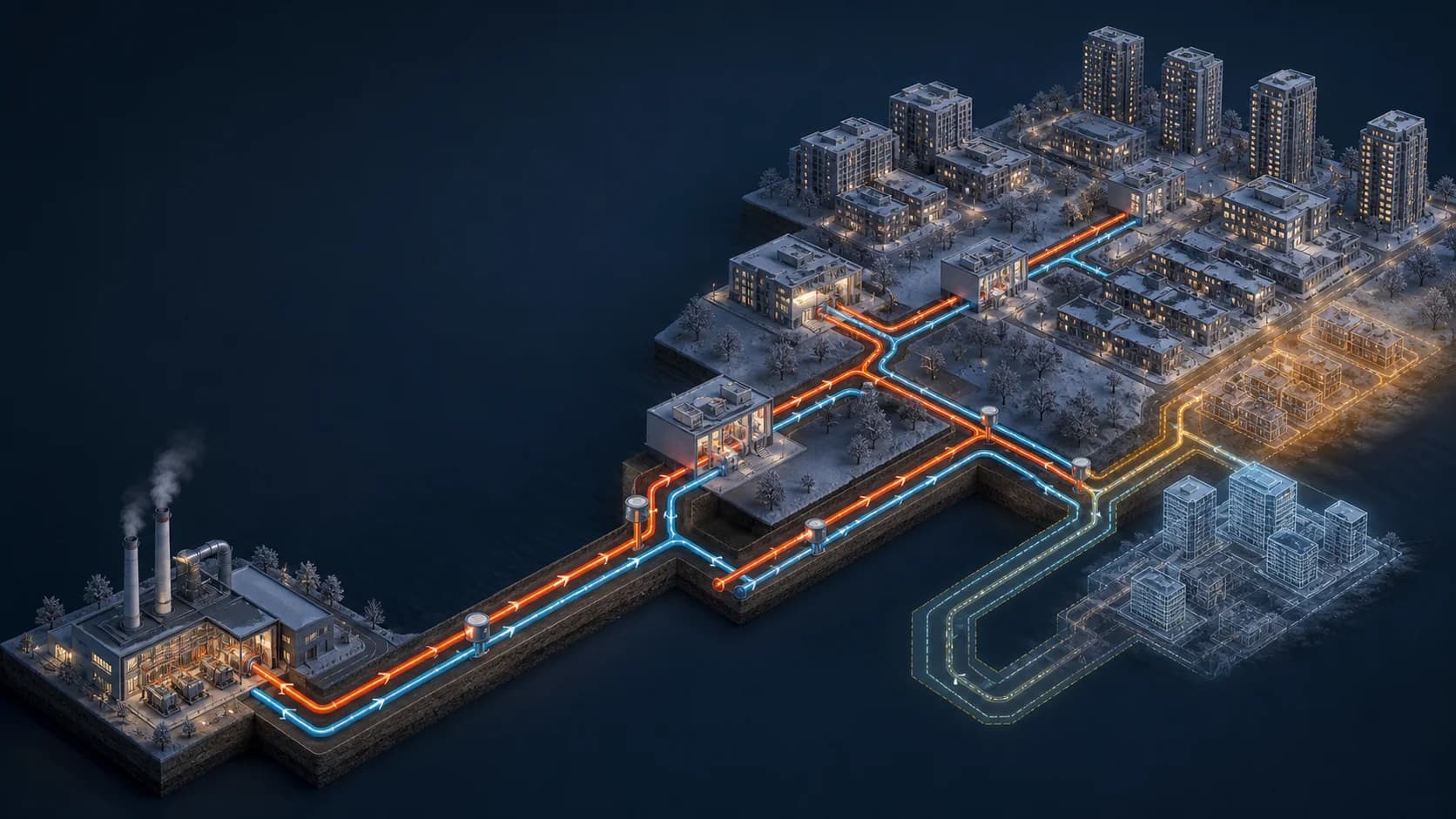
Heating operations need connected context
District heating teams make decisions from many sources at once: heat source status, primary and secondary network data, substation conditions, building-side feedback, weather forecasts, complaint records, field inspections, maintenance history, and dispatch rules. Each system explains part of the operation. The hard work is connecting those signals into a decision that operators can review, approve, execute, and verify.
HeatOps is the district-heating industry module of FactVerse AI Agent. It uses Data Fusion Services to connect operating data, FactVerse to keep network and asset context, and Inspector or customer work-order systems to keep field action traceable.
The purpose is practical: help heating teams forecast demand, diagnose network behavior, review dispatch options, coordinate field work, and preserve the operating evidence behind decisions.
What the operating model connects
| Layer | Operating context |
|---|---|
| Heat sources | Boilers, heat pumps, CHP, waste heat, storage, fuel, electricity, capacity, and availability |
| Network | Primary network, branch lines, pressure, flow, supply and return temperature, valves, leakage, and insulation context |
| Substations | Heat exchangers, pumps, control valves, meters, differential pressure, efficiency, alarms, and service history |
| Buildings | Building zones, indoor feedback, user-side temperature, comfort issues, thermal inertia, and service priority |
| External context | Weather forecast, historical load, holidays, occupancy patterns, tariff context, and service requests |
| Work execution | Dispatch orders, inspections, repair tasks, cleaning, valve adjustment, insulation work, photos, and acceptance records |
| Governance | Recommendation source, approval path, command limits, rollback rules, result review, and audit trail |
The value comes from linking these layers. A low-temperature complaint should be traceable to building context, substation behavior, branch network state, previous work, and the operator decision that follows.
DataMesh workflow for HeatOps
- Connect operating sources - Bring together SCADA, SIS, PVSS, PLC tags, meters, weather, GIS, complaint records, billing context, maintenance systems, and dispatch logs.
- Build the heating twin - Model heat sources, pipelines, substations, valves, pumps, meters, buildings, zones, and service areas in FactVerse.
- Bind signals to assets - Use Data Fusion Services to map temperatures, pressures, flows, alarms, energy readings, and work records to the right assets and network segments.
- Review demand and risk - Use FactVerse AI Agent to prepare demand forecasts, load-change explanations, abnormal pattern summaries, and dispatch options for operator review.
- Coordinate action - Turn approved findings into dispatch notes, field inspections, work orders, adjustment tasks, or controlled writeback scopes.
- Verify the result - Compare post-action readings, comfort feedback, alarms, heat-loss patterns, and work-order evidence against the original finding.
This workflow keeps AI recommendations attached to the operating context that produced them.
Forecasting, diagnosis, and dispatch review
HeatOps can support three connected work modes:
- Demand forecasting: compare weather, historical load, network state, building response, and operating constraints before demand changes arrive.
- Network diagnosis: review supply-return delta, differential pressure, flow, makeup water, heat-exchanger behavior, pump state, valve state, leakage indicators, fouling signs, and repeated end-user issues.
- Dispatch review: prepare operator-reviewed actions such as supply temperature changes, pump frequency changes, valve adjustment, pre-heating strategy, staffing preparation, and field inspection priority.
The recommendation should explain scope, reason, expected effect, required approval, and follow-up evidence. That makes the AI output reviewable by control-room staff, engineering teams, field teams, and managers.
From recommendation to auditable execution
Heating operations involve safety, comfort, contracts, equipment limits, and service responsibility. The execution path should therefore be staged.
Start with decision support. Operators review forecasts, diagnoses, and recommended actions in digital twin context. The next stage is assisted execution: approved recommendations become dispatch records, field tasks, work orders, and follow-up checks. Controlled writeback can be added after authority, command range, safety interlocks, rollback rules, and audit requirements are defined.
Inspector, Checklist, and customer work-order systems can preserve the field side of the loop: who inspected the station, what was adjusted, which photos and readings were captured, when the work was closed, and whether the condition improved.
Energy-carbon records and management review
Heating operators need seasonal evidence alongside real-time screens. HeatOps can structure heat quantity, fuel, electricity, pumping energy, heat loss, comfort feedback, incident response, retrofit activity, and field work into operating records for management review.
Those records help teams compare dispatch strategies, retrofit outcomes, substation performance, and network segments over time. They also make it easier to discuss energy-carbon performance with owners, city teams, service companies, and engineering partners using the same data trail.
Accounting methods, reporting boundaries, and carbon factors remain project-specific. HeatOps provides the connected operating context and traceable evidence needed for review.
Data readiness checklist
Before rollout, review these conditions:
- SCADA, SIS, PVSS, PLC, and meter tags have stable names, units, timestamps, and ownership.
- Heat sources, substations, valves, pumps, meters, buildings, zones, and network segments can be mapped into the digital twin.
- Weather, load history, complaint records, and work orders can be connected by time, area, asset, or station.
- Operators and engineers agree on approval rules for dispatch recommendations.
- Field teams can record inspections, adjustments, photos, readings, and acceptance evidence in a structured way.
- Controlled writeback rules are documented before any command path is introduced.
- Pilot metrics are based on verified operating records.
The first rollout should use a contained service area or substation group where the team has enough data, clear ownership, and frequent operating questions.
Practical starting points
| Starting point | Why it works |
|---|---|
| Substation overview | Teams can connect temperature, pressure, flow, pump state, valve state, heat quantity, alarms, and service history around a known asset group |
| Weather swing preparation | Demand forecasting can help operators prepare before cold fronts, warm periods, or unusual occupancy patterns affect service |
| Low-temperature complaints | Complaint records can be reviewed with building context, substation state, branch pressure, and past maintenance |
| Repeated station alarms | AI-assisted review can summarize patterns and move confirmed issues into inspection or maintenance tasks |
| Energy and heat-loss review | Seasonal records can connect source output, network behavior, building-side conditions, and field work |
These starting points create a reviewable loop before teams expand into broader optimization or control scenarios.
Public references
The HeatOps solution page describes the district-heating module scope inside FactVerse AI Agent.
The Data Center Operations guide and Predictive Maintenance guide describe adjacent patterns for connecting facility signals, digital twin context, work orders, and verified field action.
The Singtel FutureNow reference shows DataMesh digital twin context in a connected facility environment. The Yokogawa and DataMesh predictive maintenance reference shows the broader pattern of turning industrial signals into AI-assisted maintenance review.