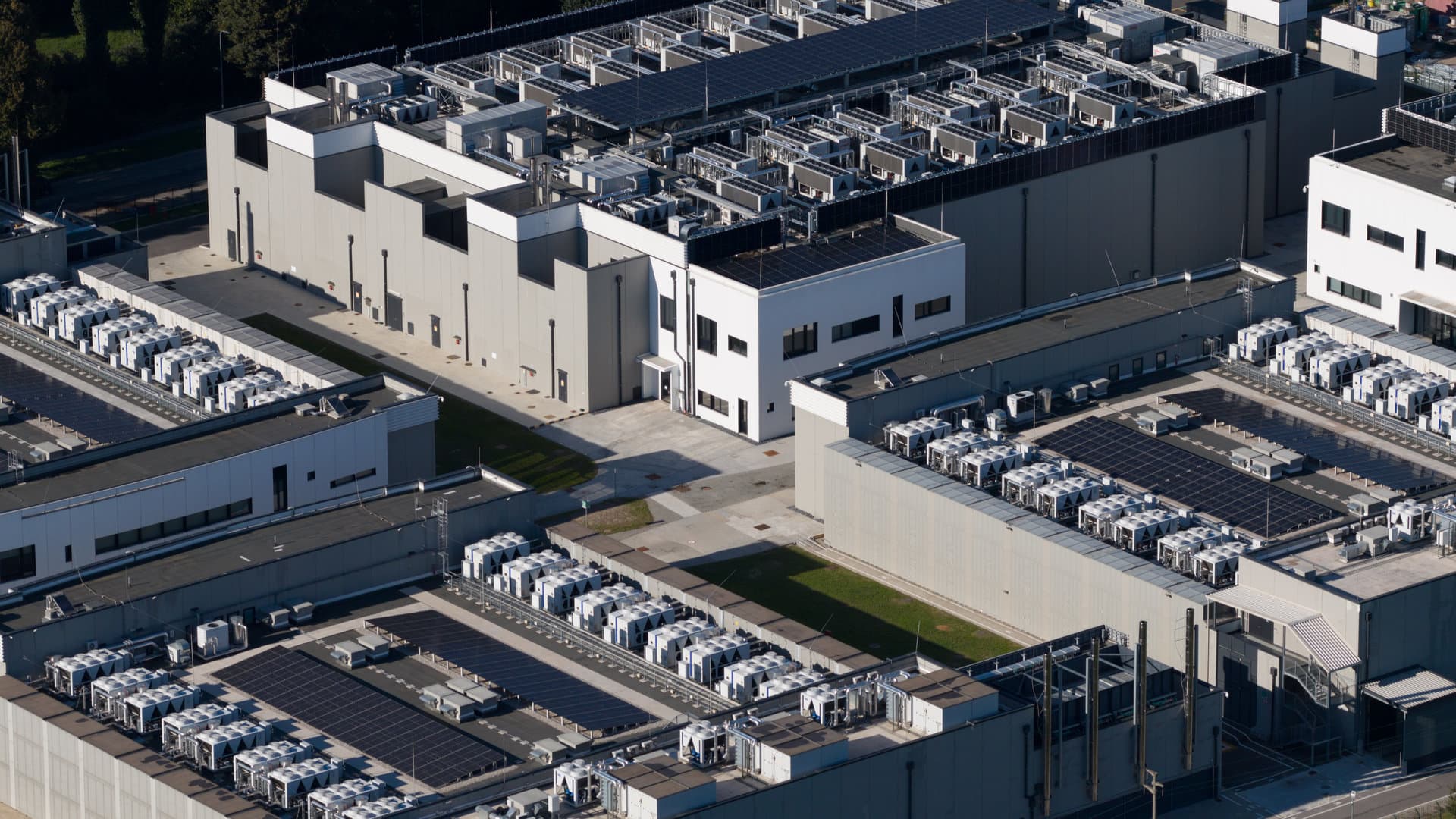
Data center operations need shared facility context
Data centers are operated through many specialized systems. DCIM, BMS, EPMS, meters, alarms, asset registers, maintenance tools, and field records each hold part of the picture. Operations teams need the site, room, rack, equipment, power path, cooling zone, alarm, inspection, and work history to line up in one context.
A data center digital twin gives that context. It connects facility assets, live infrastructure data, energy records, inspection routes, maintenance tasks, and work-order evidence in a spatial operating view. The goal is practical: make the site easier to understand, inspect, maintain, report on, and improve through engineering review.
This starting point is useful for single facilities and multi-site data center portfolios. A common model makes it easier to compare sites, standardize reports, and preserve operating evidence across rooms, assets, and teams.
What the twin should connect
| Layer | Operating context |
|---|---|
| Space | Site, building, room, rack, corridor, equipment area, access path, and safety boundary |
| Assets | UPS, generator, switchgear, CRAC, AHU, pump, chiller, rack, sensor, meter, and service owner |
| Power | EPMS data, power paths, panels, feeds, meter readings, load records, and affected assets |
| Environment | Temperature, humidity, airflow context, cooling equipment state, alarms, and room conditions |
| Maintenance | Inspection routes, work orders, repair history, photos, acceptance notes, and verification status |
| Documents | O&M files, procedures, commissioning records, asset manuals, and change notes |
| Governance | Data source, update owner, review process, approval route, evidence quality, and rollout scope |
The twin becomes useful when each signal can be traced back to a location, asset, responsible team, and follow-up record.
DataMesh workflow for data centers
- Collect facility sources - Bring together DCIM, BMS, EPMS, meters, alarms, asset lists, equipment documents, maintenance records, inspection plans, and site drawings.
- Build the facility twin - Use FactVerse to organize rooms, racks, equipment, power paths, cooling zones, meters, sensors, documents, and service ownership.
- Connect operational data - Use Data Fusion Services to bind live signals and enterprise records to the correct assets, spaces, systems, and workflows.
- Prepare reusable scenes - Use Data Center DLC and FactVerse Designer to accelerate room, rack, equipment, and facility scene creation.
- Review operating conditions - Review energy indicators, alarms, equipment status, repeated issues, and maintenance priorities in site and asset context.
- Execute field work - Use Inspector to turn confirmed findings into inspections, work orders, repair notes, photos, acceptance evidence, and verification records.
- Compare and improve - Use consistent records across sites and rooms to support management review, engineering analysis, sustainability reporting, and later efficiency programs.
The workflow is strongest when the team can move from signal to location, from location to owner, and from owner to verified work.
Where teams usually start
- Asset registry and location: clean up room, rack, facility equipment, meter, and service ownership records.
- Energy calculation and reporting: connect meter readings, equipment context, load history, and operating records for management review.
- Alarm and inspection workflow: place alarms, routes, work orders, field notes, and repair evidence around the affected asset.
- Critical infrastructure maintenance: track UPS, generator, switchgear, cooling equipment, pumps, and related service history.
- Multi-site standardization: apply the same room, asset, energy, and maintenance model across multiple data centers.
- Green operations evidence: organize energy, environment, maintenance, and corrective-action records for internal governance and Green Mark readiness work.
Start with a scope where the operating team already has data, ownership, and a recurring handoff problem.
How DataMesh products fit
Data Fusion Services connects DCIM, BMS, EPMS, meters, historians, alarms, maintenance tools, and enterprise systems.
FactVerse provides the facility digital twin context, including rooms, racks, assets, systems, data bindings, documents, and workflows.
FactVerse DLC gives delivery teams reusable data center scene foundations in Designer, including rooms, racks, facility assets, energy context, and operational visualization elements.
Inspector manages inspections, work orders, repair records, photos, acceptance notes, verification, and field evidence.
FactVerse AI Agent can help teams review abnormal patterns, repeated alarms, and maintenance history once the data model and workflow are stable enough for review.
Extend daily operations with scenario evidence
The same operating context can add scenario evidence when an engineering question extends beyond live telemetry and work history. Teams can prepare rack-load, layout, containment, cooling-degradation, and thermal-fluid scenarios, then carry reviewed findings into change planning, inspection, or maintenance.
Use Rack-Inlet Temperature and Thermal Margin for rack-level measurement and review criteria, Cooling-Failure Scenario Analysis for degraded and unavailable cooling states, and Load Growth and Capacity What-If Analysis for expansion and layout decisions.
For product configuration, BMS mapping, AI-assisted review, work-order closure, and FactSim execution, continue with the Data Center Operations documentation.
AI computing center decisions
High-density racks and mixed air/liquid cooling make available floor space an incomplete measure of expansion capacity. Teams need to review power distribution, cooling paths, rack-inlet conditions and maintenance access together. The NVIDIA Omniverse DSX Blueprint offers OpenUSD and SimReady reference workflows for electrical and thermal simulation. FactVerse can supply site assets and operating context to Omniverse scenes; each study still requires site-specific models, measurements and engineering approval. Read the solution announcement.
Governance checklist
- Are room, rack, equipment, meter, and sensor names consistent across systems?
- Are asset IDs aligned with DCIM, maintenance tools, drawings, and field labels?
- Are power, environment, and maintenance data sources documented with owner and update rule?
- Can an alarm be traced to a room, rack, asset, system, owner, and work record?
- Can field teams capture photos, notes, repair actions, and acceptance evidence from the same context?
- Can energy records be reviewed by site, room, asset, meter, and time window?
- Are multi-site reports based on consistent asset classes and data definitions?
- Are engineering review, customer approval, and change-control responsibilities clear before physical changes are made?
These checks keep the digital twin useful for daily work and management review.
Public references
The IDC DLC announcement shows how DataMesh uses reusable digital twin content to help teams start data center scenes in FactVerse Designer.
The Data Center Operations solution describes the operating scope for asset visibility, energy calculation, inspection, maintenance, work orders, and multi-site digital twin management.
The Yokogawa predictive maintenance reference shows the broader pattern of connecting industrial facility signals to maintenance review.
The Faurecia and EVE Energy reference shows how operational visibility and energy context can support manufacturing and facility improvement programs.