From visual model to operating loop
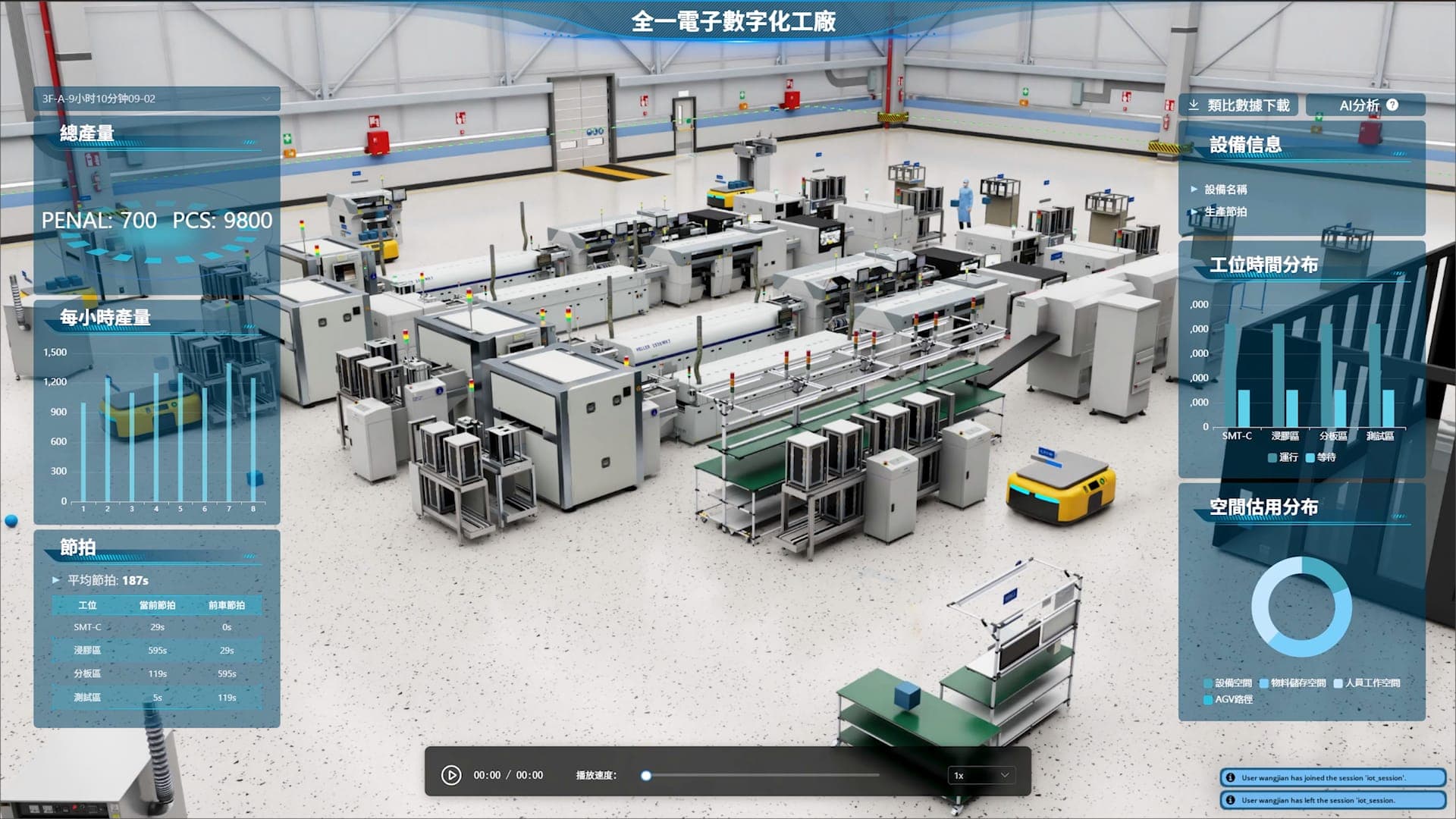
A traditional digital twin often begins with a 3D model, BIM data, equipment geometry, or a dashboard that helps teams see a facility, production line, asset, or construction site. That layer is valuable because it gives people shared context and makes complex environments easier to understand.
An executable digital twin adds the operating loop around that model. It connects live data, asset relationships, process logic, simulation, approvals, work orders, and verification records. The team can review what is happening, test what may happen under a scenario, assign work, and preserve the evidence behind each decision.
This is the foundation for Physical AI in industrial and facility environments. AI recommendations become more useful when they are grounded in real assets, spatial context, physical constraints, work history, and approved execution workflows.
What makes a twin executable
An executable twin usually combines six layers:
- Spatial and asset structure: sites, buildings, floors, zones, systems, equipment, points, documents, and ownership.
- Live operating data: BMS, SCADA, IoT, meters, historians, CMMS, ERP, MES, and other source systems.
- Behavior and process logic: process steps, control assumptions, dependencies, procedures, and event conditions.
- Simulation and scenario review: layout options, flow analysis, equipment movement, physical behavior, and what-if comparison.
- Workflows and field execution: inspections, tasks, work orders, SOPs, training, acceptance, and handoff.
- Governance and evidence: approvals, records, model versions, photos, notes, and operational results.
The value comes from keeping these layers connected. A model can show where an asset sits. An executable twin can also show the asset data, the process it supports, the scenario being reviewed, the work assigned to it, and the record that confirms what happened.
Why Physical AI needs executable twins
Physical AI deals with real-world operations. The recommendation has to fit the site, the asset, the process, the people, and the safety and approval rules of the organization. That requires more than a standalone model response.
An executable twin gives Physical AI a governed operating context:
- It describes which asset, system, zone, and process a signal belongs to.
- It provides historical records and real-time conditions for reasoning.
- It gives simulation workflows a place to compare proposed changes.
- It routes approved actions into inspection, maintenance, training, or construction workflows.
- It keeps a traceable record of what was recommended, approved, executed, and verified.
For buyers, this is the difference between a digital twin as a reference layer and a digital twin as part of an operating system.
The DataMesh stack in this workflow
Data Fusion Services connects enterprise, industrial, IoT, and facility data sources. FactVerse organizes the data, assets, scenes, and application context. FactVerse Twin Engine renders and executes the 3D twin experience across devices and operational scenarios.
FactVerse Designer supports scene authoring, process logic, virtual planning, and simulation workflows. For teams using NVIDIA Omniverse, the FactVerse Adaptor for NVIDIA Omniverse can bring FactVerse scene structure, metadata, and behavior context into USD and Omniverse-based validation workflows.
FactVerse AI Agent uses the connected context to support anomaly review, forecasting, operational Q&A, recommendation summaries, and decision handoff. Inspector turns approved findings into inspections, work orders, field records, acceptance, and evidence.
Together, these layers let teams build a twin that can be viewed, analyzed, simulated, acted on, and reviewed.
Common implementation pattern
A practical rollout works best when it starts with one operating loop:
- Connect the source data and define the ownership of each source system.
- Map assets, spaces, systems, and points into a shared twin structure.
- Add behavior logic, process steps, procedures, or scenario assumptions.
- Validate options through simulation, engineering review, or operational replay.
- Route approved actions into inspection, maintenance, training, or construction workflows.
- Capture completion records and compare the outcome with operating data.
This pattern keeps the work concrete. It also gives stakeholders a clear way to judge whether the twin is becoming part of daily execution.
Where executable twins create value
| Starting point | Practical use |
|---|---|
| Facility operations | Connect assets, meters, BMS points, inspections, and maintenance records so teams can review issues in spatial context |
| Predictive maintenance | Combine sensor data, asset history, anomaly review, work orders, and verification records |
| Process simulation | Compare layouts, material flow, equipment movement, and operating assumptions before site changes |
| Construction guidance | Link BIM, site context, method statements, schedule checks, and field guidance |
| Workforce training | Turn equipment, procedures, hazards, and scenario records into repeatable training workflows |
The first use case should have clear data ownership, a measurable operating process, and a team that can execute and verify the resulting actions.
Evaluation checklist
Use these questions when comparing digital twin platforms:
- Can the platform connect live operational data to assets, systems, and spaces?
- Can it represent behavior, process logic, and scenario assumptions?
- Can teams run simulation or scenario review before operational change?
- Can recommendations move into approved inspection, maintenance, training, or construction workflows?
- Can field teams capture photos, notes, acceptance records, and completion status?
- Can engineers and operators trace a decision back to data, model context, and approval history?
- Can the same twin support visualization, monitoring, simulation, and workflow execution?
- Can the platform support enterprise governance across users, sites, and systems?
An executable twin becomes valuable when each answer maps to a real workflow and a responsible team.
Practical outcomes
Executable digital twins help industrial and facility teams move from shared visualization to governed execution. The near-term outcomes are usually practical: clearer operating context, faster cross-team review, better handoff from analysis to field work, stronger evidence records, and more disciplined scenario comparison.
As the operating loop matures, Physical AI can work with richer context. Recommendations can be grounded in asset data, system relationships, simulation results, work history, and site governance. That is where the digital twin becomes a working layer for real-world decisions.