
Factory and facility visualization
Bring a prepared FactVerse environment into an Omniverse workflow for high-fidelity rendering, spatial review, and stakeholder alignment.

Reuse trusted industrial context across Omniverse and simulation workflows
Carry governed FactVerse factory and facility scenes into OpenUSD and NVIDIA Omniverse workflows for high-fidelity visualization, project-enabled physics, robotics preparation, and Physical AI development.
Connect data, workflows, and field execution so teams can understand context, act faster, and keep work traceable.
Carry prepared FactVerse scenes into OpenUSD workflows while preserving hierarchy, coordinates, asset identity, metadata, and version context.
Reuse facilities, production lines, equipment, spaces, systems, and operating relationships in high-fidelity Omniverse experiences.
Prepare geometry, semantics, materials, collision assumptions, behavior, and other runtime inputs for selected simulation and Physical AI projects.
Use Data Fusion Services to connect selected equipment state, sensor values, and operational signals with the scene and scenario.
Connect approved scenes with Omniverse, Isaac, PhysX, or Newton-oriented workflows according to the task, runtime, and validation plan.
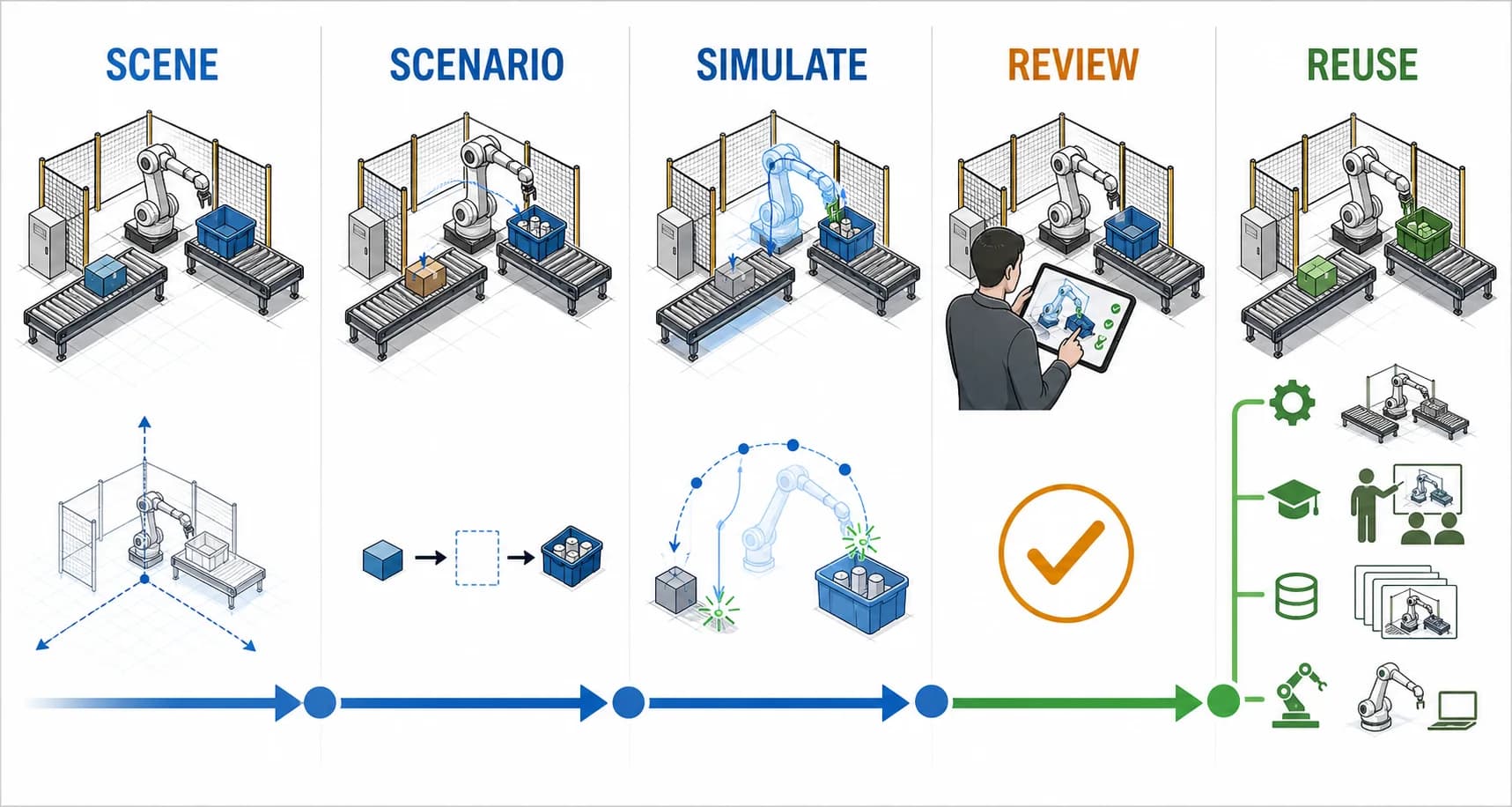
Keep scene versions, inputs, assumptions, findings, and review records connected across digital-twin and simulation teams.
Practical applications and proven success scenarios across industries.
Bring a prepared FactVerse environment into an Omniverse workflow for high-fidelity rendering, spatial review, and stakeholder alignment.
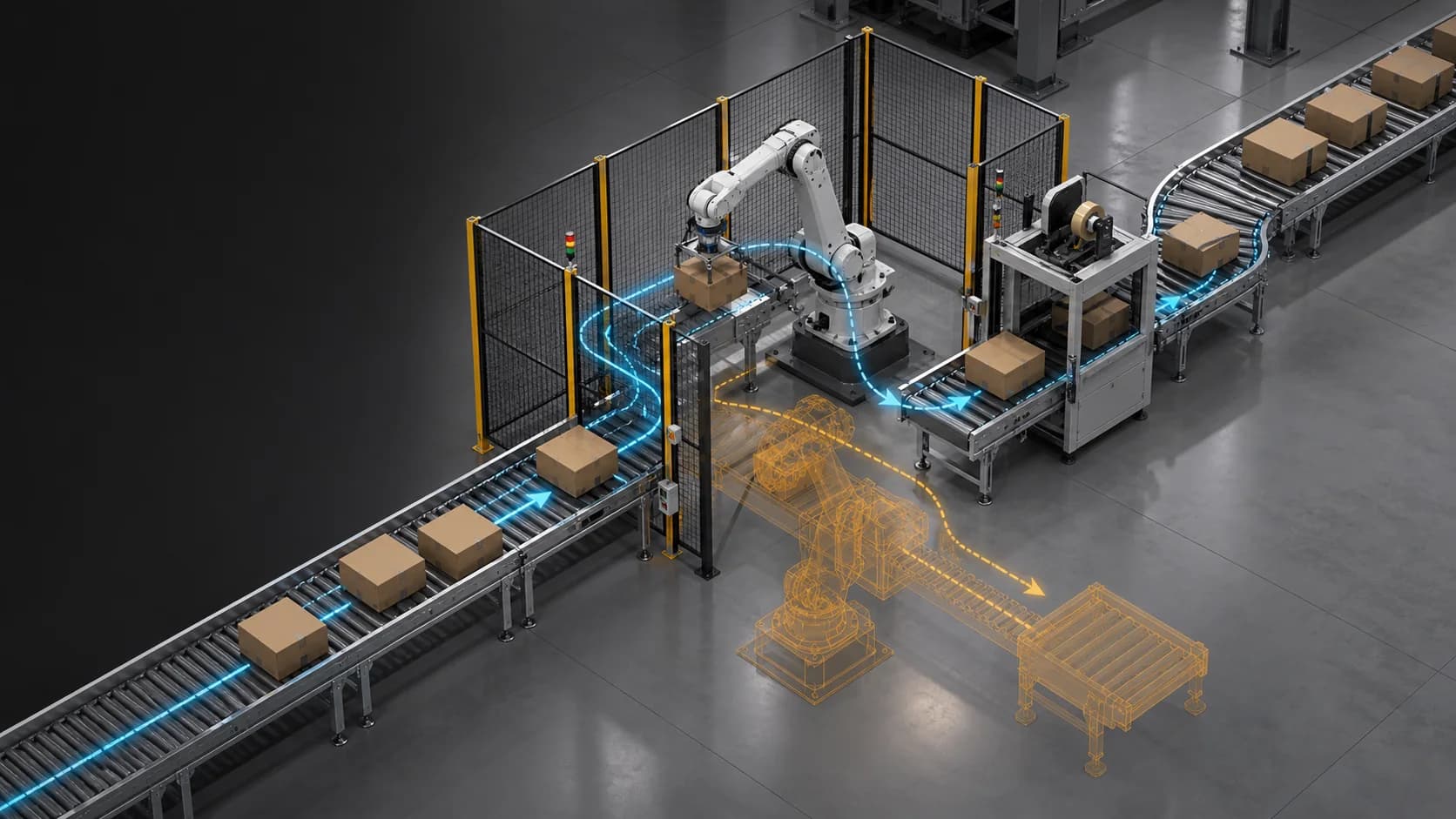
Reuse scene context in selected rigid-body, airflow, thermal-fluid, equipment-interaction, or process-validation workflows.
Prepare governed OpenUSD scenes and SimReady assets for Isaac Sim, synthetic data, robot testing, learning, and sim-to-real projects.
Factory and facility teams often rebuild the same environment for visualization, planning, physics, and robotics. Geometry may survive the transfer while asset identity, process logic, operating state, and source history are lost.
The FactVerse Adaptor for NVIDIA Omniverse carries governed digital-twin context into OpenUSD and Omniverse workflows. Teams can start from a prepared industrial scene and extend only the parts needed for rendering, simulation, robotics, or Physical AI development.
FactVerse can provide scene hierarchy, coordinates, spatial relationships, equipment identity, business metadata, data bindings, behavior logic, and source versions. This context gives downstream teams a stronger starting point for building runtime-ready assets and scenarios.
Factory-scale workflows depend on scene preparation, approved asset rights, runtime compatibility, performance targets, and the required level of synchronization. Those decisions are established during the project evaluation.
FactVerse Designer creates the scene, layout, process logic, scenario variants, and SimReady preparation context. The adaptor carries approved scene and asset structures into OpenUSD workflows where teams can add runtime-specific materials, collision geometry, sensors, physics assumptions, robot models, and validation settings.
NVIDIA now delivers Omniverse through libraries, microservices, SDKs, and APIs for industrial digital-twin and Physical AI applications. This architecture lets project teams assemble the rendering, physics, storage, and integration capabilities needed for a specific workflow while FactVerse remains the governed source of industrial context.
Selected projects can connect FactVerse scenes with Omniverse, Isaac Sim, Isaac Lab, PhysX, or Newton-oriented workflows for rigid-body motion, collision, contact, equipment interaction, sensors, synthetic data, robot testing, learning, and sim-to-real preparation.
Airflow, thermal-fluid, species, or other specialized engineering studies use project-selected solvers and validation methods. Their reviewed fields, metrics, assumptions, and findings can return to the digital-twin workflow as decision evidence.
Data Fusion Services can connect selected equipment state, telemetry, process signals, maintenance context, and historical data to the assets and scenarios in scope. This gives visualization and simulation teams a shared reference for comparing engineering assumptions with operating conditions.
Simulation value depends on knowing which scene, asset, input, model, and setting produced a result. Project workflows can retain version identity, assumptions, comparison metrics, audit checks, findings, and review records across FactVerse and the selected runtime.
FactVerse AI Agent can relate approved findings to current operations and coordinate review. Inspector can carry approved follow-up into asset, inspection, maintenance, work-order, and field-evidence workflows.
The adaptor gives each team a clear role. Designer prepares the governed scene. The target runtime provides specialized rendering or physics. Qualified reviewers assess the evidence. AI Agent supports interpretation and coordination. Inspector records field execution and verification.
This continuity reduces repeated scene preparation and keeps the operating decision connected to the digital environment that supported it.
A focused evaluation begins with one representative scene, a target runtime, stable source assets, required data, and a measurable engineering or sim-to-real criterion. DataMesh and the customer can then confirm scene exchange, asset readiness, integration depth, evidence handling, and review ownership before expanding the workflow.
It connects governed FactVerse scenes and operating context with OpenUSD and NVIDIA Omniverse workflows. The adaptor helps teams reuse prepared industrial context across rendering, simulation, and Physical AI work.
Factory-scale transfer is supported when the scene, assets, coordinates, OpenUSD resources, performance target, and runtime integration are prepared for that scope.
FactVerse retains the operational twin context, including asset identity, spatial and system relationships, metadata, permissions, data bindings, behavior logic, and source versions used by the project.
Project-enabled work can connect selected scenes with Omniverse, Isaac, PhysX, or Newton-oriented runtimes for rigid-body, contact, robotics, and related scenarios. Airflow and thermal-fluid studies use a project-selected solver and evidence plan appropriate to the decision.
Data Fusion Services can provide selected live, historical, or engineering data. The integration maps approved signals and state to the corresponding assets, scene attributes, scenarios, and review records.
Choose one target scene, decision, runtime, representative asset set, and measurable review criterion. DataMesh can then confirm the asset pipeline, integration depth, model inputs, and validation plan.
Continue with the most relevant products, solutions, guides, and public references for this topic.