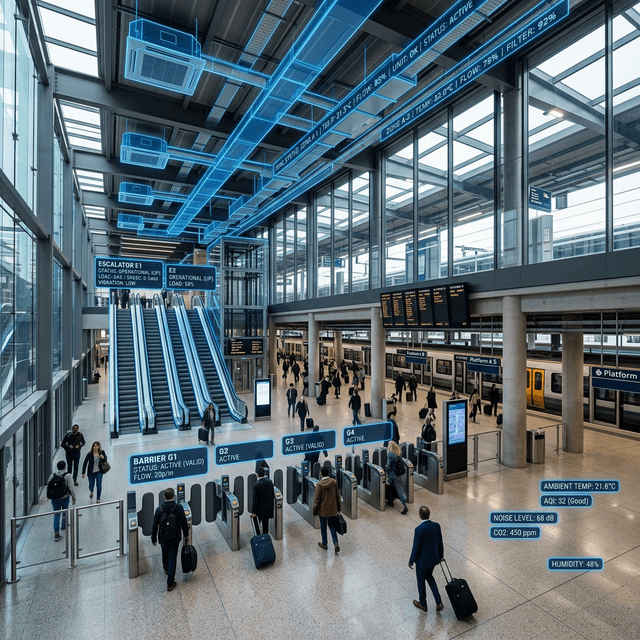
Transit hub operations
Bring HVAC, lifts, escalators, power rooms, access systems, passenger areas, and maintenance tasks into a shared station or terminal twin.
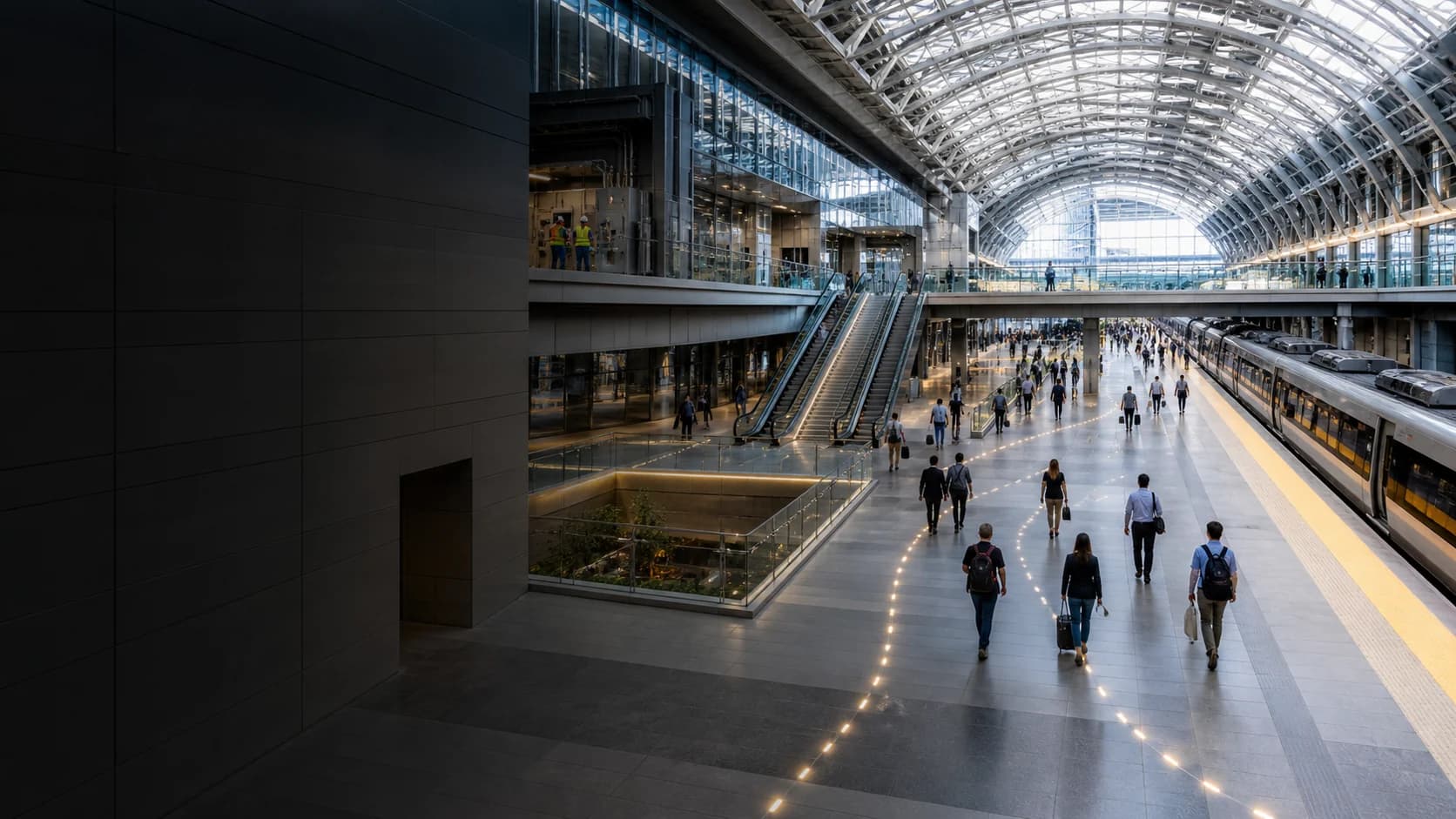
Operational digital twins for transportation assets and field teams
Connect stations, terminals, roads, rail assets, facility systems, maintenance teams, and operating data into digital twin workflows for safer and more reliable transportation infrastructure.
Connect data, workflows, and field execution so teams can understand context, act faster, and keep work traceable.
Create operational twins of stations, terminals, depots, tunnels, bridges, and road or rail assets so teams can review location, system status, and work history in one spatial context.
Use Inspector to connect alarms, inspections, maintenance plans, work orders, field actions, photos, and verification records around each asset or facility zone.
Director-authored 3D SOPs and DataMesh One guidance help technicians understand what to inspect, where to work, which risks to check, and how to close the task.
FactVerse AI Agent can help analyze passenger flow, equipment availability, queue signals, and facility constraints so operations teams can compare options before making changes.
Connect BMS, meters, HVAC, lighting, and environmental data to support station comfort, energy review, and evidence preparation for sustainability or facility-compliance programs.
Use FactVerse Designer for layout review, construction sequence, passenger-flow scenario planning, and virtual validation before field changes are made.
Practical applications and proven success scenarios across industries.
Bring HVAC, lifts, escalators, power rooms, access systems, passenger areas, and maintenance tasks into a shared station or terminal twin.
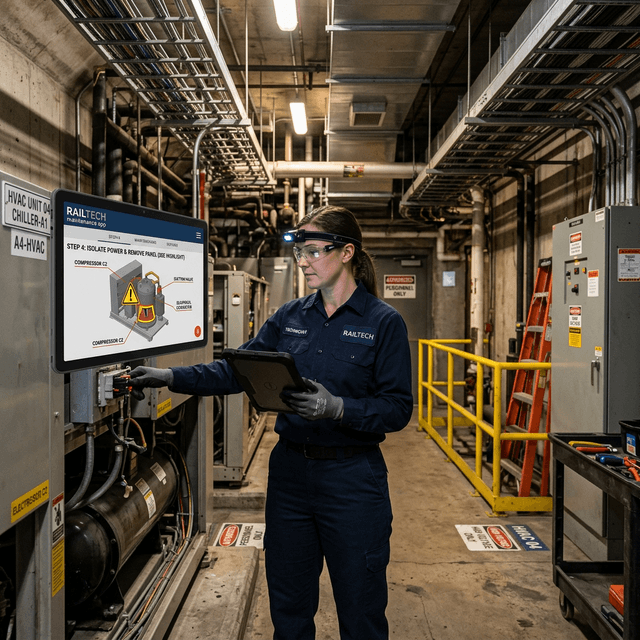
Give crews 3D procedures, asset context, risk notes, and work-order evidence capture at the point of work.
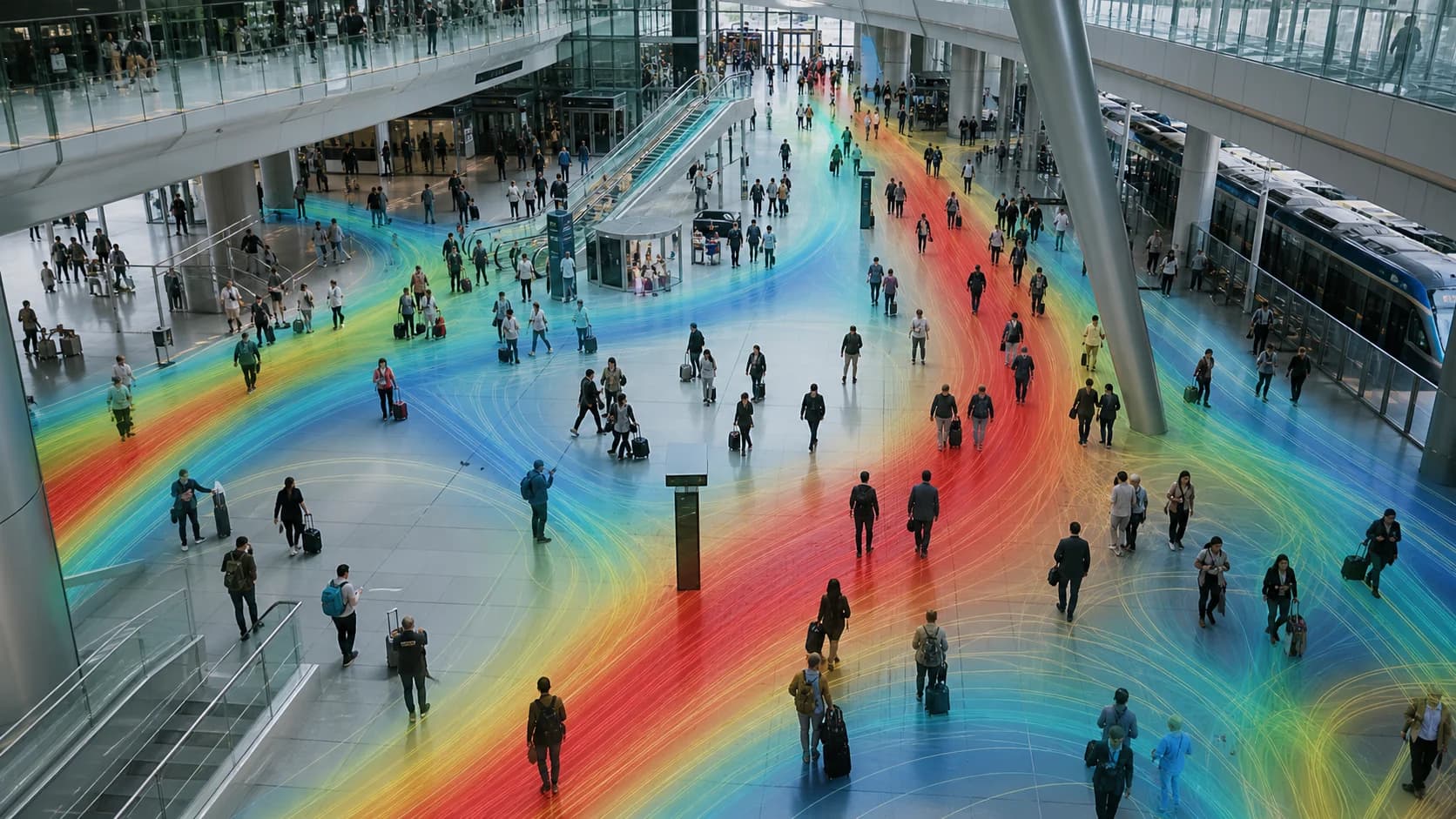
Compare crowding signals, gate or platform constraints, maintenance windows, and facility conditions before teams adjust operating plans.

Use Inspector to turn findings into assigned work, track execution, and keep verification evidence connected to the asset and location.
Transportation infrastructure is difficult to manage because work happens across large physical spaces, many asset types, and many separate systems. A station team may need BMS and power data. A tunnel team may need inspections, sensor readings, access permits, and maintenance history. A depot or terminal team may need asset status, work orders, training records, and field evidence.
DataMesh turns that distributed information into an operational digital twin. Operations, maintenance, engineering, and field teams get a shared view of where the issue is, what it affects, what action is approved, and how the result is verified across the systems that already run the facility or network.
Data Fusion Services connects relevant sources such as BMS, SCADA, CMMS, IoT sensors, meters, access systems, asset registries, and inspection records. FactVerse places those signals in spatial and asset context. Inspector turns confirmed findings into inspections, work orders, corrective actions, and verification records.
This is especially useful for:
FactVerse AI Agent can help teams find patterns in operating data, predict likely bottlenecks or maintenance risks, and compare scenarios. It should be positioned as an analysis layer. Lane changes, staffing plans, shutdown windows, maintenance actions, and safety decisions should still follow the customer's approval and control process.
When teams need to model layout changes, construction sequences, passenger-flow scenarios, or virtual planning, FactVerse Designer is the right workflow for building and reviewing the scenario before field execution.
Public DataMesh material supports this workflow through expressway safety training, JTC complex-facility digital twins, and Obayashi BIM/CIM and XR workflows for railway construction. Together, these references are strongest for training, facility context, maintenance coordination, construction communication, and scenario review. Live traffic control, rail dispatching, and safety authority stay with the customer's approved operating systems and procedures.
| Workstream | Focus | Output |
|---|---|---|
| Asset and data context | Select a station zone, terminal area, depot, tunnel, bridge, or road facility with existing asset and maintenance data. | Shared digital twin view for location, equipment, alarms, work history, and field responsibility. |
| Execution loop | Connect inspection findings, alarms, work orders, guided procedures, photos, and verification records. | Repeatable Inspector workflow from issue review to field closure. |
| Scenario review | Use Designer and AI Agent to compare layout changes, passenger-flow patterns, maintenance windows, or facility constraints before changes are approved. | Visual review package for operations, engineering, and maintenance stakeholders. |
A useful transportation pilot should prove that teams can locate issues faster, connect field work to asset context, preserve inspection evidence, rehearse operating changes, and review energy or environment trends without moving responsibility away from approved command processes.
Continue with the most relevant products, solutions, guides, and public references for this topic.
Good starting points include stations, terminals, depots, tunnels, bridges, roadside facilities, rail assets, maintenance zones, and other transportation environments where location, equipment status, and field execution need to be connected.
DataMesh usually sits above BMS, SCADA, CMMS, GIS, asset registries, queue systems, and other sources. Data Fusion Services connects these systems and organizes their data in digital-twin context.
AI Agent supports analysis, prediction, and scenario comparison. Staffing, lane, schedule, maintenance, and safety decisions remain governed by the customer's approved operational process.
Inspector manages inspections, work orders, corrective actions, evidence, and verification. Director and DataMesh One provide guided procedures and training. FactVerse gives the spatial and asset context.
Start with one facility, one critical asset family, one maintenance process, or one station area where teams already have data but lack a shared operating context.
Use a focused proof of concept to validate operational value before a wider rollout.