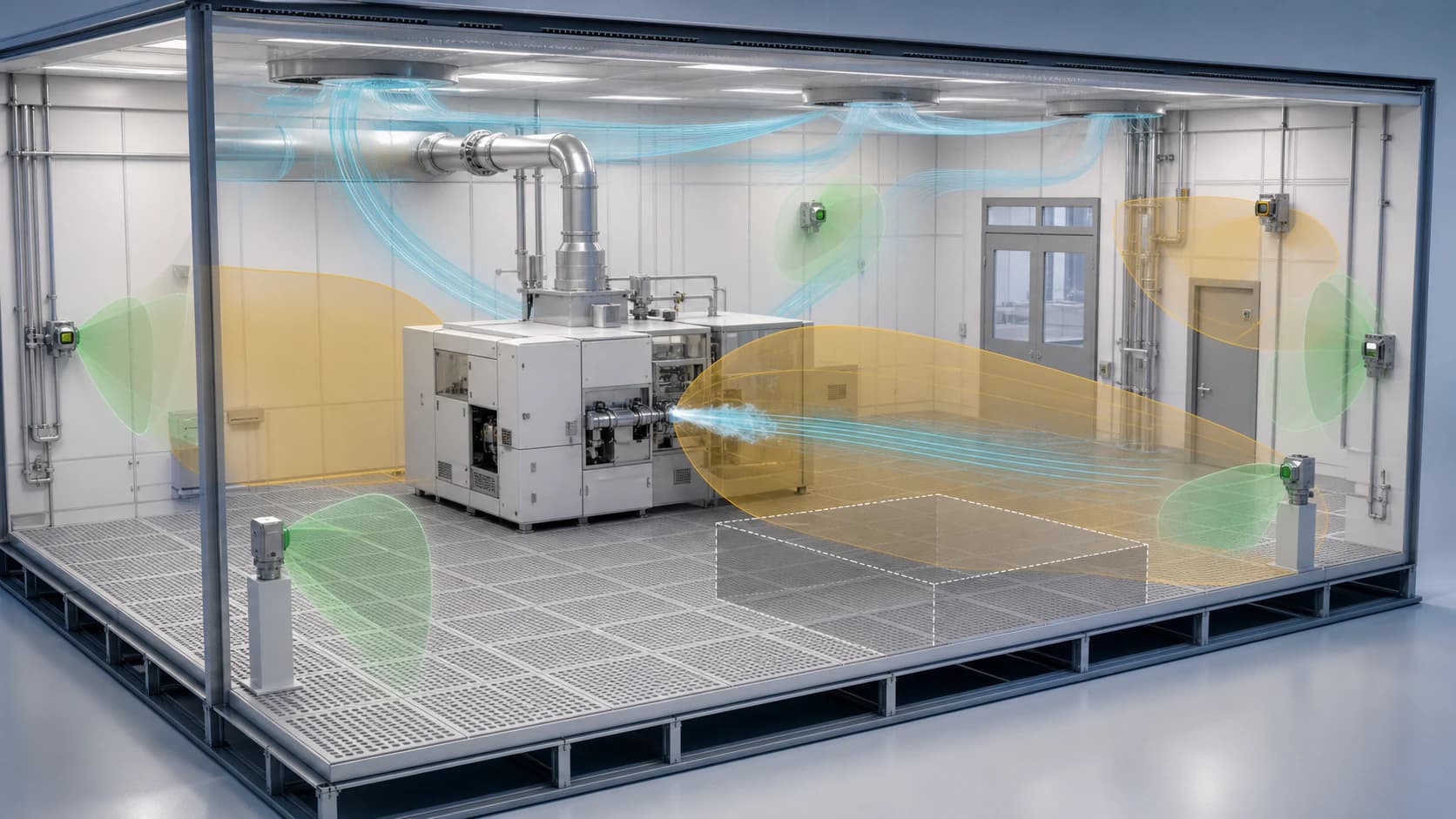

Critical facility operations
Review cleanroom and utility status by zone, system, and asset, with the alarms, trends, maintenance history, and open work that explain current conditions.
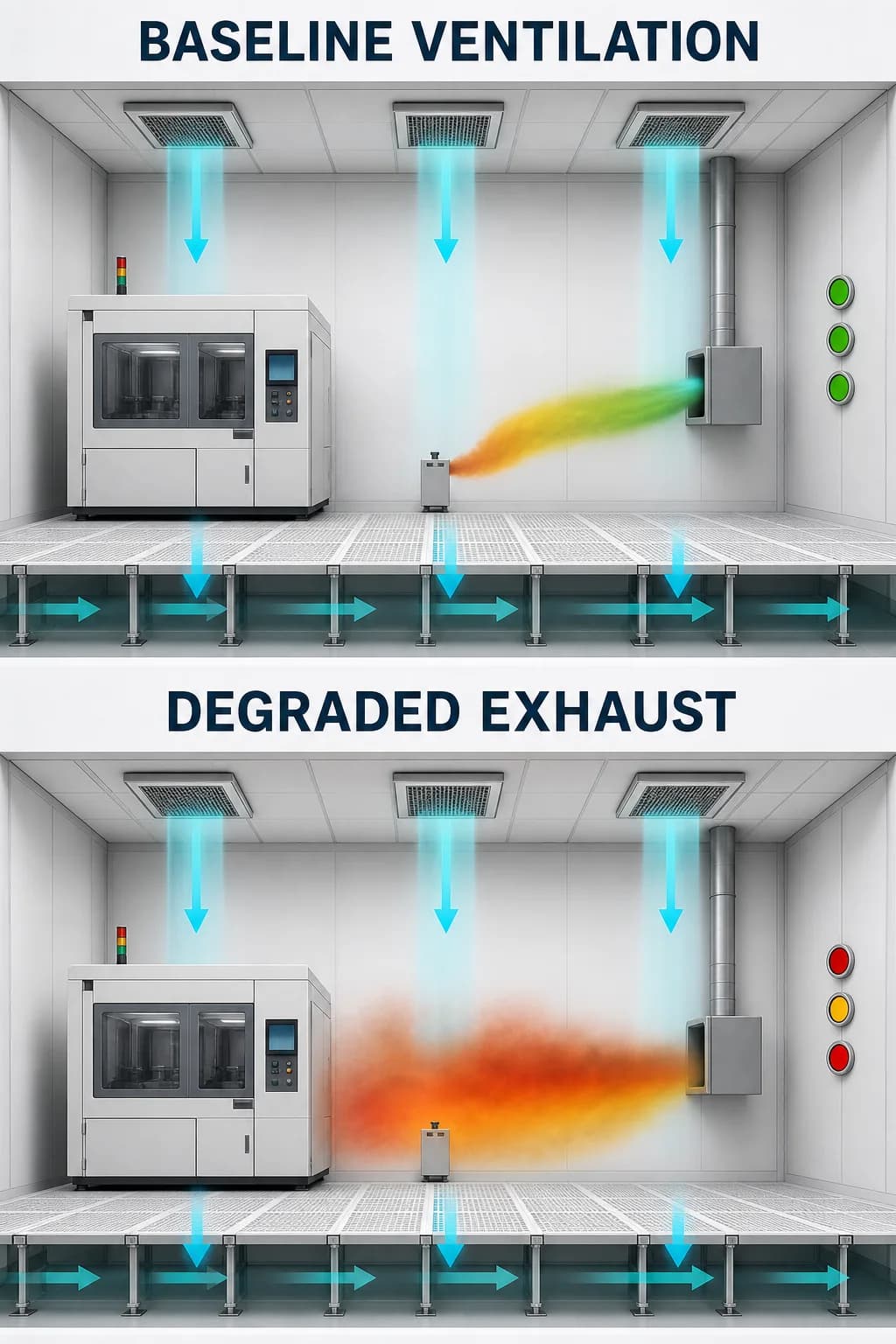
Keep the facility stable, evaluate change with evidence, and carry decisions into field execution
Connect cleanroom conditions, critical utilities, maintenance execution, and project-enabled airflow and safety scenario analysis for semiconductor facilities.
Connect data, workflows, and field execution so teams can understand context, act faster, and keep work traceable.
Connect building systems, environmental monitoring, historians, IoT sensors, maintenance platforms, and equipment telemetry through Data Fusion Services.
Represent cleanroom zones, HVAC, chilled water, compressed dry air, vacuum, exhaust, power, meters, sensors, and critical assets in spatial context.
Use FactVerse AI Agent to review environmental drift, utility instability, repeated alarms, asset condition, and maintenance priorities.
Evaluate airflow, thermal conditions, species dispersion, local exhaust capture, detector coverage, and selected degraded ventilation states.
Turn alarms, inspection findings, and approved engineering actions into work orders, field tasks, records, and verification history.
Use shared asset semantics, workflows, evidence structures, and reports while preserving site-specific systems and procedures.
Practical applications and proven success scenarios across industries.
Review cleanroom and utility status by zone, system, and asset, with the alarms, trends, maintenance history, and open work that explain current conditions.
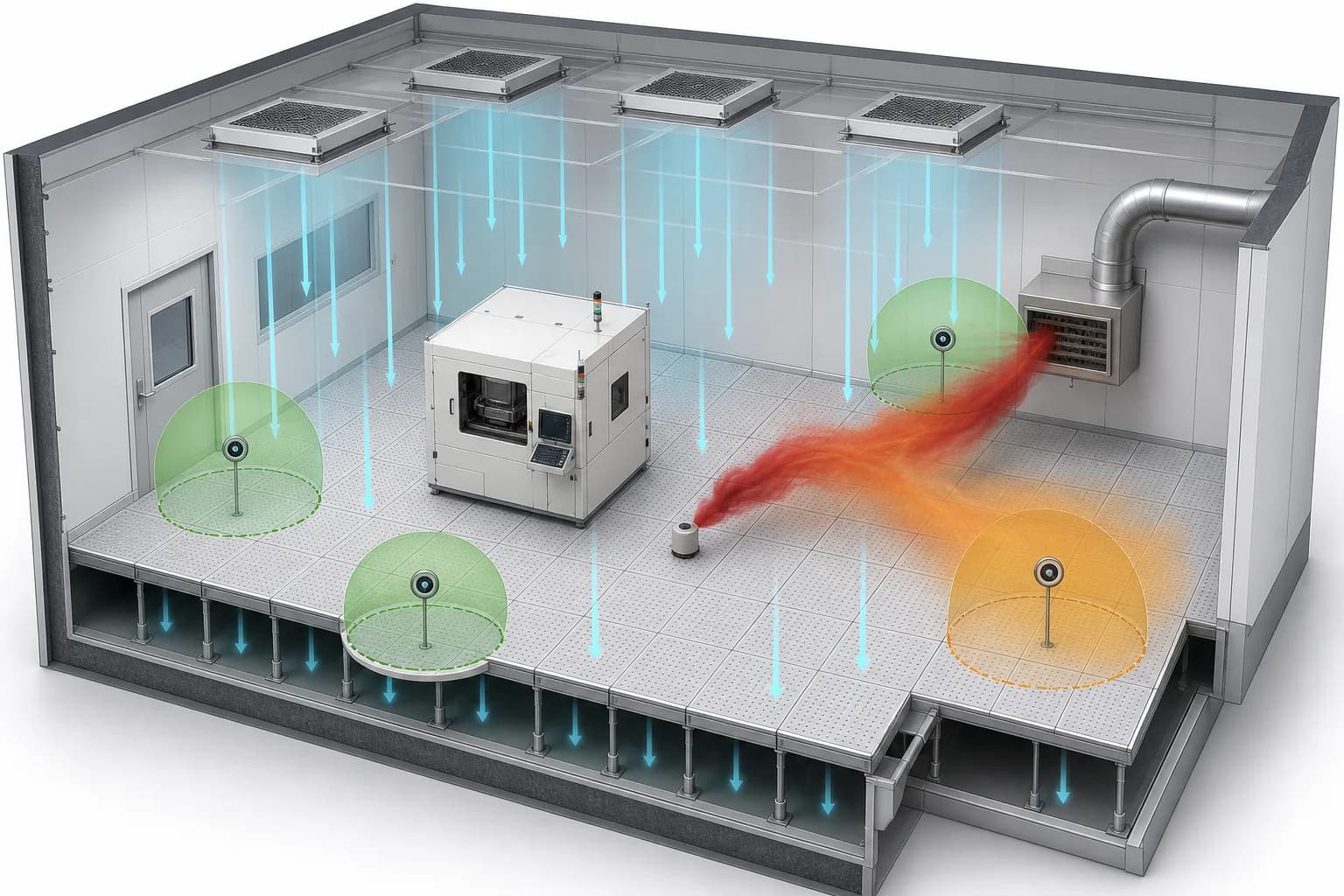
Correlate pressure, particle, temperature, and humidity changes with upstream facility behavior, recent work, and affected spaces.
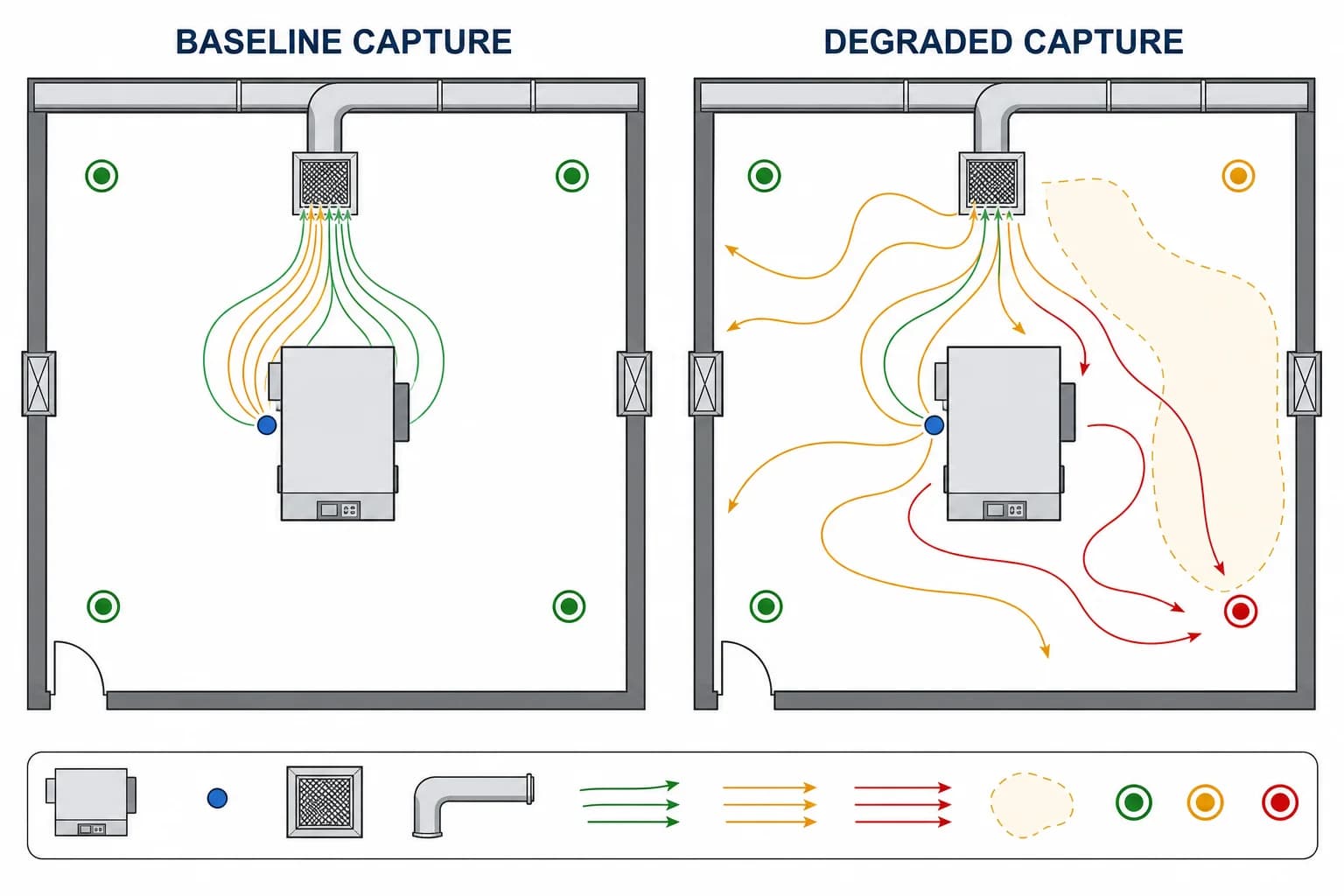
Compare airflow, thermal, exhaust, and species-dispersion scenarios for selected layouts and operating states before implementation.

Coordinate alarm response, inspection, field execution, documentation, and verification across facility, maintenance, and safety teams.
Semiconductor facilities coordinate cleanroom conditions, heating, ventilation, and air-conditioning (HVAC), chilled water, compressed dry air, vacuum, exhaust, electrical distribution, environmental monitoring, and maintenance across tightly connected spaces. A change in one system can affect several tools, zones, and operating teams.
DataMesh creates a shared facility context from source-system data, digital twin relationships, engineering models, and work history. Teams can move from an environmental or equipment signal to the affected space, supporting system, asset, document, responsible owner, and current work without rebuilding the context for every investigation.
Each stakeholder sees the evidence required for their role:
Data Fusion Services connects building management systems, supervisory control and data acquisition systems, environmental monitoring, historians, IoT sensors, equipment telemetry, computerized maintenance management systems, and enterprise asset management systems selected for the site.
FactVerse maps the data to cleanroom zones, utility systems, facility assets, meters, sensors, documents, and operating responsibilities. FactVerse AI Agent supports investigation of drift, repeated alarms, abnormal equipment behavior, and maintenance context. Inspector carries approved responses into assignments, field instructions, evidence capture, and closure.
This operating loop helps teams answer practical questions: which spaces and tools may be affected, which upstream assets changed, whether similar events occurred before, what work is already open, and what evidence confirms recovery.
Project-enabled cleanroom analysis supports decisions that need spatial and time-dependent evidence. A study may evaluate a proposed tool installation, a local exhaust configuration, detector placement, a selected release point, a fan filter unit outage, reduced exhaust capacity, or an open-door state.
The workflow can combine:
The resulting evidence can inform engineering review, maintenance planning, operating procedures, and Inspector work. Site measurements and calibration increase confidence as a program moves from relative comparison toward site-specific decisions.
Operational monitoring, discrete-event simulation, and physics-based analysis answer different questions. Monitoring shows measured conditions and alarms. Discrete-event simulation evaluates flow, queues, resources, and timing. Computational fluid dynamics evaluates airflow, thermal distribution, and the movement of a selected species through space and time.
FactVerse connects these methods to a common digital twin while preserving their assumptions and review paths. This gives operations and engineering teams a consistent way to compare current conditions, proposed changes, and the work required to implement an approved decision.
A first phase should have a narrow operational or engineering objective, available data, named reviewers, and measurable acceptance criteria. After the team validates the data and evidence workflow, the same structure can extend to additional utilities, cleanroom bays, maintenance processes, and sites.
Shared asset semantics and report structures improve consistency across a multi-site program. Site-specific integrations, operating procedures, thresholds, access controls, and engineering approvals remain explicit within each deployment.
Continue with the most relevant products, solutions, guides, and public references for this topic.
Facility engineering, cleanroom operations, environmental health and safety, maintenance, reliability, digital transformation, and site leadership use the shared context for different decisions and responsibilities.
The operational layer connects facility assets, cleanroom and utility conditions, alarms, energy calculations, inspection, maintenance, work orders, documents, and visualization.
Project-enabled studies support defined airflow, thermal, species-dispersion, local exhaust, detector, and degraded ventilation questions. Each study records its inputs, assumptions, evidence level, comparison cases, and engineering review.
DataMesh connects approved source systems and preserves their operating authority. FactVerse provides shared context, FactVerse AI Agent supports investigation, and Inspector or an integrated maintenance platform manages approved field work.
Start with one critical utility system, one cleanroom bay, one recurring alarm pattern, or one defined engineering change. Establish data quality, responsibilities, evidence requirements, and measurable acceptance criteria before expanding.
Use a focused proof of concept to validate operational value before a wider rollout.