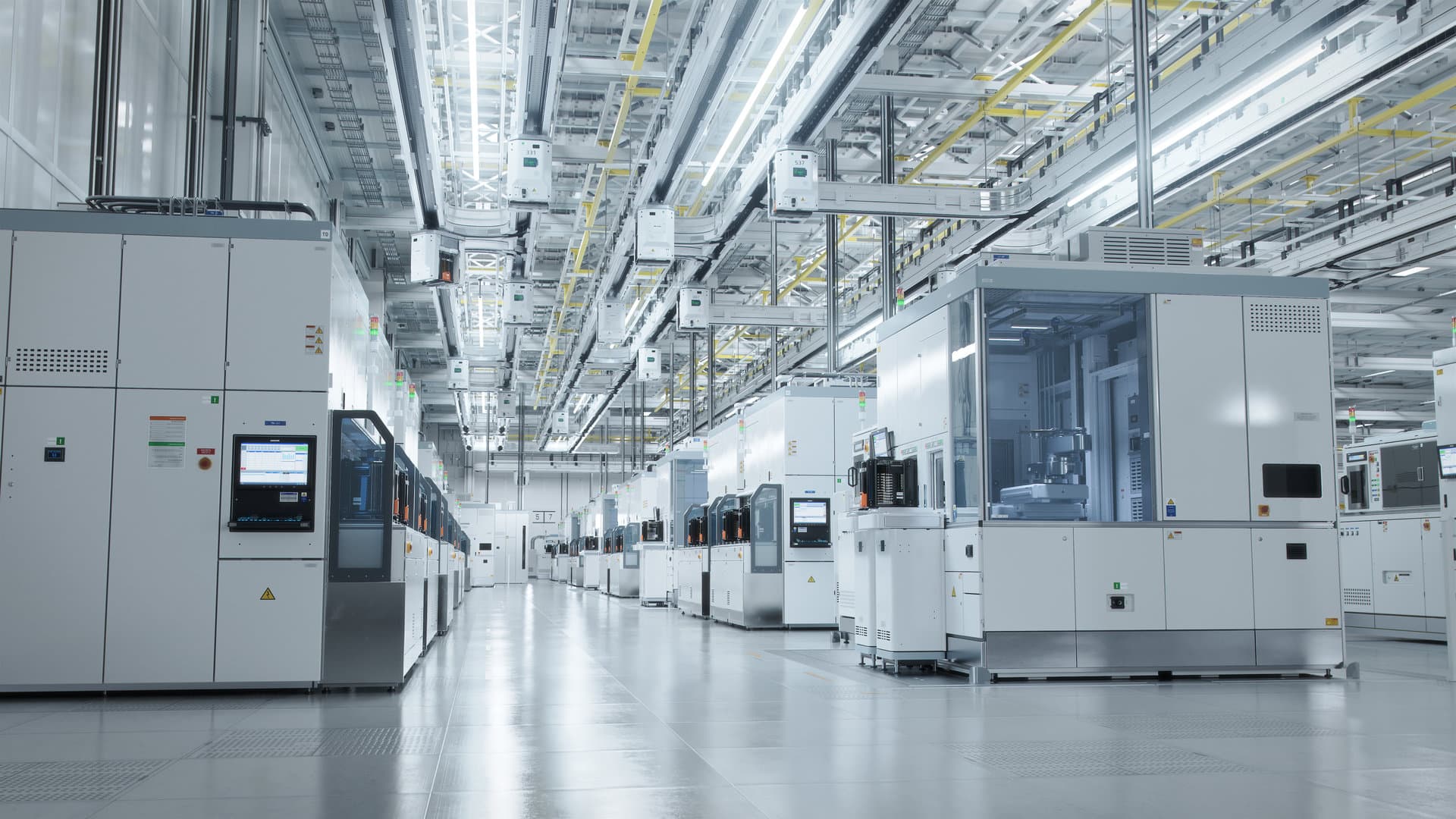
Fab operations depend on stable facility context
Semiconductor fabs depend on stable facilities as much as production tools. Cleanroom drift, pressure imbalance, filter loading, chilled-water variation, CDA pressure changes, exhaust instability, delayed maintenance, and fragmented work orders can create operational risk before teams share the same view of the situation.
Semiconductor Facility AI applies Data Fusion Services, FactVerse, FactVerse AI Agent, and Inspector to the facility operations layer. It connects cleanroom signals, utility systems, asset relationships, alarms, maintenance records, and field execution into a reviewable operating loop.
Production recipes, APC, yield analytics, MES, and tool control remain governed by the fab systems and authorization procedures that own those decisions. DataMesh focuses on the facility, maintenance, and operating evidence around the fab.
What the facility twin connects
| Layer | Operating context |
|---|---|
| Cleanroom zones | ISO class, particles, temperature, humidity, differential pressure, airflow, room hierarchy, and operating thresholds |
| Utility systems | HVAC, chilled water, CDA, vacuum, exhaust, power distribution, meters, pumps, fans, valves, and supporting equipment |
| Critical assets | FFUs, HEPA/ULPA filters, chillers, pumps, AHUs, compressors, exhaust equipment, sensors, controllers, documents, and maintenance history |
| Alarms and trends | Repeated alarms, abnormal patterns, sensor drift, pressure gradient change, filter loading, vibration, current, runtime, and service history |
| Work execution | Inspector work orders, Checklist tasks, field photos, readings, notes, approvals, escalation rules, and closure evidence |
| Governance | Recommendation source, reviewer, priority, SLA, owner, shift handover, acceptance criteria, follow-up evidence, and audit trail |
The value comes from mapping every signal to a zone, asset, system, responsibility, and field workflow. A particle spike should be traceable to cleanroom context, airflow and pressure behavior, filter state, upstream utility equipment, recent maintenance, and the response that follows.
DataMesh workflow for semiconductor facility operations
- Connect facility sources - Bring BMS, SCADA, PLCs, historians, environmental monitoring, CMMS, EAM, IoT sensors, equipment telemetry, and work-order systems into the operations layer.
- Build the facility twin - Model fabs, cleanrooms, zones, utility systems, assets, sensors, control points, documents, and work responsibilities in FactVerse.
- Bind signals to context - Use Data Fusion Services to map particle readings, pressure, temperature, humidity, alarms, energy readings, equipment health, and work records to the correct zones and assets.
- Review drift and risk - Use FactVerse AI Agent to summarize abnormal trends, repeated alarms, likely contributing systems, priority scores, and recommended next actions for human review.
- Execute through Inspector - Turn validated findings into work orders, field tasks, escalation plans, shift handover notes, documentation, and acceptance records.
- Verify the result - Compare post-action readings, alarm recurrence, maintenance evidence, cleanroom status, and operator review against the original finding.
This workflow keeps AI recommendations attached to the data, asset context, and field evidence that produced them.
Cleanroom drift and ISO evidence
Cleanroom teams often need to review small changes across several signals at once. Particle counts, temperature, humidity, pressure differential, airflow behavior, filter state, door events, alarms, and maintenance activity may each explain part of a drift pattern.
FactVerse AI Agent can prepare an evidence summary for engineering review: which zone is affected, which readings changed, whether pressure gradients remain within tolerance, whether FFU or filter status has changed, whether similar alarms repeated, and what field checks should be assigned.
ISO 14644-1 assessments and site-specific cleanroom records can be preserved as part of the operating history. The guide does not turn software into the compliance authority; it gives teams a structured way to keep evidence, review status, and connect findings to field work.
Utility equipment and predictive maintenance
Facility-side assets have their own degradation patterns. Pumps, fans, compressors, chillers, AHUs, exhaust equipment, valves, sensors, and filters can show early risk through pressure, flow, vibration, temperature, current, runtime, alarm history, and maintenance records.
The Predictive Maintenance pattern is useful here. FactVerse AI Agent reviews signals and asset context, then Inspector carries confirmed findings into work orders and verification. Teams can prioritize assets by operational impact, cleanroom dependency, urgency, repeat alarms, and available maintenance capacity.
This is especially important across shifts. The decision record should make clear what was detected, why it mattered, who reviewed it, which field team accepted the task, what was observed on site, and whether the condition improved.
From alert to work order
Semiconductor facility operations need a controlled execution path. A useful alert workflow includes:
- sensor and calibration check
- asset and zone context review
- likely cause summary
- priority and SLA proposal
- assigned owner or role
- field checklist
- photos, readings, and corrective-action notes
- acceptance and follow-up checks
Inspector and Checklist provide the execution side of this loop. They help teams route confirmed risks into work orders, capture field evidence, and preserve the closure record needed for later review.
Energy review and what-if analysis
Semiconductor facilities are energy-intensive. Utility readings, cooling demand, airflow requirements, filter loading, pump and fan behavior, and operating schedules can be reviewed together with cleanroom and maintenance context.
DataMesh can support facility energy review by connecting energy readings to systems, zones, assets, and work history. FactVerse AI Agent can prepare what-if comparisons and risk summaries for engineering review, such as whether a maintenance action may reduce repeated alarms or whether a schedule change should be reviewed with cleanroom constraints.
Energy savings, carbon reporting, and operating targets depend on the customer's baseline, metering boundary, engineering rules, and verification method. The DataMesh workflow gives teams a traceable way to evaluate options and record outcomes.
Pilot readiness checklist
Before rollout, review these conditions:
- Cleanroom zones, ISO classes, operating thresholds, and facility ownership are defined.
- BMS, SCADA, environmental monitoring, PLC, historian, CMMS, EAM, and work-order sources have accessible interfaces.
- Sensor names, units, timestamps, locations, and asset mappings are stable enough for binding.
- Utility systems and critical facility assets can be represented in the digital twin.
- Maintenance teams agree on review, priority, escalation, SLA, and acceptance rules.
- Field teams can capture readings, photos, notes, and closure evidence in a structured workflow.
- Pilot metrics are based on verified records, such as review time, repeated alarms, work-order closure quality, and post-action condition.
A practical first pilot uses a contained cleanroom zone, utility system, or recurring maintenance workflow. The scope should have clear data ownership, frequent operational questions, and a field team ready to close the loop.
Public references
The FactVerse AI Agent launch describes how DataMesh positions AI agents for complex operational environments, including semiconductor facilities.
The Gyro semiconductor intralogistics reference shows how digital twins can validate automation planning in semiconductor and advanced manufacturing environments. The Jebsee / Quan Yi Electronics reference shows production-line automation planning with FactVerse. The Yokogawa and DataMesh predictive maintenance reference shows the broader pattern of turning industrial signals into AI-assisted maintenance review.
DataMesh also applies similar facility operations patterns in confidential semiconductor projects. Public copy should describe the capability and workflow while keeping customer names and site details governed by approved references.