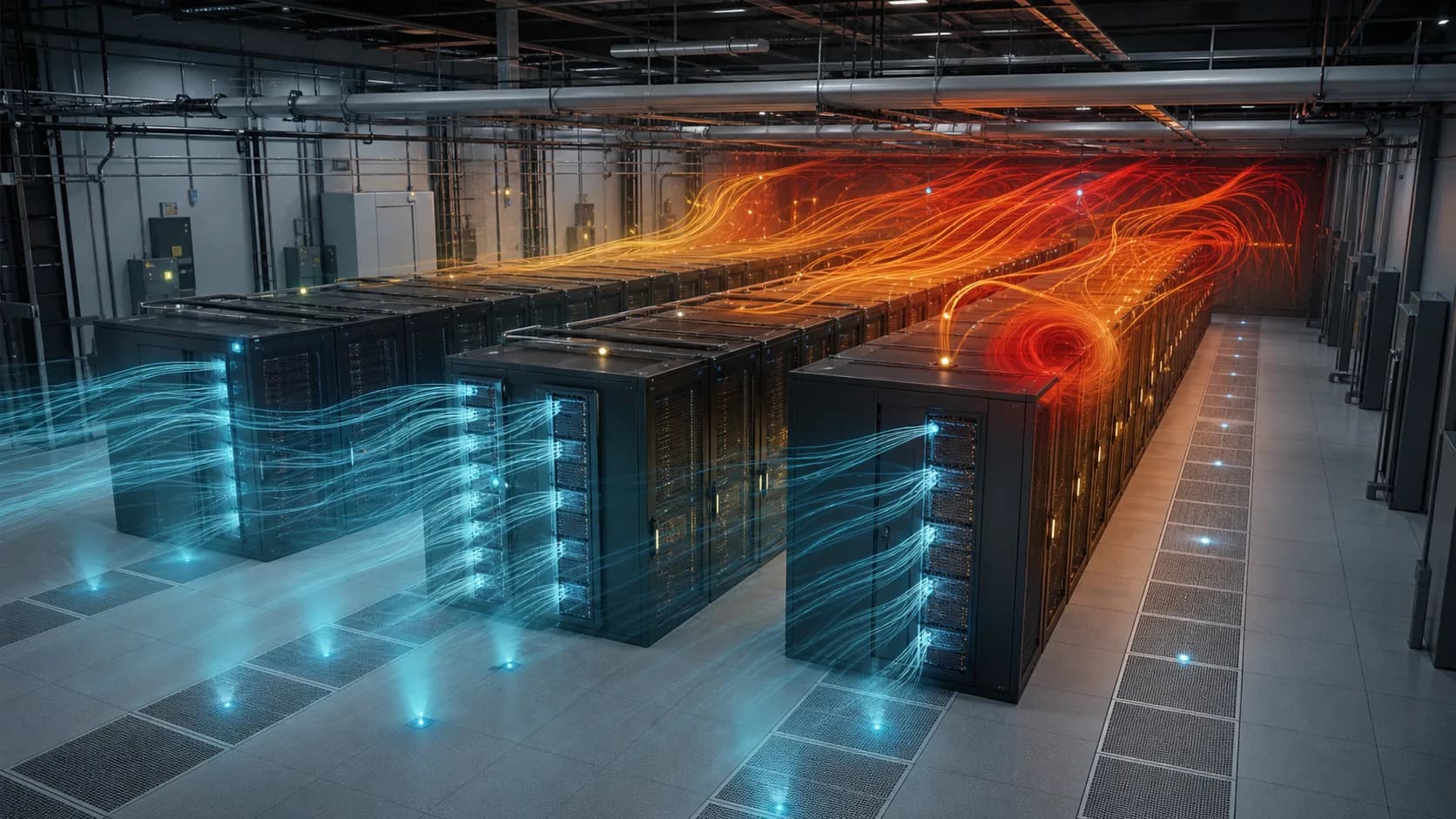
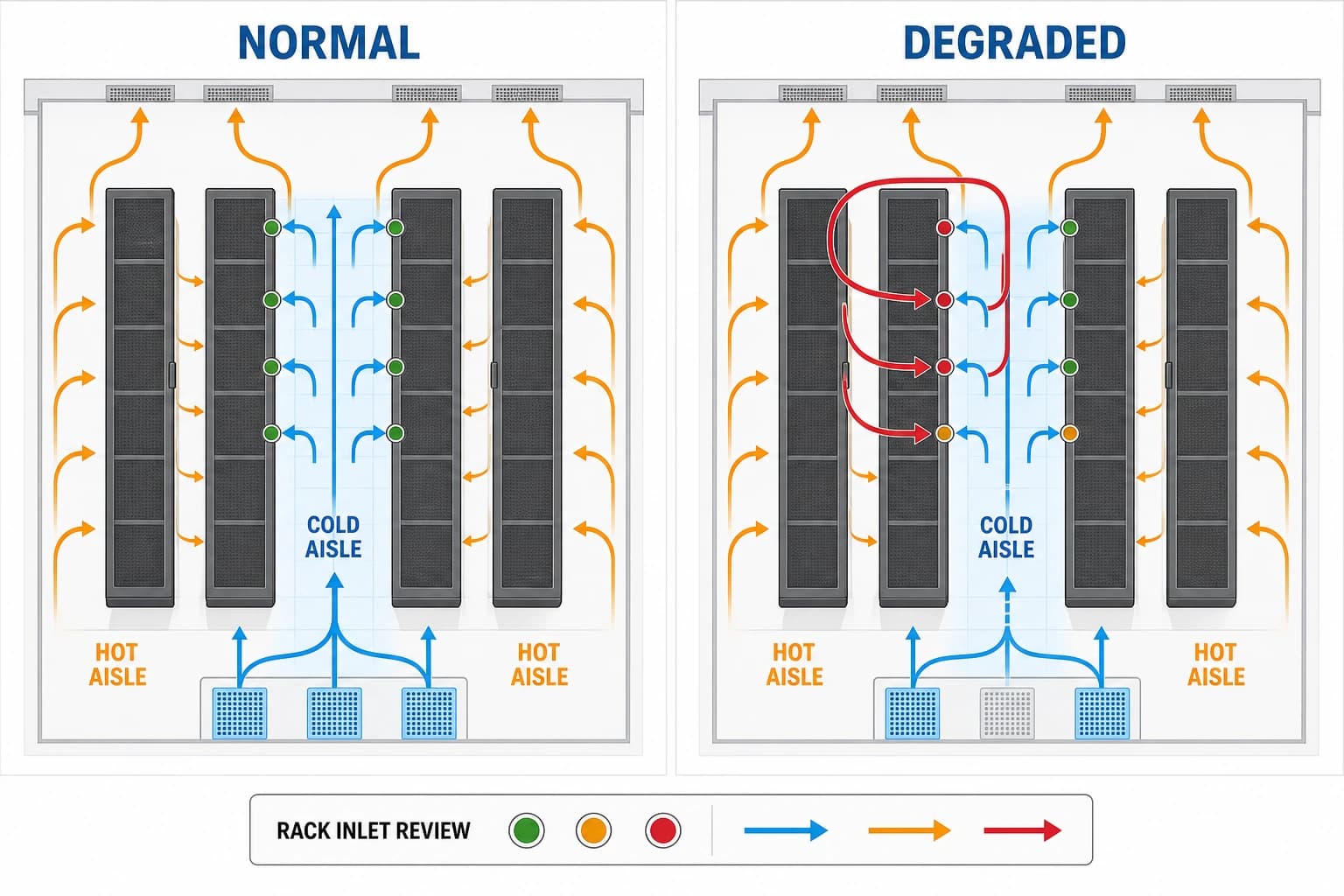
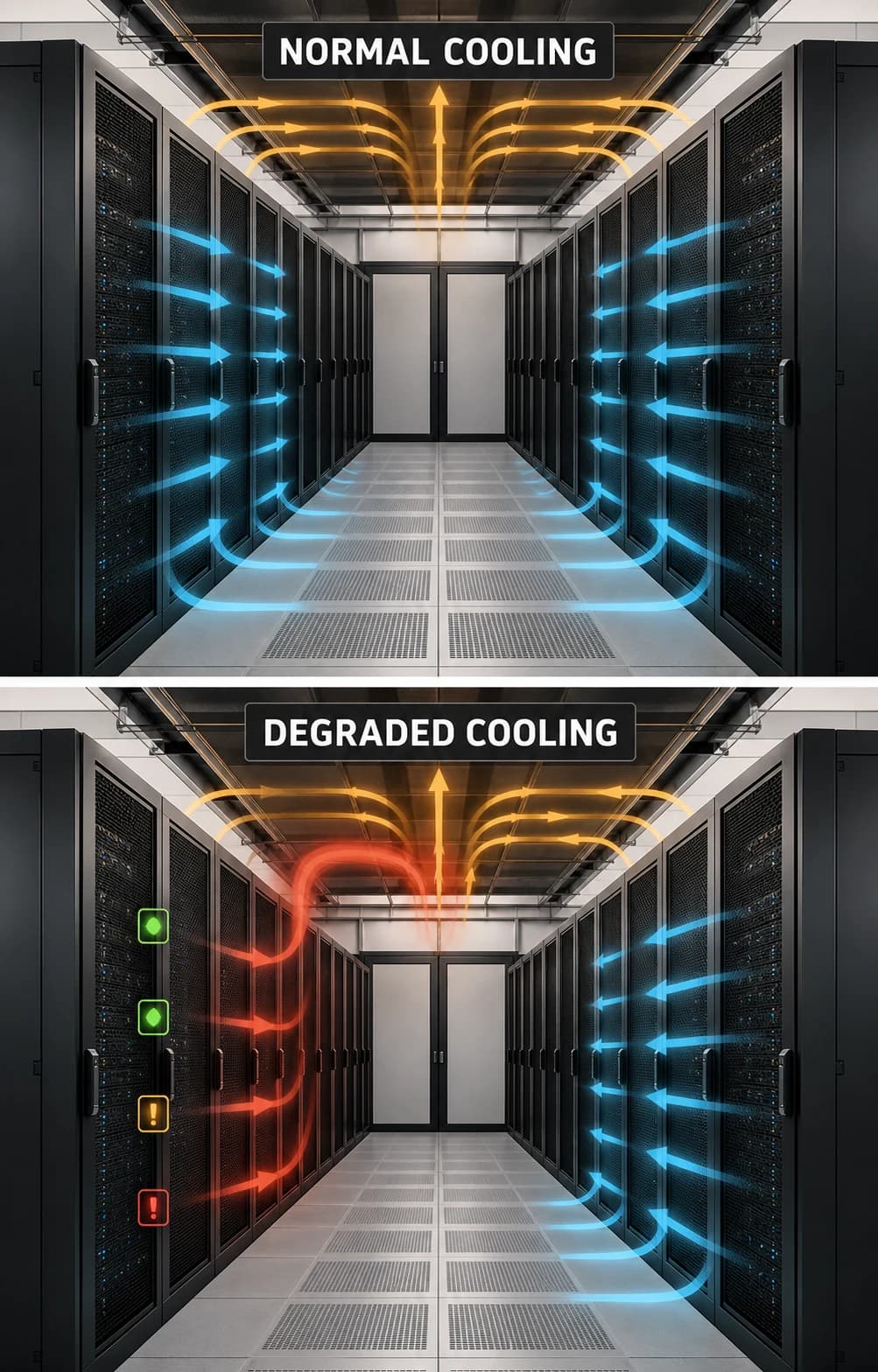
Add capacity with clearer evidence
Compare the current room with representative rack, load, containment, cooling, and layout alternatives before installation.
Turn fragmented facility data into decisions teams can test, approve, and execute
Connect facility context, AI-assisted operations, thermal and capacity evidence, predictive maintenance, and governed field execution across the data center lifecycle.
Connect data, workflows, and field execution so teams can understand context, act faster, and keep work traceable.
Give distributed teams a consistent view of sites, rooms, racks, power paths, cooling zones, facility assets, service ownership, and operating history.
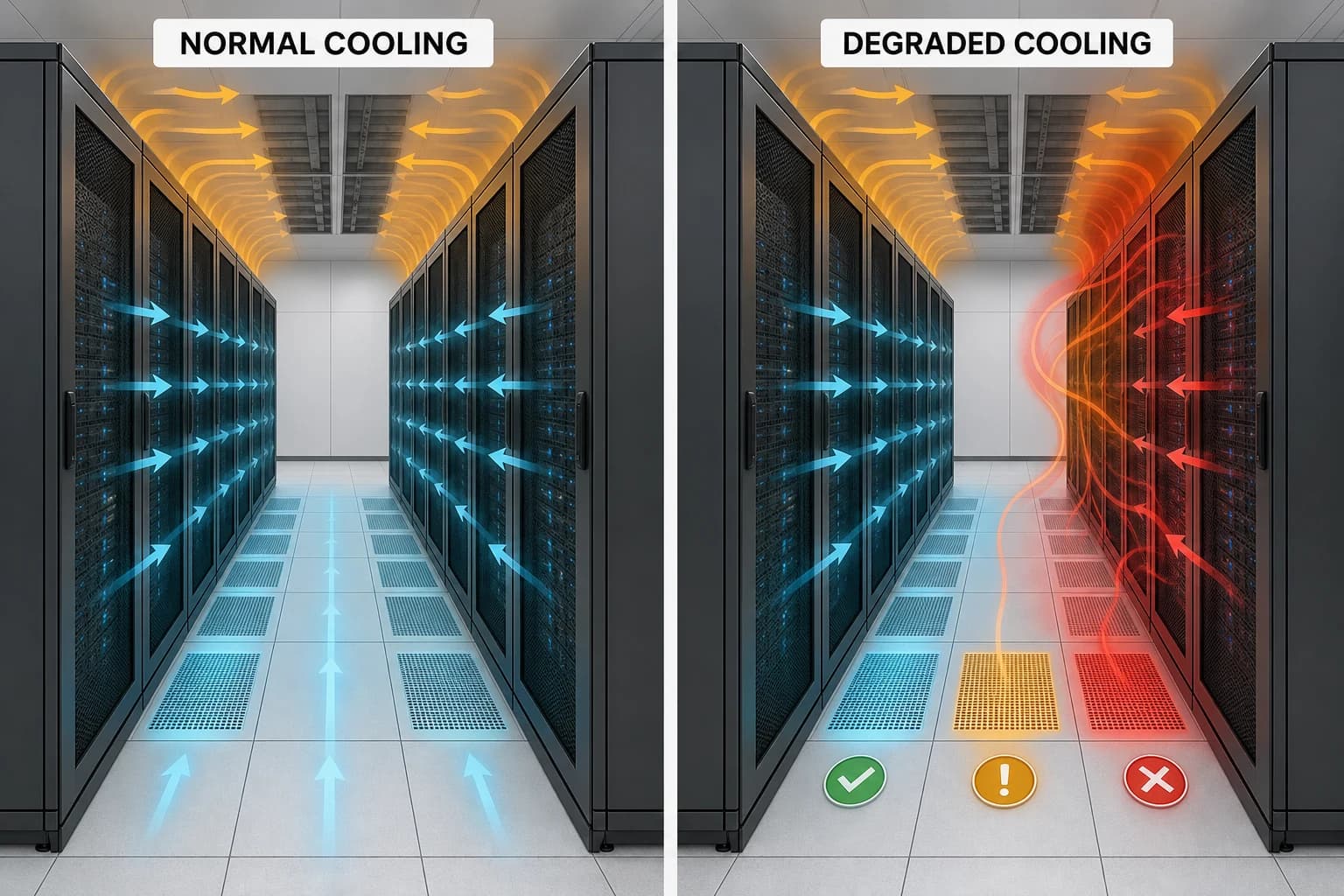
Evaluate defined load growth, rack-density, containment, cooling-degradation, and layout scenarios before approving facility change.
Bring affected assets, dependencies, alarms, measurements, maintenance records, and open work into the same investigation context.
Review equipment condition, anomaly evidence, criticality, and service history before accepted priorities enter maintenance planning.
Connect approved decisions to inspections, work orders, photos, repair notes, acceptance evidence, and post-work verification.
Rehearse procedures in facility context and prepare selected robot tasks for project-specific validation and site acceptance.
Practical applications and proven success scenarios across industries.
Compare the current room with representative rack, load, containment, cooling, and layout alternatives before installation.
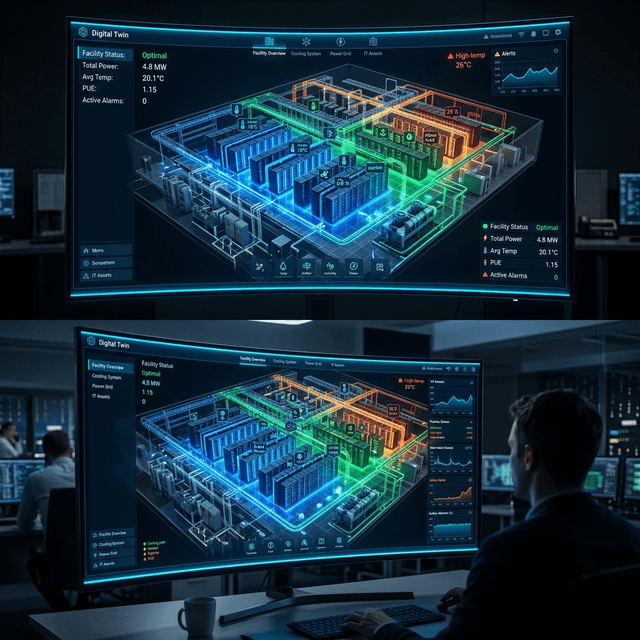
See the affected equipment, nearby conditions, dependencies, prior service activity, and responsible work team in one view.
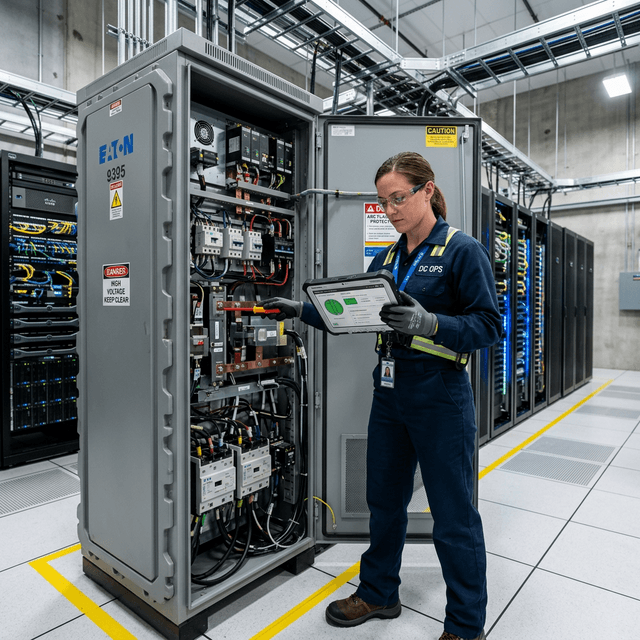
Combine condition signals, predictive evidence, open work, and asset criticality to prepare reviewable maintenance priorities.
Use a controlled virtual facility to rehearse procedures and validate selected tasks before they reach live equipment.
AI computing centers add a sharper version of the facility challenge. High-density racks, air and liquid cooling, electrical distribution, and changing compute loads have to be considered together. A space plan alone cannot establish whether the next rack or hardware generation fits the available power and cooling envelope.
Capacity growth, denser computing, critical infrastructure maintenance, energy accountability, and service continuity all depend on the same facility. The information needed to make those decisions is usually spread across DCIM, BMS, EPMS, meters, alarms, asset registers, maintenance systems, drawings, and field records.
DataMesh organizes that evidence around the actual site, room, rack, equipment, power path, cooling zone, dependency, and work history. Engineering, operations, maintenance teams, and approved AI Agents can work from the same facility context while existing source and control systems continue to perform their established roles.
Teams can connect the current asset and operating baseline with representative load, rack-density, containment, cooling, and layout scenarios. The comparison identifies constraints, assumptions, and areas that require deeper engineering review before equipment is installed or moved.
An alarm becomes easier to investigate when it is linked to the affected asset, upstream and downstream dependencies, environmental readings, recent events, inspection history, open work, and responsible team. The same context supports incident handover and post-event review.
Equipment condition, anomaly trends, asset criticality, operating impact, and repair history can be reviewed together. FactVerse AI Agent can help prepare priorities and evidence summaries, while maintenance owners approve planning, assignment, and field action.
The facility twin gives personnel a controlled environment for procedure rehearsal and task familiarization. Project-enabled robotics workflows can use the governed scene for selected task preparation and validation, followed by hardware integration, sim-to-real testing, safety review, and site acceptance.
Connected operational data supports daily visibility, alarm investigation, and maintenance prioritization. Exploratory models support option screening. Benchmarked and site-calibrated models add the evidence needed for more consequential site-specific decisions. Each project defines inputs, assumptions, checks, limits, and review ownership before results enter an approval workflow.
The Data Center Operations solution explains how the product stack supports this lifecycle. The Data Center Operations documentation provides detailed setup, BMS mapping, predictive maintenance, alarm-to-work-order, and FactSim procedures.
The NVIDIA Omniverse DSX Blueprint for AI Factory Digital Twins describes OpenUSD and SimReady workflows for linking facility assets to electrical and thermal simulation. FactVerse can supply the site, asset, and operating context for Omniverse scenes so project teams can compare defined AI computing center scenarios against the facility they operate. Learn how DataMesh brings these pieces together in the solution announcement and the Data Center Operations solution.
An operating facility can start by aligning one room, its critical assets, selected infrastructure signals, alarms, and work history around one recurring decision. A new facility can start from BIM, equipment information, commissioning records, and handover evidence so the twin is ready to support operations from the beginning.
DataMesh has delivered digital twin systems across multiple overseas data center sites for an international telecom operator. The delivered foundation covers multi-site asset management, energy calculation, inspection and repair workflows, and operational visualization. Project-enabled thermal, capacity, predictive maintenance, and robotics workflows build on that foundation according to the site, data readiness, and acceptance scope.
Continue with the most relevant products, solutions, guides, and public references for this topic.
DataMesh connects infrastructure and maintenance records to an operational digital twin. It adds spatial relationships, AI-assisted review, scenario evidence, and governed work execution while the existing source and control systems remain in place.
Teams can use shared asset and room context, data integration, energy calculation, alarm investigation, inspection, maintenance, work-order evidence, and operational visualization across one or multiple sites.
Thermal analysis is enabled for a defined engineering project. The project records geometry, loads, equipment states, boundary conditions, measurements, evidence level, comparison scenarios, and the qualified review owner.
FactVerse AI Agent and predictive maintenance workflows can relate equipment signals, anomaly evidence, maintenance history, and operational impact. The responsible team reviews the evidence before planning or dispatch.
Start with one room or data hall, a verified asset and source-data baseline, and one real decision such as alarm-to-work-order response, rack growth, cooling degradation, or critical-equipment maintenance.
Use a focused proof of concept to validate operational value before a wider rollout.