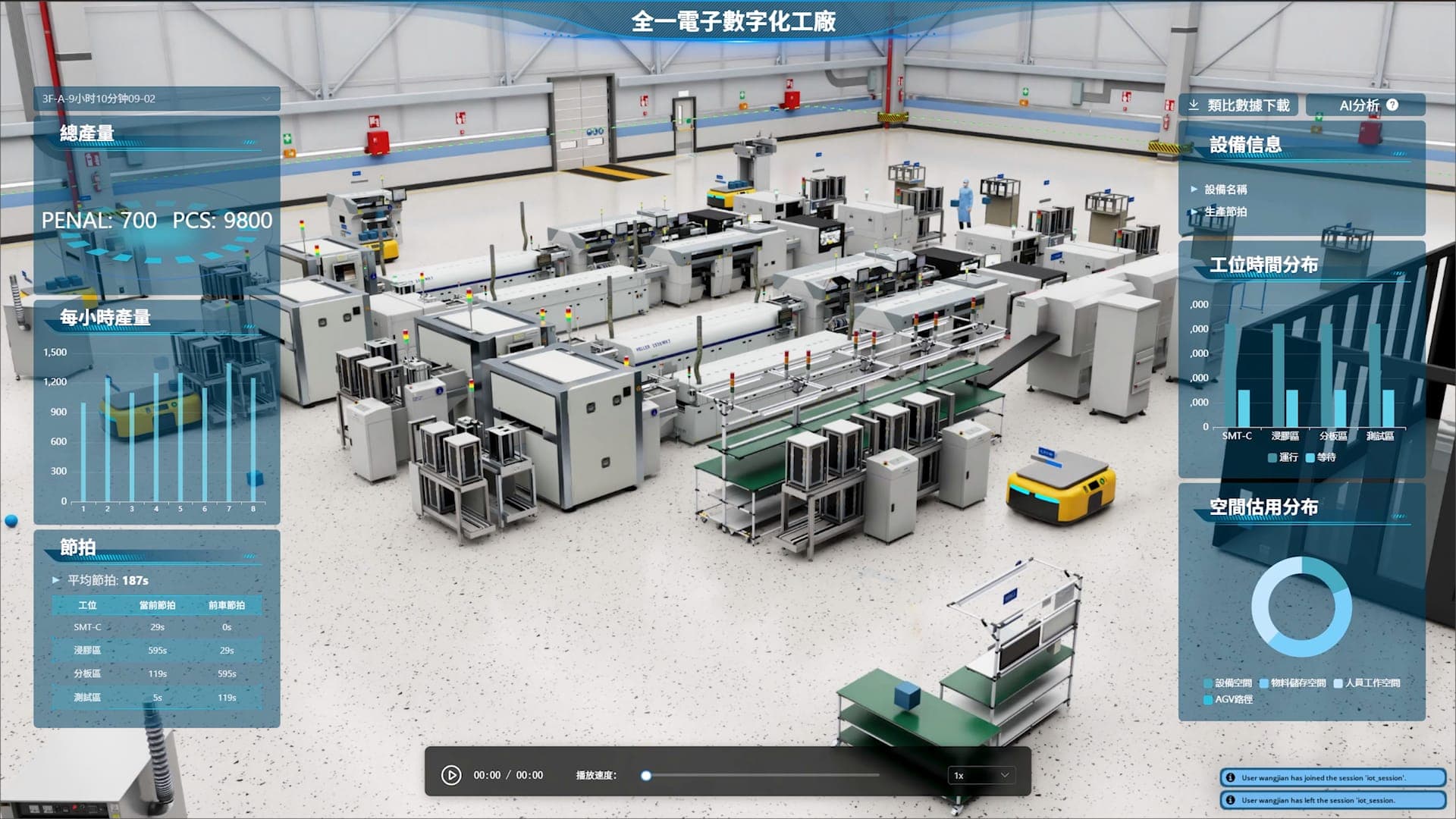
จาก visual model สู่ operating loop
Digital twin แบบดั้งเดิมมักเริ่มจาก 3D model, BIM data, equipment geometry หรือ dashboard เพื่อให้ทีมเห็น facility, production line, asset หรือ construction site ใน context เดียวกัน ชั้นนี้มีคุณค่าเพราะช่วยให้สภาพแวดล้อมที่ซับซ้อนเข้าใจง่ายขึ้น
Executable digital twin เพิ่ม operating loop รอบ model นั้น โดยเชื่อม real-time data, asset relationships, process logic, simulation, approval, work order และ validation record ทีมจึงสามารถ review สถานะปัจจุบัน ประเมิน scenario มอบหมายงาน และเก็บหลักฐานของแต่ละ decision ได้
นี่คือพื้นฐานของ Physical AI ในงาน industrial และ facility. AI recommendation จะมีประโยชน์มากขึ้นเมื่อผูกกับ real assets, spatial context, physical constraints, work history และ approval workflow
องค์ประกอบของ executable twin
Executable twin มักประกอบด้วยหกชั้นหลัก:
- Spatial and asset structure: sites, buildings, floors, zones, systems, equipment, points, documents และ ownership
- Live operating data: BMS, SCADA, IoT, meters, historians, CMMS, ERP, MES และ source systems อื่น
- Behavior and process logic: process steps, control assumptions, dependencies, procedures และ event conditions
- Simulation and scenario review: layout options, flow analysis, equipment movement, physical behavior และ comparison
- Workflows and field execution: inspections, tasks, work orders, SOPs, training, acceptance และ handoff
- Governance and evidence: approvals, records, model versions, photos, notes และ operating results
คุณค่าเกิดจากการเชื่อมชั้นเหล่านี้เข้าด้วยกัน Model แสดงตำแหน่งของ asset ส่วน executable twin แสดง data ของ asset, process ที่เกี่ยวข้อง, scenario ที่กำลัง review, งานที่ถูก assign และ record ที่ยืนยันผลจาก field
Physical AI ต้องการ context แบบนี้
Physical AI ทำงานกับ operations จริง Recommendation ต้องเข้ากับ site, asset, process, people รวมถึง safety rule และ approval rule ขององค์กร คำตอบจาก model เพียงอย่างเดียวมักขาด context เหล่านี้
Executable twin ให้ governed operating context แก่ Physical AI:
- อธิบายว่า signal นั้นเป็นของ asset, system, zone และ process ใด
- ให้ historical records และ real-time conditions สำหรับ reasoning
- ให้พื้นที่สำหรับเปรียบเทียบ proposed changes ด้วย simulation
- ส่ง approved actions ไปยัง inspection, maintenance, training หรือ construction workflows
- เก็บ traceable record ของ recommendation, approval, execution และ verification
สำหรับผู้ซื้อ จุดสำคัญคือ digital twin เข้าสู่ operating system ขององค์กรได้จริงหรือไม่
บทบาทของ DataMesh stack
Data Fusion Services เชื่อม enterprise, industrial, IoT และ facility data sources. FactVerse จัดระเบียบ data, assets, scenes และ application context. FactVerse Twin Engine render และ execute 3D twin experience บนอุปกรณ์และ scenarios ต่าง ๆ
FactVerse Designer รองรับ scene authoring, process logic, virtual planning และ simulation workflows. สำหรับทีมที่ใช้ NVIDIA Omniverse, FactVerse Adaptor for NVIDIA Omniverse สามารถนำ FactVerse scene structure, metadata และ behavior context เข้าสู่ USD และ Omniverse validation workflow
FactVerse AI Agent ใช้ connected context เพื่อรองรับ anomaly review, forecasting, operational Q&A, recommendation summary และ decision handoff. Inspector เปลี่ยน approved findings เป็น inspections, work orders, field records, acceptance และ evidence
ชั้นเหล่านี้ทำให้ทีมสามารถ view, analyze, simulate, execute และ review digital twin เดียวกันได้
รูปแบบ implementation ที่ใช้บ่อย
Rollout ที่ practical ควรเริ่มจาก operating loop หนึ่งชุด:
- เชื่อม source data และกำหนด ownership ของแต่ละ source system
- Map assets, spaces, systems และ points เข้าสู่ shared twin structure
- เพิ่ม behavior logic, process steps, procedures หรือ scenario assumptions
- Validate options ด้วย simulation, engineering review หรือ operational replay
- ส่ง approved actions เข้าสู่ inspection, maintenance, training หรือ construction workflows
- เก็บ completion records และเปรียบเทียบ outcome กับ operating data
รูปแบบนี้ทำให้งานเป็น concrete และช่วยให้ stakeholder เห็นว่า twin กำลังเข้าสู่ daily execution อย่างไร
จุดที่สร้างคุณค่าได้เร็ว
| Starting point | Practical use |
|---|---|
| Facility operations | เชื่อม assets, meters, BMS points, inspections และ maintenance records ใน spatial context |
| Predictive maintenance | รวม sensor data, asset history, anomaly review, work orders และ verification records |
| Process simulation | เปรียบเทียบ layouts, material flow, equipment movement และ operating assumptions ก่อน site changes |
| Construction guidance | เชื่อม BIM, site context, method statements, schedule checks และ field guidance |
| Workforce training | เปลี่ยน equipment, procedures, hazards และ scenario records เป็น repeatable training workflows |
Use case แรกควรมี data ownership ชัดเจน มี operating process ที่วัดผลได้ และมีทีมที่ execute และ verify actions ได้
Evaluation checklist
ใช้คำถามเหล่านี้เมื่อเปรียบเทียบ digital twin platforms:
- Platform เชื่อม live operational data กับ assets, systems และ spaces ได้หรือไม่
- Platform แสดง behavior, process logic และ scenario assumptions ได้หรือไม่
- ทีมทำ simulation หรือ scenario review ก่อน operational change ได้หรือไม่
- Recommendations ส่งต่อเข้า approved inspection, maintenance, training หรือ construction workflow ได้หรือไม่
- Field teams เก็บ photos, notes, acceptance records และ completion status ได้หรือไม่
- Engineers และ operators trace decision กลับไปยัง data, model context และ approval history ได้หรือไม่
- Twin เดียวกันรองรับ visualization, monitoring, simulation และ workflow execution ได้หรือไม่
- Platform รองรับ enterprise governance ข้าม users, sites และ systems ได้หรือไม่
Executable twin มีคุณค่ามากขึ้นเมื่อแต่ละคำตอบผูกกับ workflow จริงและทีมที่รับผิดชอบชัดเจน
ผลลัพธ์เชิงปฏิบัติ
Executable digital twin ช่วยให้ทีม industrial และ facility move จาก shared visualization สู่ governed execution. ผลลัพธ์ช่วงแรกมักเป็นเรื่อง practical เช่น operational context ชัดขึ้น cross-team review เร็วขึ้น handoff จาก analysis ไป field work ดีขึ้น evidence records แข็งแรงขึ้น และ scenario comparison มีวินัยมากขึ้น
เมื่อ operating loop เติบโต Physical AI จะใช้ context ที่ลึกขึ้นได้ Recommendations สามารถอิง asset data, system relationships, simulation results, work history และ site governance. Digital twin จึงกลายเป็น working layer สำหรับ real-world decisions