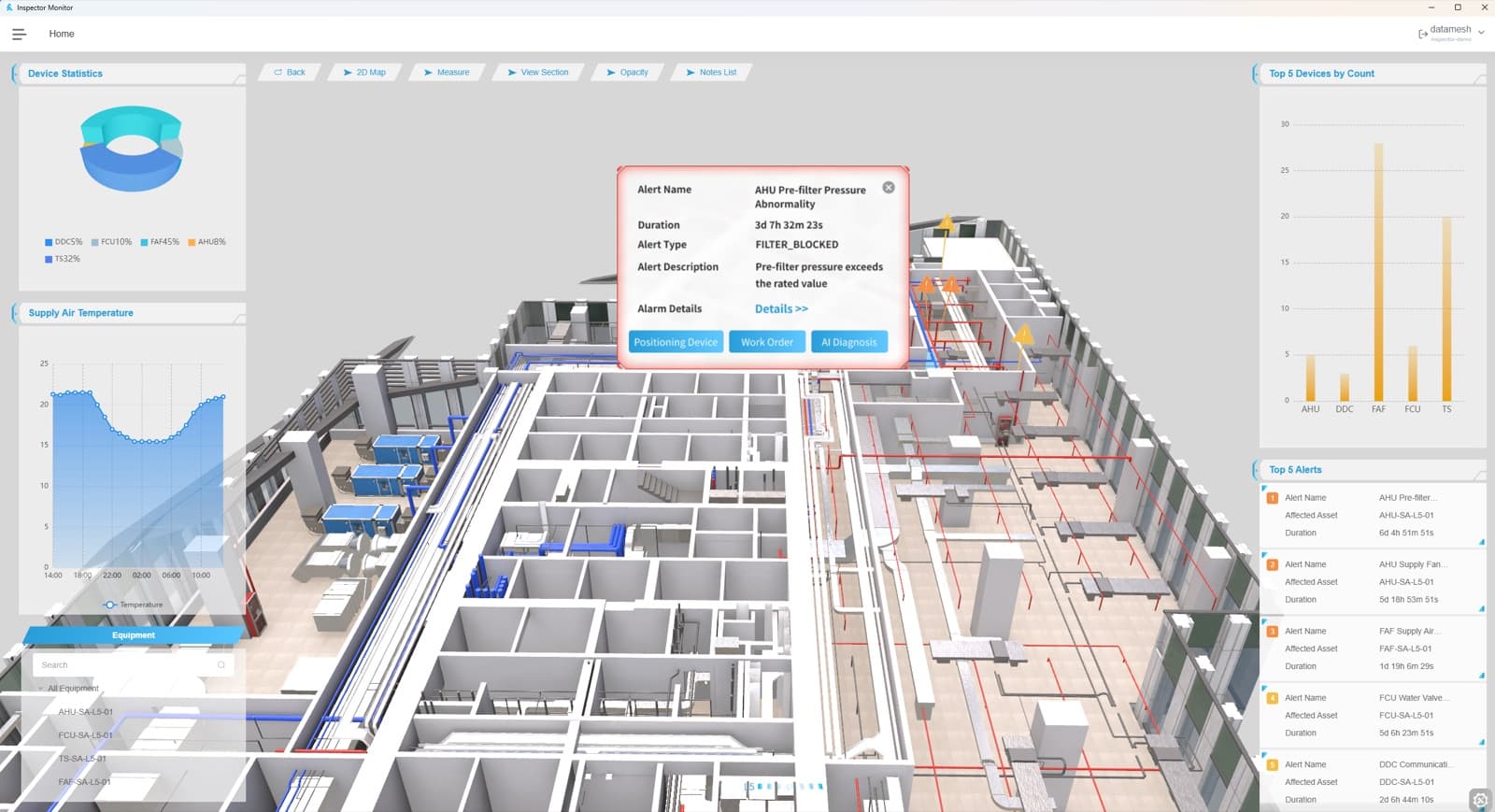
Facility management ต้องมี operating context เดียวกัน
Large facilities ถูกบริหารผ่านหลายระบบเฉพาะทาง เช่น BMS, EMS, meters, alarms, asset registers, CMMS, EAM, BIM, drawings, service reports และ inspection records แต่ละระบบอธิบายเพียงส่วนหนึ่งของ site เมื่อมี issue, work order, energy pattern change หรือ management ต้องการ evidence ทีมต้องเชื่อมข้อมูลเหล่านี้กลับเข้าหากัน
AI facility management เริ่มจาก operational digital twin ตัว twin เชื่อม spaces, assets, systems, data, work records, documents และ field execution เพื่อให้ทีม review facility conditions ใน context เดียวกัน AI ช่วย summarize abnormalities, compare patterns, draft recommended actions และเตรียม management review
Pattern นี้ใช้ได้กับ buildings, campuses, data centers, plants, utilities และ high-tech manufacturing facilities ใน advanced manufacturing programs ทีม facility มักต้องดูแล cleanroom support systems, power, compressed air, cooling, exhaust, alarms, inspections และ service handoffs ในหลาย sites Shared twin ทำให้ review และ execution มี context ที่มั่นคง
Facility twin ควรเชื่อมอะไร
| Layer | Operating context |
|---|---|
| Spaces | Site, building, floor, room, zone, clean area, service corridor, access route และ safety boundary |
| Systems | HVAC, cooling, power distribution, lighting, water, compressed air, exhaust, fire safety, elevators และ process utilities |
| Assets | Equipment registry, asset IDs, documents, service owner, maintenance plan, warranty context และ spare-part references |
| Signals | BMS points, meters, sensors, alarms, environmental readings, historian tags และ calculated indicators |
| Work | Inspections, work orders, corrective actions, photos, field notes, acceptance records และ verification status |
| Energy | Meter readings, EUI, load composition, operating hours, weather context, setpoints และ improvement options |
| Semantics | Buildings, systems, equipment, meters, sensors, points และ relationships ที่ aligned กับ Brick Schema |
| Governance | Source owner, data quality, approval route, operating responsibility, version และ evidence retention |
Twin จะมีประโยชน์เมื่อ signal สามารถ trace ไปยัง space, asset, system, responsible team และ field record ที่เกี่ยวข้องได้
DataMesh workflow สำหรับ AI facility management
- Collect facility sources - รวม BMS, EMS, meters, IoT, historians, asset registers, CMMS, EAM, BIM/IFC, drawings, inspection plans และ service reports
- Build the operating twin - ใช้ FactVerse และ Twin Engine จัด spaces, assets, utility systems, documents, routes, points และ work context
- Connect data pipelines - ใช้ Data Fusion Services ingest, clean, normalize, compute และ bind operating data กับ twin objects ที่ถูกต้อง
- Structure facility semantics - ใช้ Brick Schema-aligned relationships เมื่อ buildings, zones, equipment, meters, sensors และ points ต้องมี meaning ที่สม่ำเสมอ
- Review with AI assistance - ใช้ FactVerse AI Agent summarize abnormal consumption, repeated alarms, missing records, maintenance patterns และ candidate actions
- Compare energy scenarios - ใช้ EnergyPlus-based workflows เมื่อจำเป็นต้องทำ building energy modeling และ scenario comparison
- Execute and verify work - ใช้ Inspector สร้าง inspections, work orders, assignments, photos, repair notes, acceptance records และ verification evidence
ผลลัพธ์คือ operating loop จาก signal ไป analysis จาก analysis ไป work และจาก work ไป verified record
AI เพิ่มคุณค่าตรงไหน
AI มีประโยชน์มากขึ้นเมื่อ facility context ถูกเชื่อมไว้แล้ว FactVerse AI Agent ช่วย review operational data และ work history จำนวนมากได้เร็วกว่าการดู dashboard ทีละชุด
Review patterns ที่พบบ่อย ได้แก่:
- Repeated alarms ตาม space, system, asset, time window และ work history
- Abnormal energy use ตาม meter, zone, asset group, weather และ operating schedule
- Maintenance-prone assets ที่มี recurring repairs, incomplete records หรือ repeated acceptance failures
- Cleanroom หรือ controlled-area drift ที่ต้องใช้ facility, utility และ maintenance context
- Work-order backlog patterns ข้าม sites, service teams และ asset classes
- Improvement candidates ที่ต้องมี engineering review, cost context และ field validation
บทบาทของ AI คือ decision support ส่วน responsible owners, approval rules, field execution และ verification evidence ยังเป็นส่วนของ facility operations
Brick Schema และ EnergyPlus ใน workflow เดียวกัน
Brick Schema ให้ semantic layer ที่สม่ำเสมอกับ building และ facility data Temperature point สามารถเชื่อมกับ sensor, zone, air system และ equipment ที่ถูกต้อง Meter สามารถเชื่อมกับ system หรือ space ที่วัด Work order สามารถเชื่อมกับ asset, alarm, document และ inspection ที่เป็นต้นเหตุ
Semantic layer นี้ช่วยให้ maintenance, energy analysis, Green Mark readiness และ management review trace ได้ดีขึ้น และยังให้ context ที่ดีกับ AI Agent เมื่อต้อง summarize issues หรือเตรียม recommended actions
EnergyPlus เหมาะกับกรณีที่ทีมต้องการ energy analysis เชิงลึก DataMesh สามารถเชื่อม BIM/IFC, weather data, operating records และ digital twin context กับ EnergyPlus-based building energy models เพื่อ compare EUI, load composition, operating schedules, setpoints, retrofit options และ control strategy changes
ผลวิเคราะห์ควรกลับเข้าสู่ operating loop ทีมสามารถสร้าง work orders, บันทึก assumptions, เก็บ field results และ compare post-action operating record กับ baseline
เริ่มจากตรงไหน
ขอบเขตเริ่มต้นที่ดีควรมี facility data, asset ownership และ execution path อยู่แล้ว:
- Utility systems ที่มี repeated alarms หรือ service ownership ไม่ชัดเจน
- HVAC และ cooling systems ที่ต้อง review energy หรือ comfort
- Cleanroom support systems ที่ต้องแชร์ environmental drift และ maintenance records
- Meter groups และ high-load zones สำหรับ energy governance
- Inspection-heavy equipment ที่มี recurring field records
- Multi-site facility portfolios ที่ต้องการ comparable asset classes และ reports
Pilot แรกควรเลือก asset group ที่จัดการได้ data sources ไม่กี่ชุด work-order path ที่ชัดเจน และ review metrics ที่ facility team เชื่อถืออยู่แล้ว
Metrics ที่ควร validate
AI facility management ควร validate กับ baseline ของแต่ละ site Metrics ที่ใช้ได้ ได้แก่:
- Time from alarm หรือ finding to review
- Share of findings ที่เปลี่ยนเป็น planned work
- Work-order closure quality และ evidence completeness
- Repeat alarm rate หลัง corrective work
- Energy baseline completeness และ review frequency
- Data mapping coverage สำหรับ priority assets และ systems
- Field team acceptance ของ guided procedures และ record capture
- Management review quality ข้าม sites, assets และ service teams
โปรแกรมที่ mature ควร validate work quality และ decision traceability ก่อนประเมิน savings
Public references
JTC and DataMesh collaboration แสดงการใช้ digital twin และ mixed reality กับ complex facility และ construction workflows
Yokogawa predictive maintenance reference แสดงทิศทาง public สำหรับ AI-assisted maintenance review ใน industrial facilities
Swire Coca-Cola maintenance reference แสดงว่า frontline training, maintenance process digitization และ field records ช่วย support execution อย่างไร
Faurecia and EVE Energy reference แสดงว่า operational visibility, energy context และ digital twin workflows ช่วย support manufacturing และ facility improvement programs อย่างไร