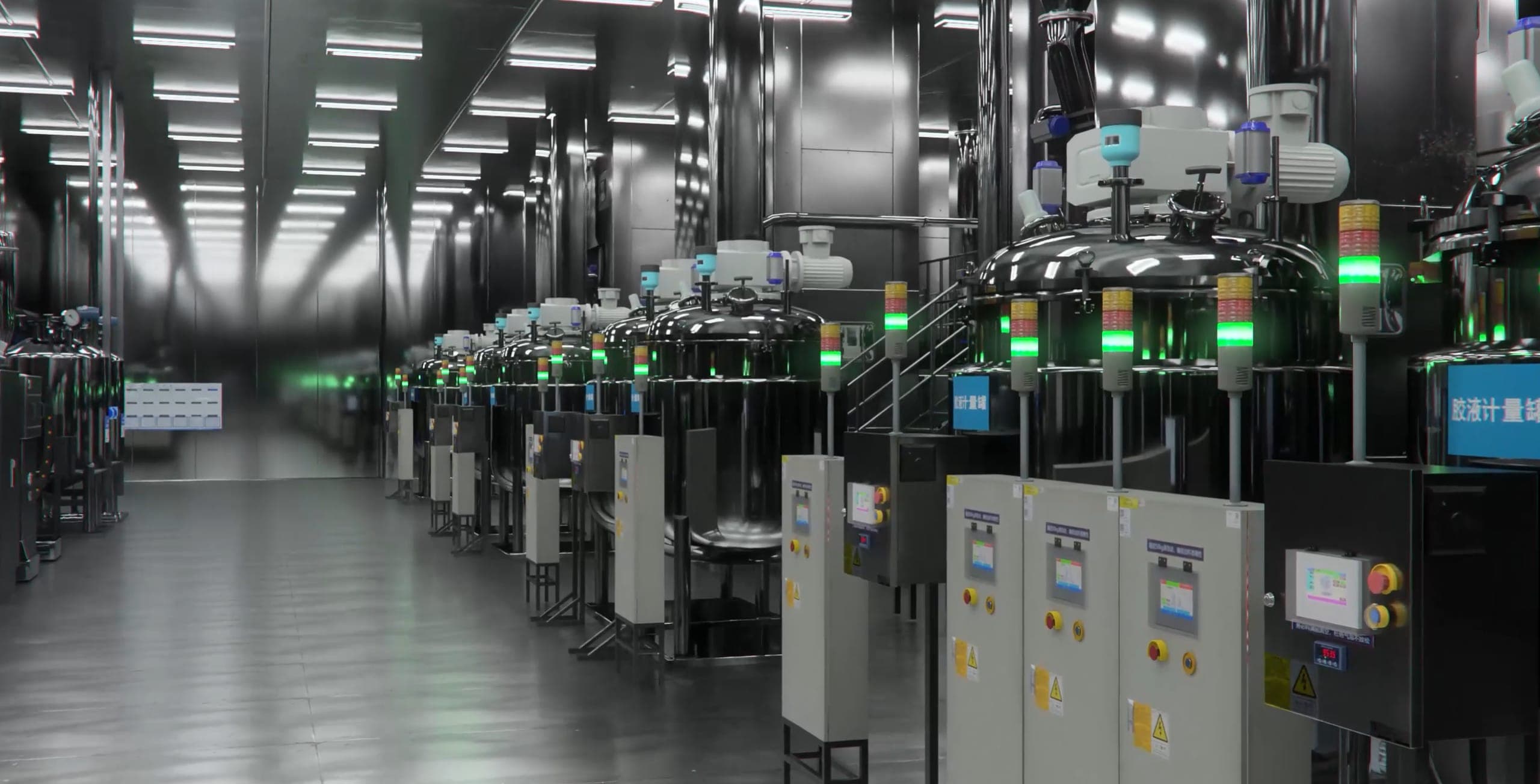
Physical AI starts with real operating context
Industrial AI becomes useful when it understands the place where decisions happen. A facility, production line, data center, utility room, warehouse, or construction site has assets, spaces, signals, people, procedures, physical constraints, and approval rules. Physical AI brings those layers into the decision workflow.
For DataMesh, Physical AI is an operating capability built around executable digital twins. The twin holds the physical context. AI supports analysis and recommendation. Simulation helps teams compare possible outcomes. Field applications carry approved work into inspections, work orders, training, or operating procedures. Verification records bring the result back into the twin.
That loop matters because industrial decisions have consequences in the real world. A recommendation needs asset context, operating state, spatial constraints, process dependencies, and a clear path into execution.
The core layers of Physical AI
| Layer | What it contributes |
|---|---|
| Operational data | BMS, SCADA, IoT, MES, CMMS, EAM, meters, alarms, work history, and documents |
| Physical context | Sites, buildings, floors, zones, systems, equipment, routes, safety areas, and access constraints |
| Behavior and process logic | State changes, dependencies, procedures, timing, exceptions, and workflow rules |
| Simulation and scenario review | Layout comparison, process validation, physics assumptions, training scenarios, and robotics preparation |
| AI decision intelligence | Anomaly review, forecasting, evidence summaries, option comparison, and next-action recommendations |
| Execution workflows | Inspections, work orders, guided procedures, training, acceptance records, and field evidence |
The strongest Physical AI programs keep these layers connected. AI can then work with the same asset names, operating relationships, and evidence records that engineering and operations teams already use.
The DataMesh operating loop
- Connect data - Data Fusion Services brings operational data from plant systems, facility systems, enterprise platforms, meters, sensors, and documents into a shared context.
- Build the executable twin - FactVerse and Twin Engine organize assets, spaces, relationships, live state, behavior logic, and scenario records.
- Author and simulate scenarios - Designer and Omniverse-related workflows help teams review layouts, process flows, equipment movement, packaging behavior, robotics paths, and training scenarios.
- Analyze with AI Agent - FactVerse AI Agent reviews signals, trends, asset context, and knowledge sources to support diagnosis, prioritization, and recommended next steps.
- Execute through applications - Inspector, Checklist, Director, Simulator, and DataMesh One turn approved decisions into work orders, guided tasks, training, and field records.
- Verify the result - Completion status, notes, photos, acceptance records, exceptions, and operating results return to the twin for review and improvement.
This is why Physical AI should be planned as a loop. The value comes from the connection between analysis, validation, execution, and review.
How this differs from general AI in operations
General AI can summarize documents, answer questions, or generate reports. Industrial Physical AI needs additional operating context. It needs to know which asset is involved, where it sits, which system it belongs to, which signals are relevant, which process state matters, and how a recommended action should move into governed work.
An alarm on a pump, for example, can connect to the pump asset, upstream and downstream equipment, historical work orders, current operating state, spatial location, inspection route, safety area, and maintenance procedure. AI can then support the review with richer evidence, while the twin keeps the decision grounded in the real site.
The same pattern applies to equipment maintenance, energy analysis, process simulation, operator training, facility management, construction guidance, and robotics workflows.
Where DataMesh products fit
FactVerse is the platform foundation. It connects the twin execution engine, AI decision engine, data services, authoring tools, and frontline applications into one operating architecture.
FactVerse Twin Engine is the physical context layer. It binds assets, spaces, relationships, behavior logic, live data, and workflow state into an executable twin.
Data Fusion Services prepares the operational data foundation across industrial systems, facility systems, enterprise systems, and documents.
FactVerse Designer owns scene authoring, behavior modeling, layout planning, process logic, virtual planning, and simulation preparation.
FactVerse AI Agent supports analysis, diagnosis, forecasting, knowledge review, recommendation summaries, and decision handoff.
Inspector, Checklist, Director, Simulator, and Robotics extend the loop into inspections, work execution, guided procedures, operator training, and Physical AI data preparation.
Practical starting points
- Alarm-to-work-order loop: connect alarms, asset context, inspection records, AI-assisted triage, work orders, and verification.
- Predictive maintenance loop: combine sensor trends, operating context, maintenance history, risk review, and field execution.
- Facility energy review: connect meters, equipment state, zones, inspections, work orders, and scenario analysis.
- Process simulation: compare layout, packaging, material flow, robot paths, and operator access before physical changes.
- Operator training: use digital twin context and Simulator scenarios to support repeatable practice around equipment behavior.
- Robotics preparation: prepare assets, scenes, synthetic data, labels, and task context for Physical AI and robotics workflows.
Start with a bounded workflow that has data access, an accountable owner, a review path, and a way to verify the result.
Evaluation checklist
- Does the system connect operational data to assets, spaces, systems, and work records?
- Does the twin include physical context, behavior logic, process state, and version history?
- Can teams review proposed actions through simulation, scenario comparison, or engineering checks?
- Can AI recommendations move into inspections, work orders, guided procedures, training, or robotics workflows?
- Can operators and engineers see the evidence behind a recommendation?
- Can the organization record approval, execution, exceptions, and verification?
- Can the same context support facility operations, manufacturing, training, maintenance, and simulation over time?
These questions keep Physical AI tied to operating reality and away from isolated AI experiments.
Public references
The FactVerse AI Agent launch describes DataMesh's public direction for simulation-driven operations in complex facilities.
The FactVerse and NVIDIA Omniverse announcement and GTC 2025 showcase show how simulation digital twins, OpenUSD workflows, and Physical AI preparation fit into DataMesh's public platform story.
The NIO smart factory, JTC collaboration, and Yokogawa predictive maintenance references provide public examples of digital twin context, facility operations, and AI-assisted maintenance themes.