DataMesh Demonstrates Physical AI and Robotics at TECH BEAT Shizuoka 2026
DataMesh presented FactVerse industrial digital twins, Physical AI, and robotics simulation to manufacturers and ecosystem partners at TECH BEAT Shizuoka 2026.
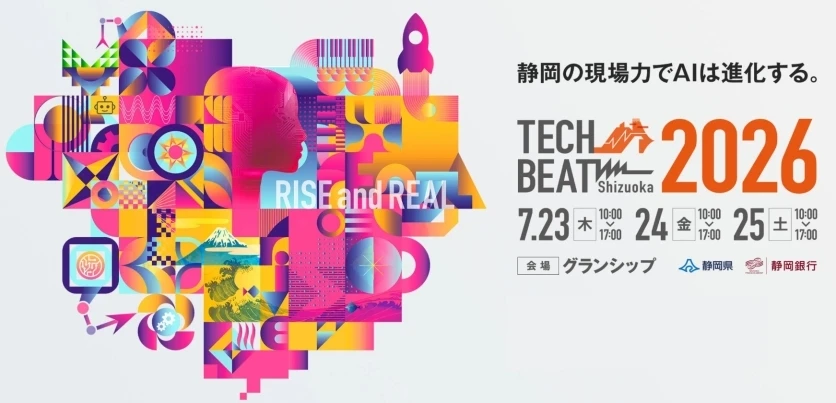
DataMesh participated as a specially invited exhibitor at TECH BEAT Shizuoka 2026, held from July 23 to 25 at Granship in Shizuoka City. The event connects companies in Shizuoka Prefecture with technology providers and startups to explore new projects and industrial collaboration.
At the DataMesh booth, manufacturing leaders and technology partners explored how FactVerse, Physical AI, and DataMesh Robotics can support simulation-driven innovation in factories.
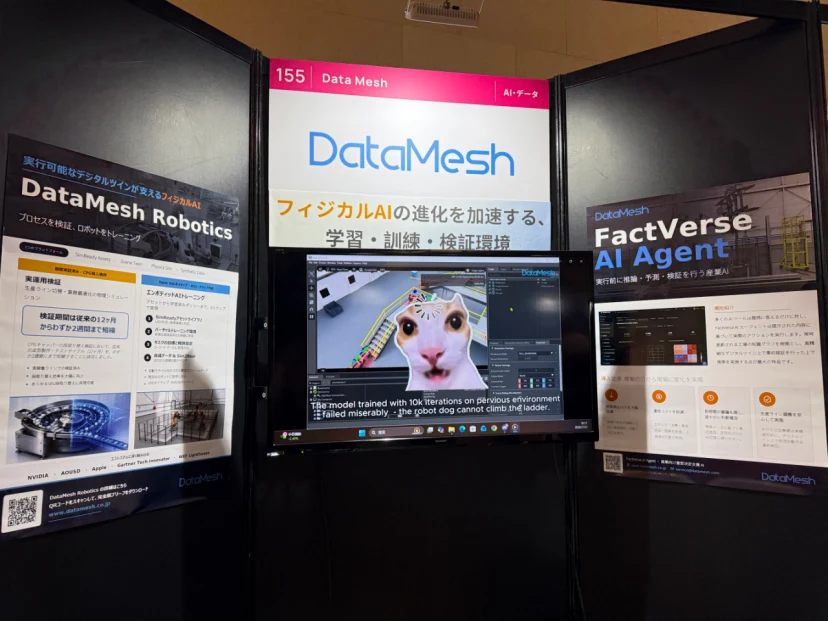
Physical AI and robotics for industrial digital twins
FactVerse provides executable digital twin environments in which industrial objects, processes, events, and operating logic can be represented together. DataMesh Robotics extends this foundation with industrial scene modeling, physics-based simulation, sensor simulation, and synthetic data generation for robotics development and validation.
The platform can connect with established industrial simulation ecosystems, helping teams prepare robot motion scenarios, production-line process simulations, and task environments. Selected tests can move into a virtual environment before on-site trials, allowing teams to compare more alternatives while keeping engineering review in the loop.
Bringing AI into operating context
A connected digital environment gives AI Agents access to equipment, process, spatial, and workflow context. Teams can use that context to investigate anomalies, evaluate process changes, and organize information for frontline decisions.
This approach connects AI with the operating conditions of an entire work scenario instead of treating it as an isolated algorithm. The same environment can support simulation, training, maintenance planning, and continuous improvement.
Start with a production line, station, or task
DataMesh presented a phased adoption path for manufacturers: begin with a defined production line, critical workstation, or repeatable task, then build the digital twin around measurable business needs. Feasibility validation, workforce training, and equipment maintenance provide practical starting points.
System integrators can use the environment for proposal demonstrations, frontline training, and collaborative debugging. Robot, sensor, and edge-computing partners can connect device data and processes to a shared industrial context.
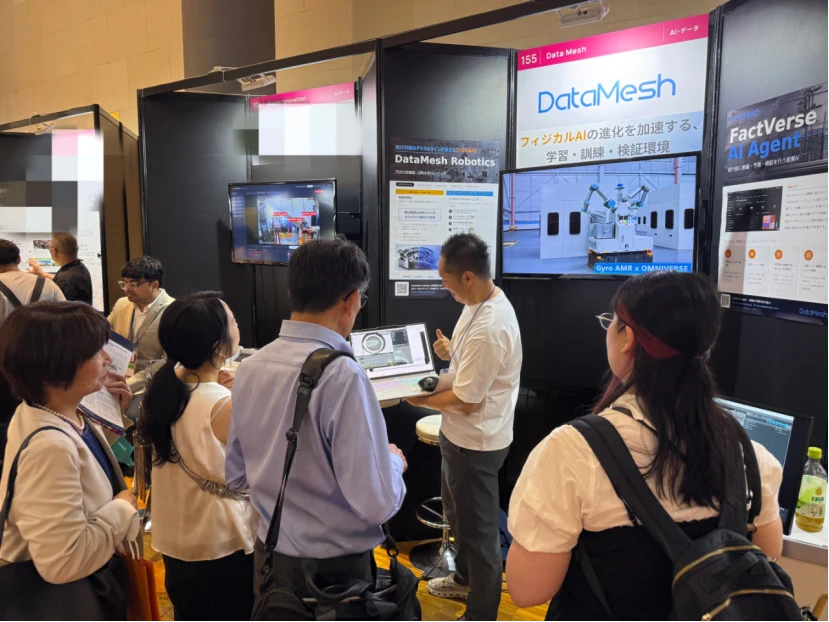
Collaboration across the manufacturing ecosystem
Discussions at the event reinforced that industrial Physical AI depends on cooperation among manufacturers, system integrators, robot makers, hardware providers, and industrial software companies. Each contributes operating knowledge, equipment interfaces, engineering constraints, or delivery capabilities.
DataMesh will continue working with partners in Japan to bring digital twins, simulation, and Physical AI into more manufacturing environments, helping teams move from visual models toward digital environments that support planning, validation, training, and operational improvement.