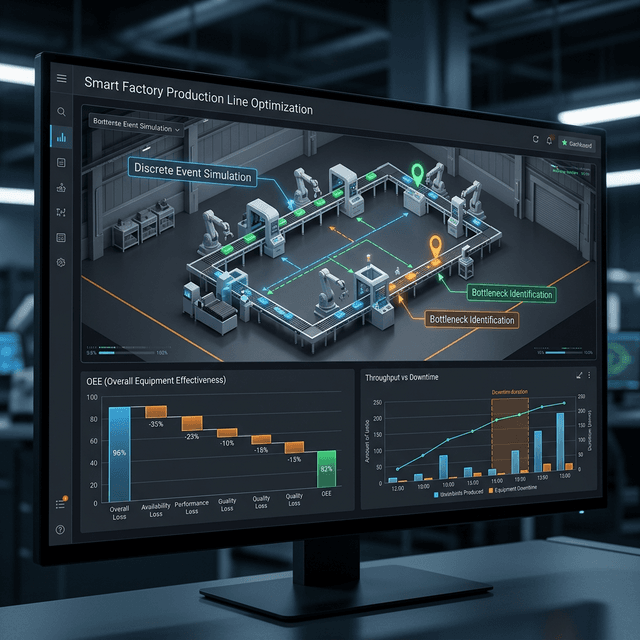
Production line optimization
DES simulation evaluates production line configurations, identifies bottleneck stations, and optimizes scheduling — helping improve OEE metrics across manufacturing cells.
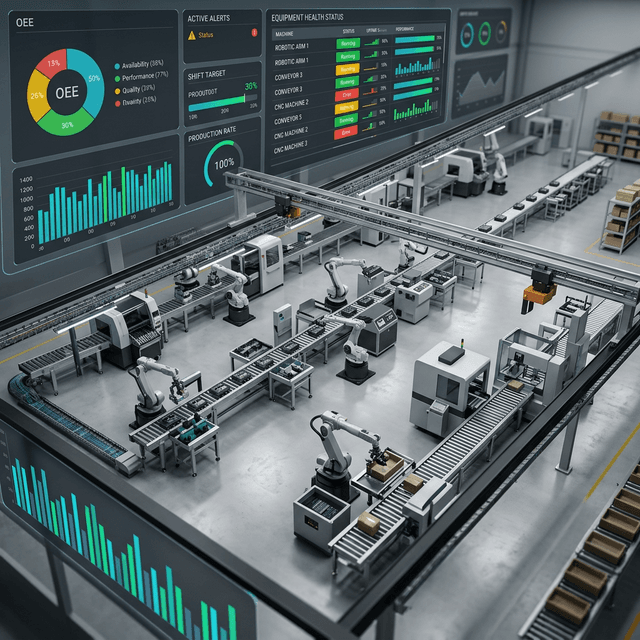
Simulate Lines. Predict Quality. Optimize Yield.
FactVerse AI Agent brings discrete event simulation, AI defect classification, causal inference for environment-yield correlation, and closed-loop quality analytics to manufacturing operations.
Core building blocks that define how this page delivers operational value.
Discrete event simulation models production line configurations — machine sequences, buffer sizes, changeover times. Identify bottleneck stations and evaluate layout changes before physical modifications.
Computer vision and statistical analysis classify defects by type, severity, and probable cause. Feed results back into process parameters to reduce defect rates over time.
DoWhy causal inference framework identifies true cause-effect relationships between environmental conditions, process parameters, and yield outcomes — separating correlation from causation.
Weibull reliability analysis and Kalman-filtered sensor fusion monitor production equipment health. Predict failures before they cause unplanned stops that impact delivery schedules.
Multi-objective optimization balances energy consumption against quality targets. NSGA-II finds Pareto-optimal operating points that reduce energy cost without compromising product quality.
Practical applications and proven success scenarios across industries.
DES simulation evaluates production line configurations, identifies bottleneck stations, and optimizes scheduling — helping improve OEE metrics across manufacturing cells.
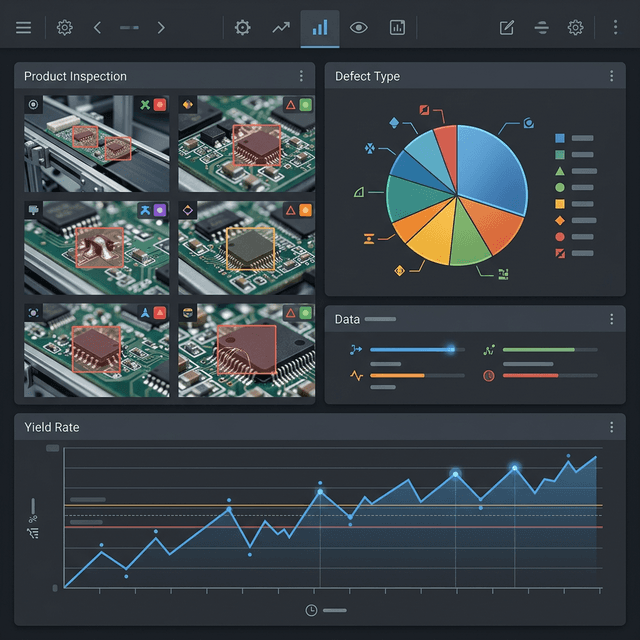
Causal inference identifies which environmental factors (temperature, humidity, vibration) actually cause quality variations — enabling targeted interventions instead of broad process changes.
Manufacturing dashboards show what happened. Decisions require knowing what to do next. FactVerse AI Agent bridges this gap — combining production data with simulation and causal inference to answer "why did this happen?" and "what should we do about it?"
When yields drop, the typical response is to investigate everything. Causal inference narrows the search — identifying which process parameters and environmental conditions actually cause quality variation, not just correlate with it. This means targeted interventions instead of expensive shotgun approaches.
Every line change, equipment upgrade, or scheduling modification can be simulated first. DES models capture the complex interactions between stations, buffers, changeover times, and operator patterns — predicting real-world impact before committing resources.
| Traditional Manufacturing Analytics | FactVerse AI Agent |
|---|---|
| SPC charts and dashboards | Causal inference + predictive analytics |
| Manual bottleneck identification | DES simulation with optimization |
| Correlation-based quality analysis | DoWhy causal inference (cause ≠ correlation) |
| Separate maintenance systems | Integrated PdM within the production twin |
| Static energy targets | Multi-objective energy-quality optimization |
Yes. Data Fusion Services connects to MES, SCADA, PLCs, and quality management systems through OPC UA, REST APIs, and database connectors.
AI Agent is process-agnostic. It has been deployed in discrete manufacturing, process manufacturing, and assembly operations. The simulation and analytics engines adapt to any production environment.