DataMesh Joins AOUSD to Advance Industrial OpenUSD Semantics and SimReady Assets
DataMesh has joined the Alliance for OpenUSD to help advance industrial OpenUSD semantics and SimReady Asset development for digital twins, simulation, Physical AI, robotics, and AI Agent workflows.
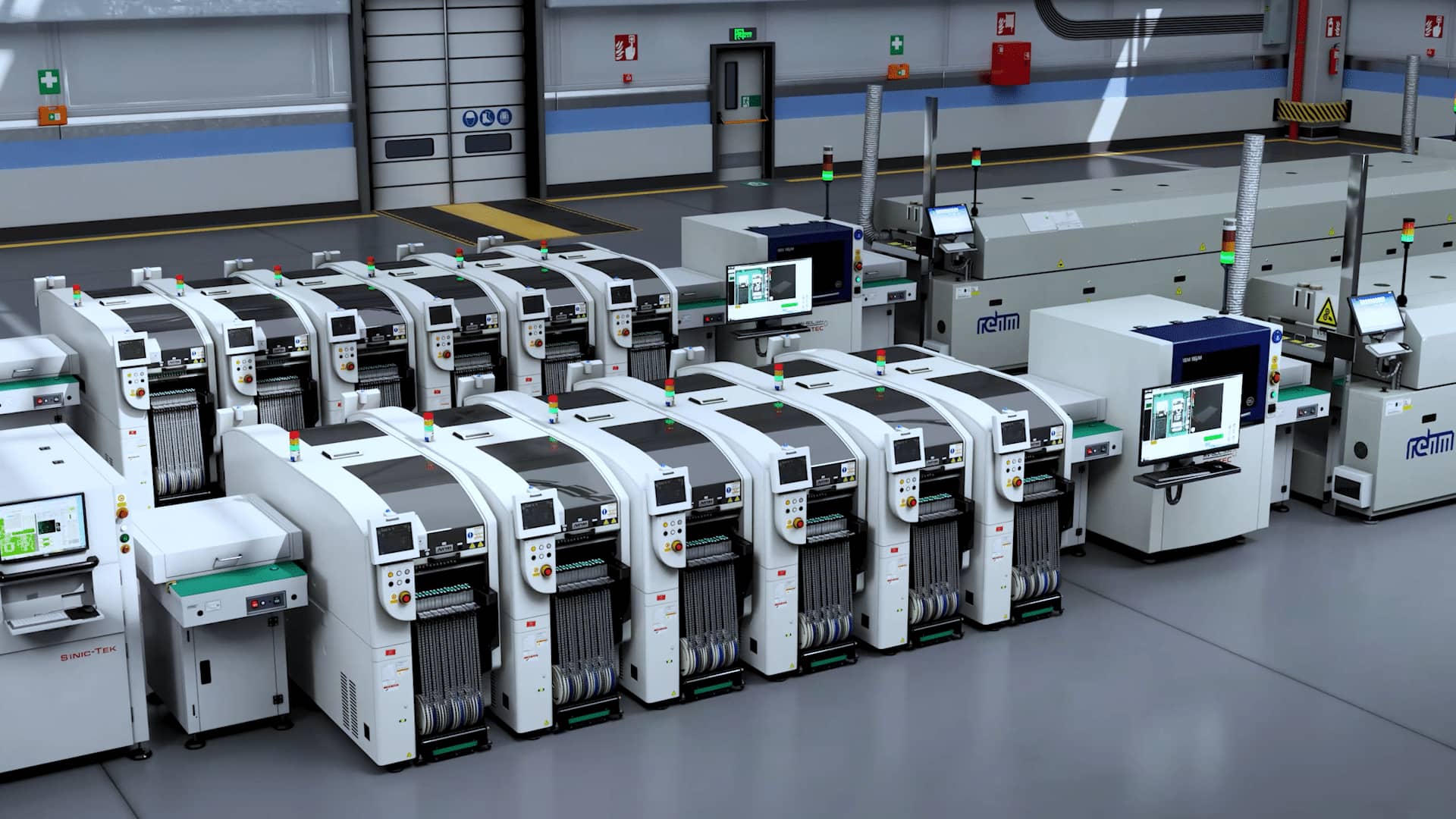
DataMesh has officially joined the Alliance for OpenUSD (AOUSD), participating in the standardization of OpenUSD for industrial digital twins, simulation, and Physical AI workflows.
AOUSD is an international open alliance focused on advancing OpenUSD as a foundation for interoperable 3D worlds. In 2025, AOUSD released the OpenUSD Core Specification 1.0, a step toward reducing fragmentation in 3D data and supporting digital twins, simulation, and large-scale 3D scene construction.
The alliance has also established work related to industrial and engineering digital twins, including terminology, definitions, and application requirements. DataMesh will bring field experience from industrial digital twin projects into this ecosystem.
Industrial digital twins need a semantic foundation
Industrial digital twins have moved beyond the first wave of modeling and visualization. Manufacturing companies, energy operators, and facility teams already have CAD files, BIM data, point clouds, 3D scenes, equipment models, and project-specific twin assets.
The next stage depends on whether these assets can be understood by systems, reused by simulation engines, interpreted by AI, and carried into robotics training and operations workflows. That requires semantics.
- A pump needs equipment type, medium, operating state, upstream and downstream relationships, valve connections, sensor points, maintenance cycles, fault modes, and energy parameters.
- A conveyor needs direction, speed, takt assumptions, accumulation logic, workstation relationships, and abnormal stop rules.
- A robotic workcell needs robot body data, end effector context, workpiece state, path constraints, collision boundaries, safety zones, human-machine collaboration rules, and process actions.
This semantic layer defines what an object is, what it connects to, which constraints apply, what state it is in, and which workflows it can support. With this structure, assets can move from 3D scenes into simulation systems, AI Agents, robot training environments, and operational systems.
From visual assets to SimReady Assets
NVIDIA describes SimReady as a simulation-ready asset framework built on OpenUSD. For industrial teams, the practical goal is to express 3D assets and digital twins with real-world properties, behavior, and data bindings so they can be used across simulation environments.
DataMesh is working with NVIDIA and the broader ecosystem on industrial SimReady Asset workflows that organize source material from CAD, BIM, 3D models, and scan data into five practical layers:
- Geometry
- Semantics
- Physics
- Behavior
- Data Bindings
These layers allow assets to support simulation, robot training, synthetic data generation, layout validation, process rehearsal, and AI Agent reasoning.
FactVerse captures industrial semantics, behavior, and data connections
In the DataMesh FactVerse platform, industrial objects carry geometry, materials, equipment attributes, spatial relationships, physical constraints, behavior logic, and real-time data connections.
Once an object enters FactVerse, it can be recognized as an equipment class, process node, operating state, or maintenance object. This makes the same object useful for simulation, operational decision support, and AI-driven review.
This is where industrial OpenUSD differs from generic 3D asset exchange. Industrial scenarios require stable, extensible, reusable ways to represent equipment names, object IDs, function classes, process relationships, sensor mappings, behavior states, and safety constraints.
The value grows as programs scale across plants, production lines, suppliers, and systems. Without shared semantics, teams repeatedly rename equipment, remap points, reinterpret process relationships, and rebuild simulation rules. With a reusable asset library, industrial knowledge becomes part of the asset system.
A SimReady industrial object can support:
- spatial checks during design review
- takt and layout validation during production-line upgrades
- path and collision validation during robotics deployment
- state monitoring and fault analysis during operations
- object-relationship and operating-boundary reasoning for AI Agents
Building an industrial digital foundation for Physical AI
By joining AOUSD, DataMesh will contribute practical industrial requirements from real digital twin projects into the OpenUSD ecosystem. Industrial twins need a machine-understandable object language for equipment, spaces, processes, states, behavior, and data relationships.
As Physical AI moves into manufacturing and facility operations, digital twins are becoming the shared environment between AI training, simulation validation, field decision-making, and robotics execution.
OpenUSD provides an open foundation for 3D scenes. SimReady Assets provide a framework for simulation-ready objects. DataMesh focuses on capturing the industrial semantics, behavior, and data connections that make those objects useful in real operational workflows.
DataMesh will continue working with NVIDIA and ecosystem partners to help industrial assets evolve from 3D models into understandable, simulation-ready, reusable digital objects for manufacturing, energy, facility operations, and robotics applications.