Multi-site data center operations
Standardize asset, room, rack, power, cooling, energy, inspection, and maintenance context across distributed facilities.
Operate with shared context. Plan change with thermal evidence
Unify facility assets, energy, environmental telemetry, inspections, and maintenance in an operational digital twin, then evaluate thermal and cooling-resilience scenarios before change.
Connect data, workflows, and field execution so teams can understand context, act faster, and keep work traceable.
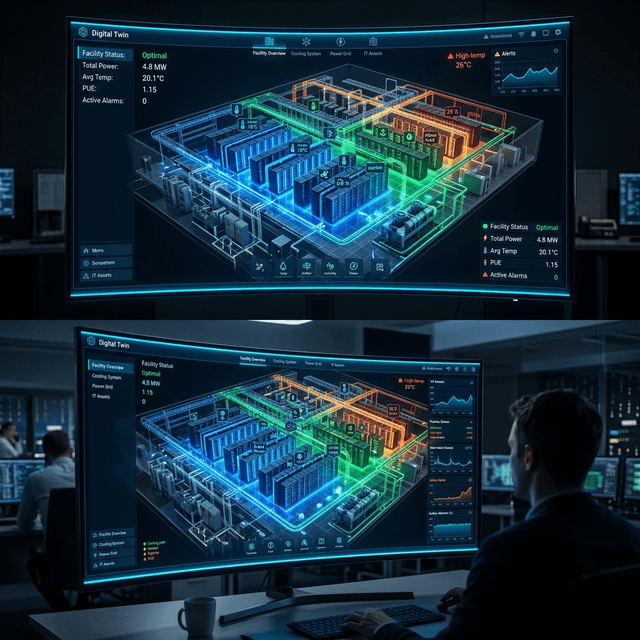
Model rooms, racks, facility equipment, power paths, cooling zones, meters, sensors, documents, and service ownership in a shared spatial view.
Connect building management, electrical power monitoring, data center infrastructure management, meter, alarm, and sensor data to review operating conditions by site, room, rack, and asset.
Use project-enabled thermal analysis to compare rack-inlet conditions and identify where margin may be narrowing against customer-approved or recognized operating bands.
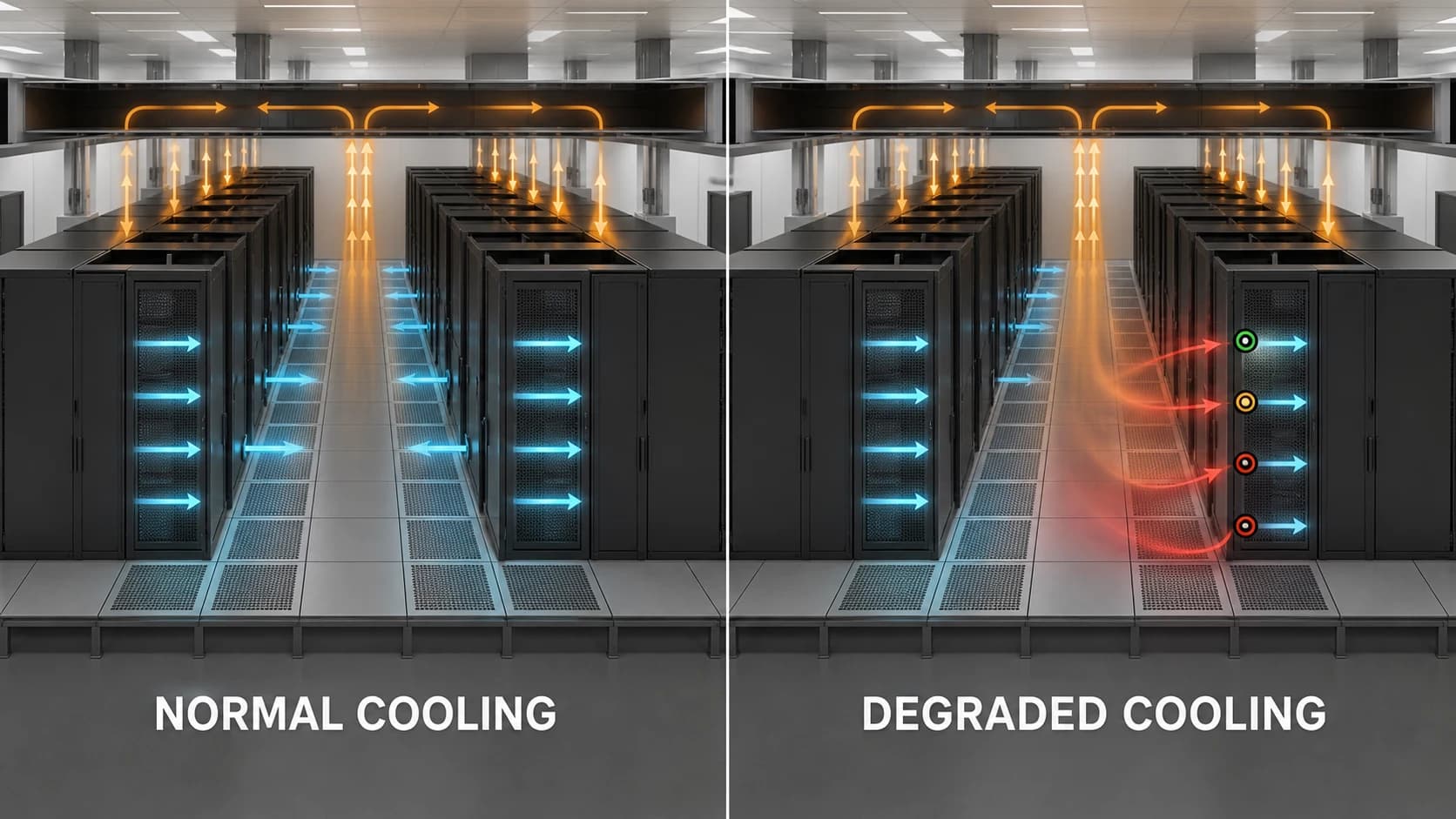
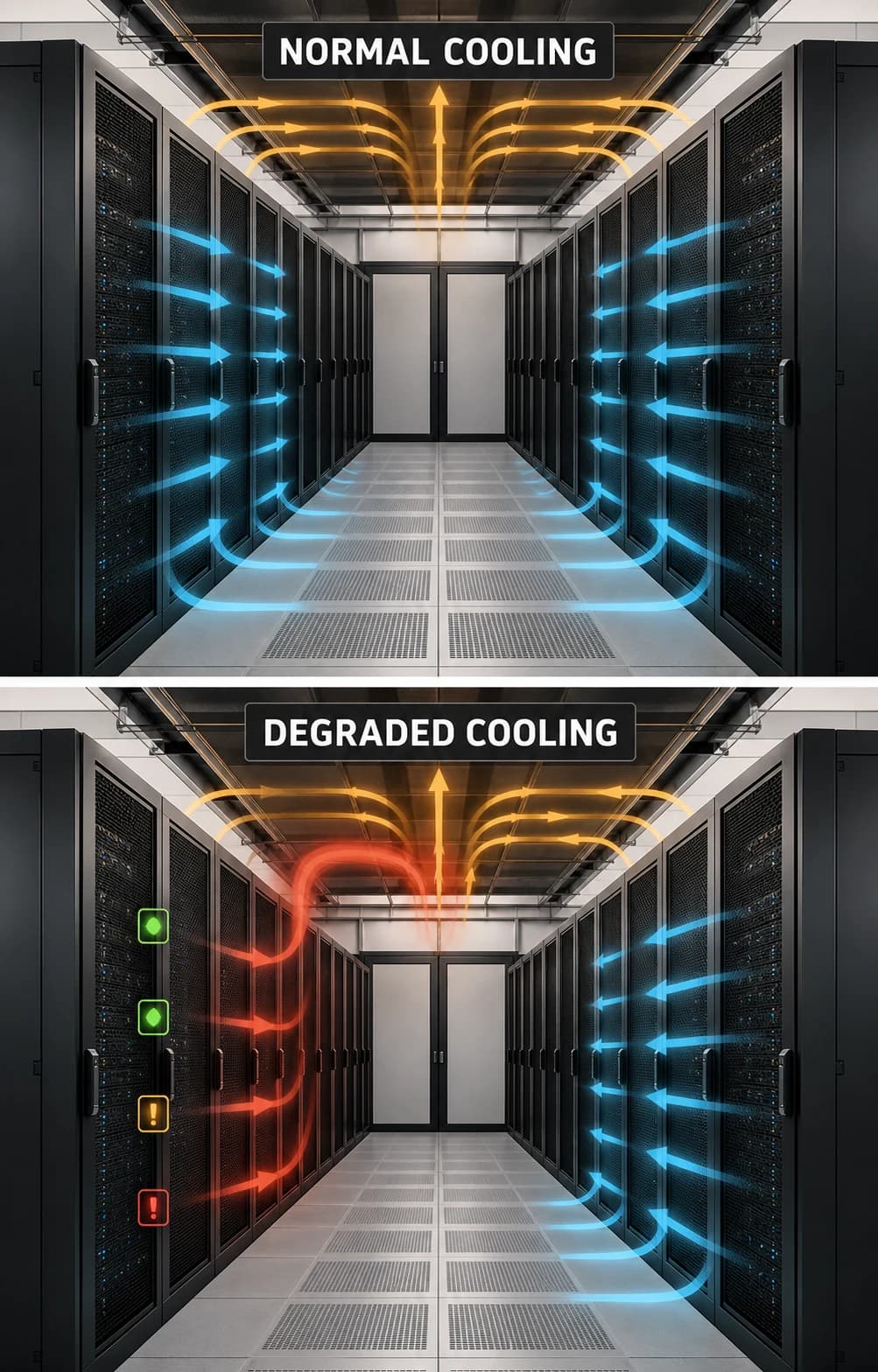
Compare normal and degraded cooling scenarios to see which areas are affected first and where engineering review should focus.
Evaluate representative rack loads, density, containment, cooling distribution, and layout alternatives before a physical change is committed.
Connect confirmed findings to inspections, work orders, field evidence, repair history, and verification through Inspector or an existing maintenance system.
Practical applications and proven success scenarios across industries.
Standardize asset, room, rack, power, cooling, energy, inspection, and maintenance context across distributed facilities.
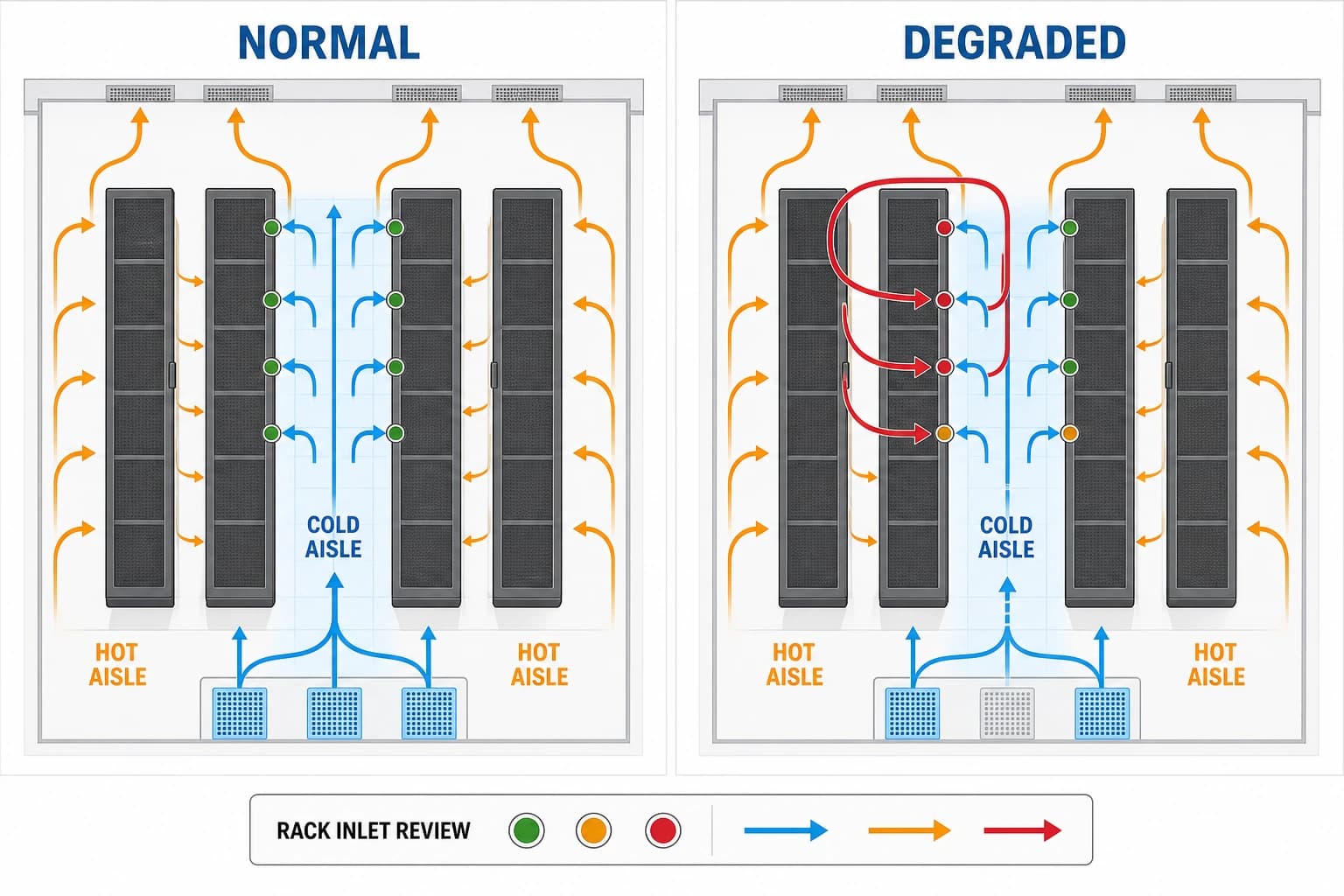
Compare rack-level conditions, approved operating bands, and available measured data to identify areas that deserve deeper engineering review.
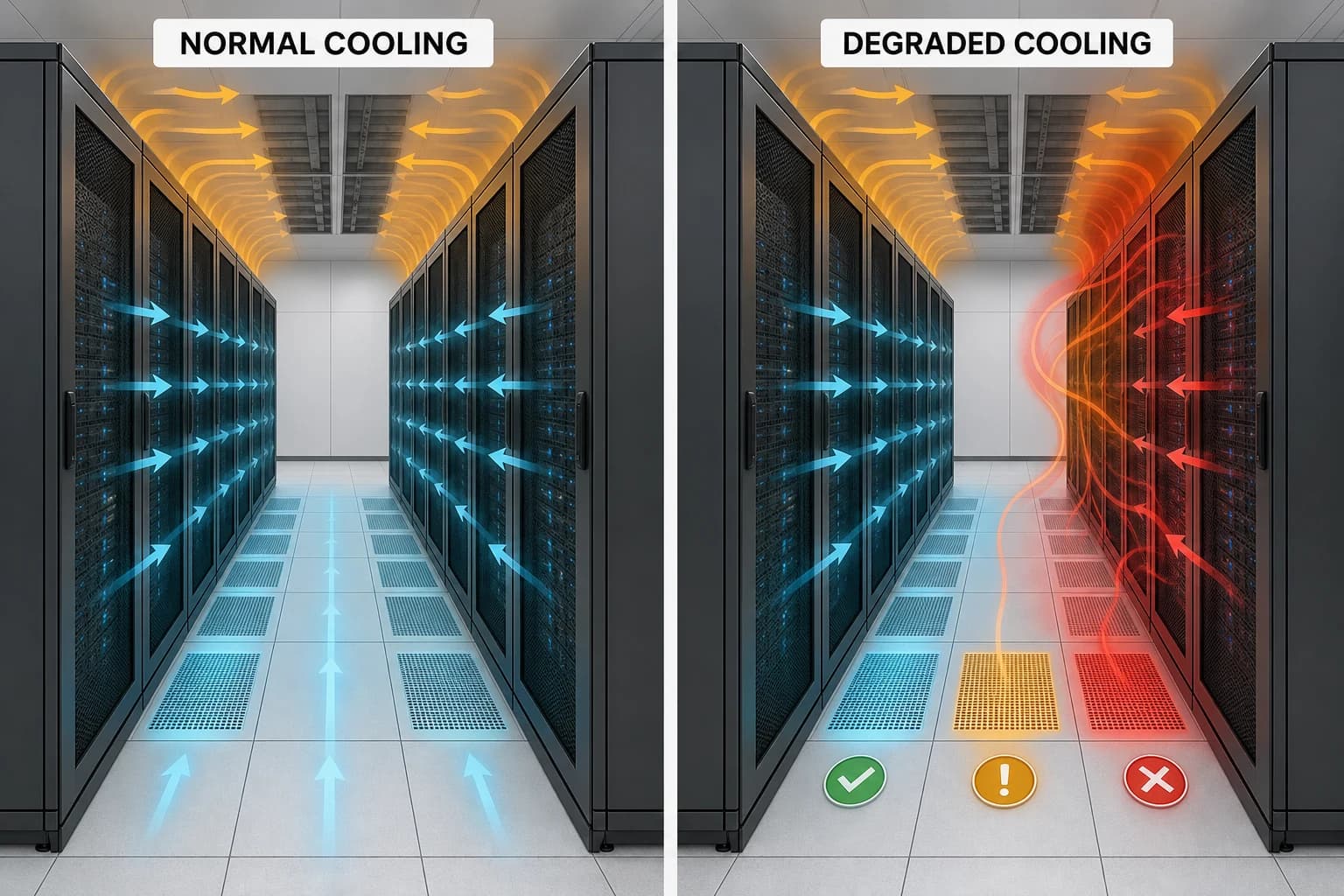
Study cooling-unit degradation, load growth, rack density, containment, and layout alternatives within a defined project and evidence scope.
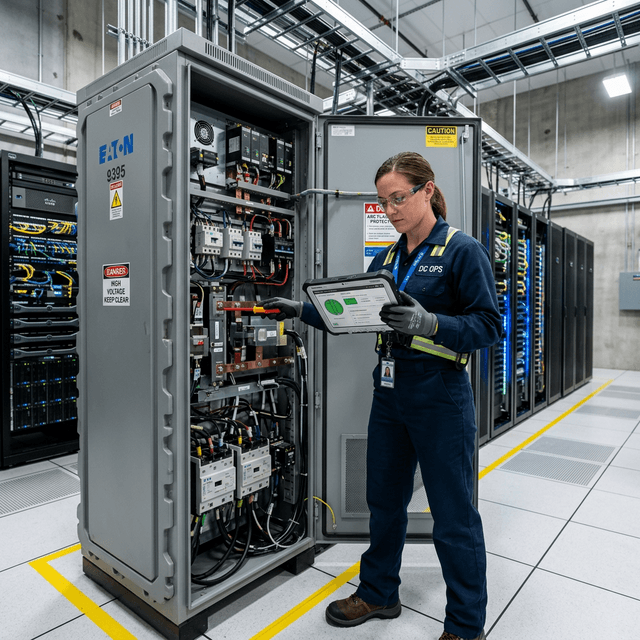
Locate affected assets, coordinate field work, preserve evidence, and verify conditions after approved maintenance or facility changes.
Data center teams make daily decisions across rooms, racks, power paths, cooling equipment, meters, alarms, inspections, and maintenance work. Each source describes part of the facility. A reliable operating picture emerges when those sources share the same asset, location, system, and work context.
Data Center Operations combines that operational foundation with project-enabled thermal analysis. Teams can run daily operations from current facility evidence, then add airflow and temperature studies when a capacity, resilience, or layout decision requires more than a monitoring dashboard.
Data Fusion Services connects building management, electrical power monitoring, data center infrastructure management, meters, sensors, alarms, documents, and maintenance records. FactVerse organizes rooms, racks, power and cooling relationships, facility equipment, and ownership in an operational digital twin.
FactVerse AI Agent can help teams review abnormal trends, repeated alarms, asset health, and maintenance history. Engineers confirm the evidence, and Inspector or an existing maintenance system carries approved work into inspection, repair, and verification.
This operating layer supports:
For decisions that depend on airflow or temperature fields, DataMesh adds a project-enabled thermal and thermal-fluid workflow. The study begins with a defined question, representative geometry, loads, cooling conditions, available measurements, and agreed review criteria.
Teams can compare:
The purpose is to compare options and expose decision risk before physical change. Absolute site conclusions use measured-data calibration appropriate to the question being reviewed.
| Evidence level | What it uses | Suitable use |
|---|---|---|
| Operational evidence | Connected meter, sensor, alarm, asset, inspection, and maintenance records | Daily visibility, issue investigation, work prioritization, and baseline definition |
| Exploratory model | Representative geometry, loads, and boundary assumptions | Relative pattern review, option screening, and study scoping |
| Benchmarked model | Reference cases, solver checks, conservation review, and repeatable inputs | Method review and stronger comparison between defined scenarios |
| Site-calibrated model | Measured facility data and documented residual review within a stated scope | Site-specific planning and engineering decisions covered by the calibration |
Each result should retain the model version, inputs, assumptions, checks, limits, and evidence references needed for qualified review.
Thermal evidence becomes more useful when it remains connected to operations. A finding can be linked to the affected room, rack, cooling unit, sensor, or maintenance history, reviewed by the responsible engineer, and routed into an approved inspection or change workflow. After work is completed, the twin preserves what changed and the evidence used to verify it.
DataMesh has delivered digital twin systems across multiple overseas data center sites for an international telecom operator. That experience anchors the operational foundation of this solution: shared facility context, energy calculation, inspection and repair workflows, asset management, and operational visualization. Project-enabled thermal analysis extends that foundation for defined capacity and resilience decisions.
A practical first phase combines one representative room, a verified asset and data baseline, and one decision such as rack growth, a cooling-degradation scenario, or a layout change. The team can then evaluate data readiness, model evidence, review ownership, and field execution before expanding to more rooms or sites.
Data Fusion Services connects existing data center infrastructure management, building management, electrical power monitoring, meter, sensor, alarm, and maintenance systems. FactVerse adds spatial and asset context, while Inspector and connected maintenance systems manage execution records.
Asset, energy, alarm, inspection, maintenance, and visualization workflows are established DataMesh capabilities. Airflow, thermal, and cooling-resilience studies are project-enabled engineering workflows with a defined geometry, load model, boundary conditions, evidence level, and review owner.
A study can compare rack-inlet conditions, thermal margin, cooling-unit degradation, load distribution, rack density, containment, and layout options. Results support planning and qualified engineering review within the stated model and calibration scope.
A useful starting set includes room and rack geometry, equipment and cooling layout, representative IT loads, supply and return conditions, temperature and environmental measurements, cooling equipment state, and the decision the team needs to make.
Exploratory models support relative comparison, benchmarked models add reference checks, and site-calibrated models use measured facility data within a stated calibration scope. The evidence level should match the operational or engineering decision under review.
Continue with the most relevant products, solutions, guides, and public references for this topic.